Small Talk
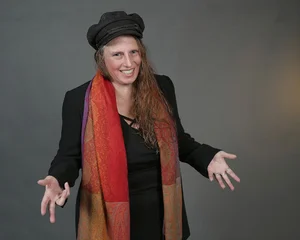
Aicila: [00:00:00] welcome to Business as Unusual, and I'm gonna talk a little bit today about, uh, everybody's favorite topic: small talk. So I've been thinking about this, uh, a little bit because interestingly, you know, there's a lot of, uh, there's a lot of strong feelings about small talk.
People, uh, really kinda pooh-pooh it and, and I understand why. It feels inauthentic at times, and it feels kinda pointless, like why are we talking about the weather, right? And I started really thinking about that trope. People talk about the weather and, you know, you see it in movies the-- where it, you know, gets brought up and it's this awkward thing.
However one of the things that we lost or that we, that, that became more limited during the pandemic, and hasn't, I don't think, completely refilled in, is those weak tie or passive connections. So there's the people that you're really close to, your friends [00:01:00] that you seek out and you choose.
And then there's the people that you are really familiar and intimate with, like your family or your colleagues, who you don't really choose, you may not seek out, but you have, um, bonds with them. Shared history or shared goals, uh, you know, shared survival interdependence. And, and so those are a different kind of connection.
And then there's those passive connections, the people that walk their dog at the same time that you do, or the cashier at the register, or the person on the corner who's out in the morning picking up their paper or mowing when you walk by. And those per-- those, uh, I don't wanna call them relationships, but those experiences and interactions actually are part of our social landscape and part of our psychological makeup. And they're important in a certain way.
We need to have that as part of our daily interaction without it become isolated [00:02:00] or we can be a little more isolated. So I was thinking about that as you do, and I was thinking about this whole idea that, you know, the weather is this, you know, innocuous piece of small talk. And then I thought, actually, it's kind of brilliant because the weather is something that everybody's experiencing.
It's nobody's fault. It's just what's happening. So nobody was... will, will take a strong reaction one way or the other personally, uh, because there's no point. Um, and it's a shared experience. We are all blistering hot or, you know, dealing with the rain or avoiding the snow. And a lot of us are really willing to be honest.
Like, I'll talk about, "Oh, it's too hot," blah, blah, blah. And some people will be like, "Do you like it cold?" And I'm like, "No." I can complain about the weather no matter what it is, unless it's like this three degrees between, like, seventy-one and seventy-four. And I'm, you know, in another way, other places I might get defensive, but for some reason, [00:03:00] talking about the weather, I'm like, "Eh It's, I complain about it, whatever.
It's a great place to get that stress and frustration out at the things that we can't control and just have to experience because it's not, um, it's not personal, like I said before, and it's, it's easy to, to, to express. So, so the weather is this really easy kind of small talk that also allows you to have some of that more casual engagement with people that is really important in our lives and in our social makeup, but is maybe not something that any of us is gonna prioritize because we don't think about it.
And any- and t- if I'm being honest, it's not s- it's something we're not gonna pri- and it's not something any of us are gonna prioritize because that's kind of the point. If you're prioritizing those relationships, then they aren't those more, um, generalized, you know, sort of communal engagements. [00:04:00] Someone that, um, a, a friend and colleague of mine once said he, he gets really frustrated at the ways that people use the word community, um, because usually a community, um, the way that it's often being used, it's not technically community.
It's a, it's a group of people with an affinity or an affiliation. A community is people that are f- sort of dealing with the same things and are in some way a little bit interdependent. And I thought that was an interesting observation, and I f- I thought kind of on point. And so, you know, we talk about connection energy and community, like, and friends, right?
Like, so your friends are people that you really want to help. You want them to succeed because you care about them. Your community are people that you don't maybe care about or even like because they're just your neighbors, and maybe your neighbor's irritating 'cause their dog's [00:05:00] really barky. But, um-
Uh, but maybe you don't even like them because... And your, your neighbors, your community might be your neighbors, and they might be people that you don't even really like or they irritate you or you have no feeling about them. But maybe their dog's really barky and you find that frustrating. However You ca- you, you care about or you, you have a, a care...
I think care is the right word. You, you have a care for their well-being. You don't want them to slip on the ice, so maybe you put rocks salt down or you warn them that the... there's a power outage coming or, you know, you warn them that there's a bad storm coming. And, um, and we have that in our neighborhood.
It's really great. People help each other out, and they, they, uh, watch each other's... help each other's pets, watch each other's pets and things like that. But it did take some, uh, effort to, to create some of those [00:06:00] connections. And, and it does start with things like talking about the weather or asking, you know, h- how they're enjoying the football season or whatever it is.
And I, I'm not a football fan per se, but I do think that shared experiences are really important. And one of the reasons that I do things like watch the Super Bowl is not because I particularly like the Super Bowl, but because I think it's important that we have things and experiences that we can talk to people about that we share, even if they aren't, quote-unquote, "our thing."
Like, plenty of things are my thing that I do. But there's just gotta be a few that are about the fact that we all live kind of in the general same space and time, and we need to find ways to make room for everybody to have opportunities and experiences. So when you think about small talk, so a lot of times I, I know it gets kind of a bad rap and, and be like, "Oh, I don't like to network."
But, but a lot of times what I find when I dig in is the people, what they don't like is they don't like to be unauthentic. They don't like to [00:07:00] feel like they are being transactional with their, um, emotional engagements, and that is kind of gross. And for some people, that kind of like small talk, uh, around a lot of different things is a very natural thing.
If it's not natural for you, um, and you can't really get excited about the weather, think about something that is, uh, something that's real for you, like a comedian or a book or, um, a concept and, and, and think about ways that you can show up authentically and engage people in that or, uh, be curious about them.
You know, if they're into something and, and you don't feel a sense of really knowing how to put something out there for yourself, you do need to kind of find that. You can, you can ask questions to help you understand, "Well, why do you care about that?" Or, "What, what, what brought you to think that was a cool thing?"
But maybe not quite like that 'cause that could sound a little like... But you know what I'm saying. And, and just remember that if it's draining you, [00:08:00] then it's probably not a great idea. Like, that's probably not... If it's draining you, that's probably not the best direction. You wanna find something that feels easeful and allows you to, to build that muscle to be able to have those conversations with people that aren't high stakes, and they can be really enjoyable and fun and, and, and In business, sometimes they do lead to, to more opportunities, and even if they don't, it, it wasn't a waste.
It was, like, an opportunity to be in communication with another human, and that is, uh, is part of what we're here for. So thanks for tuning in. This is Business as Unusual. I will see you next week.