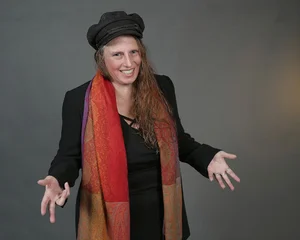
Self at Work with Sandhya Sudhaker
[00:00:00]
Aicila: Welcome to Business As Unusual. Today, I'm joined by Sandia Sadakar, the founder of Self At Work and host of the Working Your Way podcast. After a successful 13 year corporate career navigating massive organizational changes, Sandia took a sabbatical to redefine success on her own terms.
She now brings a trauma-informed inclusive lens to leadership development, helping leaders cultivate belonging and achieve sustainable success through meaningful connection. Welcome to the show, Sanja.
Sandhya: Thank you so much. I'm excited to be here.
Aicila: I am really excited to talk to you. I, I actually, so I didn't tell you before is I dabbled in the Enneagram when my kids were in middle school, someone was like, oh, this is a cool thing. And I was like, yeah, whatever. And um, I think I had the kids like, take the test and I had this book. And it was just like, if you're this, you know, on the Enneagram, this is something that you might say.
And it was literally [00:01:00] stuff they had said. Like, like word for word quotes they had said in the last couple of days. So I was like, okay, witchcraft. But then I tried some of the tactics that it suggested for, like how to motivate or how to approach talking to them, or, and it was so beyond successful.
I immediately became a huge champion of, uh, the Enneagram in general because it, it really did decode my tween ages for me in a way that I thought was beyond, um, helpful and unexpectedly. So, honestly, probably not to you 'cause you use it all the time, but that, that was my first exposure to it.
Sandhya: Yeah. Well, no, I mean, I love the endorsement for the tool because I am biased. I think it is the single best tool for understanding ourselves and understanding each other, and I think it's just natural human nature to assume, if I'm thinking this, someone else is thinking this. If I operate this way and this works on me, this will also work on someone else and, and that's [00:02:00] just not the case.
And so it gives us this language, this framework, to see. Here's how I am motivated. Here's how someone else is motivated and like we're just two different people. But until you name it, it's really hard to kind of like really grasp.
Aicila: Mm-hmm. What I think. And I think parenting is its own complex ecosystem. And I also think that it, it removes, um, I don't know how to s like, blames not quite the right word, but it, it almost depersonalizes the difference. Like, 'cause with your kids especially, you can really over identify with them and so to say, oh I'm a this on the Enneagram and you're this, and you're motivated by this. Let me try that perspective as, as opposed to, I'm doing it wrong, or I didn't get you, or something like that. It takes that, that sting out of it or did for me and let me just approach it from a little bit more of a holistic perspective.
And so I guess that's [00:03:00] the other part of it, is it, I feel like if it can be. A useful tool for a parent with teenagers and teenagers, then I can't imagine that it would be quite useful in the workplace.
Sandhya: Yes, 100%. And I love that phrase that you used, depersonalizing our differences because it is, it takes the like. Why, why don't you get me out of it? Right. It's, it's not personal. It's actually just different ways of being. And I think one thing, one way the Enneagram has changed me or like working with this tool has changed me is I am such a more accepting and understanding person because I can see there are nine different ways that we get our needs met.
And there are nine different ways of thinking and solving a problem, and all of them are really valuable. In their own way, but they're gonna look different and they require different resources. And that's where then you like bring that into the workplace and it's like, oh, okay, I get it now. We just do things [00:04:00] differently.
Let's take the frustration out of it and work with it instead.
Aicila: Yeah. So for folks that aren't familiar, can you give them a, like a little simple overview of the Enneagram?
Sandhya: Yeah, I, it's most commonly known as a personality assessment tool, but the way that I like to talk about it is that the Enneagram is a tool for self-development. It's a, it's a tool for emotional intelligence, and it's a framework where there are nine core archetypes, and these core archetypes are not.
Necessarily rooted in the behaviors of the archetype. They're rooted in these kind of underlying, unconscious, often motivations. So how are the nine ways that we as humans try to get our needs met and have learned to cope in the world? And then how do those motivations manifest into behaviors, whether it's our [00:05:00] greatest talents and strengths, or the things that we do when we're not at our best.
Aicila: Right, and, and something that you shared is that you wish more people understood that it, it's beyond a test, it's a system, it's a complex system. There's lots of layers of insight and it does require something from their participant that you're gonna get a lot more out of it if you do some deep reflection on how, what you, how you express your type, what your type is, and how that then interacts with people.
Can you speak a little bit about that?
Sandhya: Yeah, I think when I first started working with the Enneagram, because obviously like as many people do, I came to this tool in a, a time of like personal curiosity and I was trying to kind of figure out what was going on with me and that led me down a path and I, I read and I learned and I got a lot of insight out of it.
And then when I started to use it in companies. I was getting frustrated by the fact that people were, they would take an online assessment and they'd be like, well, [00:06:00] I'm this, or like, you know, and I'd have a conversation. I'm like, actually, I think this might be the right type for you. And, and they were like so tied to the result that a report gave them.
And I think. I now am like less frustrated by it and more, it's a problem to solve because we live in a culture that I want an easy answer, right? I want a quick fix. I wanna push a couple of buttons and I want you to tell me what to do. Right? We, we put our difficult conversations into chat GPT, because we don't wanna like think through them or it's difficult for us.
And so I think because especially in the corporate world, we're used to inputting information and getting an answer out. The, the mindset around Enneagram is like, well, this test should give me the answer. And with Enneagram, because it is rooted in the core motivations, those motivations can play out in a number of different ways.
And there is overlap between how each of the types show up. They have commonalities, they have differences. But that's why when you take a test online, [00:07:00] it's only testing you for your behavior and your conscious behavior. And so we're only inputting what we know and see and realize, and therefore we're not necessarily able to like always get to the bottom of it with a, a computer result.
Um, and there's more to say in that sense too, just around like. Individuality and diversity and things like that. So, you know, there's not, everything can be captured in a series of questions, and that's, that's another reason why, you know, the tests are not always accurate in determining your type. And so it's really about like taking the time to self-reflect and explore and even just observe yourself and, and see what comes up for you having this different language or this different framework, like can you notice things that you didn't notice before?
Aicila: No, that's, I mean, not everything's quantifiable and so we have to, we have to bring that qualitative piece to it. Are you, do you have a, a story that you [00:08:00] can share about a time that you worked with a company where they, that you saw the way that this tool was helpful in them either achieving a goal or resolving a conflict?
Sandhya: Yeah. Um, many of them, but I'd say a couple that come to mind are, so one of the things that I'll do is, you know, take a bit of a hybrid approach to working with teams. So I'll go in and I'll do one-on-one sessions with each person on the team, and then we'll come together as a team and do kind of more workshop, um, and discussion based team sessions.
And so that allows me to map out the team, have everybody in their accurate type. What does the layout of the team look like? And so often what can happen is a team might be more heavily weighted toward certain types of behavior that can look like. Um, there are certain types in the Enneagram that are more assertive.
There are certain types of the Enneagram that are more withdrawn or kind of remove themselves from a situation to find [00:09:00] clarity. And there are certain types that are maybe a little more compliant. They'll follow the lead of the leader or they'll follow the lead of some, some other kind of outside force.
And so when you look at a team in this type of makeup, you can see. Oh, okay. The assertive people. If you are in a typical meeting room, the assertive people are probably getting their ideas heard. They're probably the ones speaking up. The withdrawn folks might not even have had the time to process and get to, what is my idea?
Let me bring that to the table. Or like, bring their best thinking to things. And so often what that looks like is what's not being heard, um, who's not being heard? What systems do we need to put in place as a team? To really support like all the different ways of processing information and problem solving so that we can actually hear all the wisdom that's in this group.
Aicila: Right. No, that's really, that's really important when I, so I'm a five and, uh, one of the [00:10:00] things that was helpful for me is I've always had, um, a lot of conflict with people who are sixes because they like a lot of information and by default fives and me, this is also me, don't we just, like, I don't share information.
I didn't. And so I would really put a lot of effort into, okay, this person needs details that I think are ridiculous. And I can, I can feel that way and I could just give them, and it really did make our interactions smoother. And so, you know, I would, I would use that as a, as a way to kind of like identify this is a place where I need to be more proactive in sharing details that I find extraneous and that is actually helpful to them.
Sandhya: Exactly. And like you said, it depersonalizes it, right? It's not like, oh my gosh, why do you need so much information? Like, I, I don't wanna share that it's a waste of time, or whatever it
Aicila: I mean, I still feel those things. I just know. I just know they're my problem. Right? Like that's a me problem,
Sandhya: Yeah, exactly. It's [00:11:00] like they are not extraneous to this other person and therefore like I can provide that. Right. And it will, it will help them get to where they need to be.
Aicila: So, yeah, and I, and I've gotten better by default at it. I, I better is probably not the, quite the right word to say, but I have, I think it has also helped me to grow in how I communicate and deepen the ways that I, I default to in circumstances. You, it was really challenging. Um. A habit to start. I don't know that I would've if I hadn't had some external motivation to do it, because I, I definitely had some commitment to it as the way, and I think that's the other part, right.
You talked about the Enneagram made it clear to me it's not the way, it's the way that I like.
Sandhya: Yeah. Yeah. A classic conflict like that is like a type seven and a type six that are on a team together. Type sevens are ideas and innovation and no constraints, right? Blue sky thinking and sixes are security and [00:12:00] safety and scenario planning, and so. Sevens want big ideas, and sixes are bringing it down to a pragmatic, can we do this?
And so there's tension there, right? Where it's like you're being unrealistic as a seven, no, well, you're being pessimistic as a six, you know? And so that butting of heads can happen. But when we can see great ideas and.
Aicila: pragmatic.
Sandhya: scenario planning and thorough thinking through and risk mitigation make a great pair.
We can get beyond this kind of like, why do you shoot down my ideas all the time? It's like, oh no, you're actually going to make them better.
Aicila: exactly. You're gonna make them actionable as opposed to to like, they just live in the cloud, which some things need to stay in the cloud. It, I mean, the brain cloud, not the the other one.
Sandhya: Exactly.
Aicila: What is a common business tip that you think does more harm than good?
Sandhya: Hmm. Ooh, that's a good one. [00:13:00] Um, I think like the compliment sandwich for giving feedback is not always helpful. Um, I think, um, you know, uh. The, the golden rule of like, you know, do unto others as you would have them do unto you. It's like, no, it should be how managing to the person and not to like how you would wanna be managed.
Um,
Aicila: And both of those really fit with what you talked about, uh, with the Enneagram where recognizing there's nine. Archetypes of communication. Some, some people might love the communicate the compliment sandwich and some people might find it to be onerous on either side. Right. Like, that's, so,
Sandhya: totally.
Aicila: that makes sense.
Did I, I didn't mean to cut you off. You just had, I had that thought when you were saying that. Was there anything else
Sandhya: No, no, those, those are like the two first ones that came to mind, so
Aicila: What does success look for you?[00:14:00]
Sandhya: Mm. In my business or my work or my life,
Aicila: Um, honestly, whatever feels most alive for you in this moment. I have never been unhappy with someone's answer. I just feel like I learned something. I'm like, that's a great idea for success. I like it.
Sandhya: Yeah, so I wrote like a business vision for, it's kind of a lifestyle slash, you know, business vision for myself. And it was like, basically like I, you know, I, I want to like have a business that supports my lifestyle so that I can show up generously for the people that I care about that supports my health and wellbeing.
Um, and so like for me, I think success. Has been kind of defining enough, um, like what allows me to feel all of those things versus like saying I need to make a certain, you know, revenue or have a certain number of clients. But I think success is also impacting people in the way that I can best do it. [00:15:00] And, and I, I think, and you talk a lot about like energy management, right? It's like, what is the thing that I can do really well? With the least amount of effort that makes the greatest impact on other people's lives. And like, I think I'm getting close to that. You know, it's like, it's just the sweet spot of all of those things.
Aicila: I love that. Thank you for sharing.
Sandhya: Yeah.
Aicila: I feel that with you.
Sandhya: I.
Aicila: And especially now, I feel like there's so much, um, noise, I guess that being able to be really clear about how you experience success and how you participate in other people's achievements and, and dreams and fulfillment. I, I don't know. I think there's a lot of, um, power in that in a and in the storm that we're in.
So.
Sandhya: Yeah, I, I noticed this kind of early on in my business that. and this is part, part of the Enneagram [00:16:00] type three, which is my
Aicila: Ah, okay.
Sandhya: Um, threes can see potential, which can maybe be a challenge in the sense of like kind of being in pursuit of like. Constant growth and development, which like that has its own, you know, uh, pitfalls.
But there's a real way of seeing your own potential, the desire to live up to it, but also seeing other people's potential and seeing things sometimes in them that they don't even see in themselves. And so I started my business in career coaching, and it was something that I noticed coming up a lot where I was like, I could see.
These people's like talents very clearly and they maybe couldn't see them so clearly because it's just like part of how they are every day. And so I think there's also like something really cool about Enneagram or really like a lot of different self-discovery tools that can help us kind of name [00:17:00] what is this thing that you're like amazingly good at that you don't even necessarily realize other people are not.
Aicila: Yeah. Now I feel like I see that I work with a lot of folks that have really developed some innovative, uh, frameworks or ways of approaching a specific aspect of business or a specific type of project. And they don't think it's anything. They're just like, oh, this is just how it is. And it's like, no, you created something really powerful, but it's so intuitive for you.
You just think that's the way it is. You don't realize that other people are gonna hear this. They always think they have to do this big thing to be impressive. But I'm like, just say two sentences about what you're up to. I promise people are gonna be interested. It's very intriguing.
Sandhya: Yeah. Right. And it's old news to you. 'cause you've been living in this brain for however long. Right. And it's like, no, that's, that's new and exciting to other people.
Aicila: it's kind of, it's fun to, to watch that process. What advice would you give your 18-year-old self? [00:18:00] I.
Sandhya: Oh my gosh, I don't know if I've ever been asked that before. Um, wow. My 18-year-old self was probably, you know, in her freshman year of college, uh, lining up all the classes and figuring out how to get. The major and the minors and optimize this four years of school to get like the best resume coming out of it.
Um, which is very classic type three. she also was having fun. So I think, I think I would say like explore more. Um, it's like coming out of college. It's not necessary to like just start your trajectory and it's okay to [00:19:00] take time off. And I think early in my career, I wish I would've done maybe a little bit more of that, a little more exploring, a little less like just checking the box.
Aicila: That's always a good, good reminder. There's, there's a lot to discover. In that I, I get, I also get very goal oriented, so,
Sandhya: Yeah.
Aicila: which is, I, I love it, except for some things you can't have, you can't do goal oriented. You have to let it organically unfold. It's so unfair.
Sandhya: it's so true, but also like really, really, I, I am today, me is grateful to 23-year-old through, you know, 33-year-old me who did put in the hours in corporate. Learned a lot. Maxed out her 401k because now I have like a much bigger safety net and, and the freedom and also the, the experience and stuff to, to go and do something totally different.
So it's like, you know, on one hand, like, [00:20:00] would it have been great to adventure more? Sure. And like, I think now is the time that I know where I, I'm supposed to be and what I'm supposed to be doing. Whereas I, I wouldn't have maybe had that earlier on.
Aicila: Right. Or something different, but yeah. Um. So if, if, um, let's say I'm in a team and I, I, what is it that happens for me that I realize I need what you offer? Like how, how does that show up? Is a team miscommunicating? Is the leader sad? I mean, I don't know. And then what hap, how, what do you offer that that's, that gives them some sort of pathway to success or, or a solution to their problem or their thriving?
Sandhya: Yeah, so, um. The way that you would know would be either, maybe you're kind of like coming new into a team as a leader. Maybe you've, you've had a lot of turnover. Any moment where there's a lot of rapid change happening in your company where you need to set a foundation of like, trust and [00:21:00] cohesion. And trust is like such a big business, uh, buzzword out there, right?
And so it's like every team needs trust. And is there a moment to kind of like hit that reset button to say. If my team knew each other really, really well, we could skip over a lot of the kind of tensions. Right. Those miscommunications, like you said. Um, one thing that I've really narrowed in on lately is specializing in working with like, kind of high achieving, fast-paced leaders who are experiencing things like.
My team is not as engaged as I would like them to be. Um, they're not taking ownership, they're not bringing ideas to the table. Um, maybe they're working too slow. Right. The perception of the leader is that these things are happening. And so that's where I've like, really a lot of my clients fit in this bucket of kind of, uh, that fast moving, kind of more assertive leader.
And so what I'll do then with them is [00:22:00] go in and kind of do this hybrid approach of like. Meeting with everyone on the team, mapping out the team, and then we sit down and we address these challenges in the sense of if you think your team is not taking ownership, what are the things on both sides of the table that we can do differently to allow for that to to thrive?
And so it could be that. You are being very directive as a leader and they don't think they have permission to say, actually, I think this is a better way. It could be that, you know, there's a certain, um, meeting structure that you have that doesn't really allow for ideas to come out. Or it could be that they're swirling and they're concerned because there's a reorg coming, and really all you need to do is like, make sure you're providing them more information.
So they're not ruminating on these things. And how do you build safety, right, for the different people on the team that they can then move into like a thriving state instead of surviving state. And so it's [00:23:00] a number of different things, and it could be any kind of number of problems like that where we can really look at, there's a, there's a perception of the problem and there's what's actually happening.
And usually the leader perceives it to be a them problem, right? This is like a human thing that we do. And really it's a, a leader problem and a individual problem and a structural problem that we can like, address all three of those things and really, um, get to the bottom of it.
Aicila: Yeah, no, I, I really would second that. I, I've worked with a lot of smaller businesses that are trying to transition to, uh, delegation. Essentially. They're used to kind of marrying all the hats, and in order to really be successful, they have to start sharing. And that's such a tender space for people. And, um, one of the things that I've noticed is exactly that we're.
You'll hear people say, oh no, you know, people just can't figure out, they can't do it. They don't know how to do it. They're not able, they're not motivated. But really what happens is exactly that. They don't feel [00:24:00] like they have permission or they try to do something and they immediately get shut down because they, they're the, the, uh, leader or the entrepreneur is really afraid of upsetting clients.
And so there has to be like a very clear process for how you give feedback that encourages initiation and also protects your reputation. And so it is usually a system. Um, system issue, but it can feel very personal,
Sandhya: Yeah, and, and that's, you know, that's the thing. It's like when we can map out a team and see, oh, this is what's happening. This is, this is inevitably gonna happen if you have the structure of a team. And now what do we do differently from a systemic standpoint? And it's simple things, right? Like, we're gonna change the way we brainstorm in meetings.
Like just that easy, right? And it doesn't have to be a whole heavy lift. It's like, let's implement a system that works better for the makeup of your unique team. Which for me, as a, a business owner, has been interesting because it's like. The work I do is not scalable. [00:25:00] It's not a one to 100 kind of thing.
It's like me sitting around the table with 10 or 15 people really getting in and, and solving problems that are unique to your team, your team's makeup. And so, um, I, that's the way I love to work, but it's also one of those things that I'm like, okay, this is just the, like, this is how my business works best and like
Aicila: Yeah.
Sandhya: I'm gonna move forward that way.
Aicila: Yeah. No, that's good. And it's good to know that, so that you have clarity around, I mean, I think that helps with pricing, right? 'cause then you're aware like, this is what I need to be able to cover all the things. Because you can't, you can't go for quantity. Yeah.
So what's something you are excited about in your business?
Sandhya: Yeah. Um, well, I'm very excited about working with these kind of high achieving, fast-paced leaders because I've, in the, you know, years that I've done this, I, I kind of, uh, accumulated. Okay, what are the, the. Problems that I'm solving most often. What are the, [00:26:00] the reasons that they're happening? And I kind of created a new framework for what types of problems you might have on a team.
And so I'm gonna be talking a lot more about these kind of three Cs. You either have a connection challenge, a contribution challenge, or a context challenge. And so working with that framework, talking about what that looks like, what that means, how to solve for it, um, is something I'm excited about. And that's.
S you know, rooted in this teamwork that I do. So if you are a, a team leader, a company owner, and you have anywhere from, you know, five to 15 people, like, I'll get it. And whether that's a leadership team or an entire company, I'll get in there, roll up my sleeves with you and like we can do some of this work together to, to find those friction points and, and release them so that your team can bring their best to the table. And then my podcast, um, is kind of, you know, the biggest offering I have that's out there. Um, it's called Working Your Way, and it's all about how [00:27:00] we navigate our careers in a more authentic way so that we can be successful, but do it. Sustainably and not kind of hit that burnout, right. Or chase that goal, that's not really ours.
And so I have, you know, guests on there. We'll, we talk about their career stories and then I'll share like tools that people can use to, whether it's reflection or you know, ways that they can kind of like take what the guests said and maybe reapply it to their own career.
Aicila: Hmm. Um.
Sandhya: But I just started a new series about Enneagram types and so I'm having conversations with folks about their Enneagram type and kind of helping them get to type, but then unpacking what the, how the type shows up for them in a way that's nuanced, right?
That accounts for different layers of social identity, um, different types of upbringings and cultures, different types of lived experience. And so that is something I'm really passionate about is like how do we bring. A more inclusive lens [00:28:00] to the Enneagram, and so that'll be coming up on my podcast over the next couple of months.
Aicila: That sounds really interesting. Everybody tune in I or I order you.
Sandhya: Exactly. I haven't done a lot of Enneagram episodes on my podcast. We're, you know, almost at like 90 episodes and I think maybe I have five. And so this is me kind of like putting more of that emphasis on this tool that I love so
Aicila: That's awesome. Thank you. Uh, for folks that are listening, how do they learn more? Follow you, get in touch. Um.
Sandhya: Yeah, so, um, self@work.com is my website and I am on LinkedIn under my name, obviously, and then Instagram at. Self at work, Sandia. Um, those are probably the main places, but you can really, you know, you can find my email anywhere on my website, um, as well or set up a meeting with me if you're interested in doing some team stuff.
And the podcast working Your Way is on YouTube and all the audio platforms.
Aicila: Thank you so much. I really appreciate you taking [00:29:00] the time to talk to me today.
Sandhya: Thank you so much. It's been a pleasure.
Thank you for tuning into business as unusual, remember, in this ever evolving world of modern business, it's not about fitting in.
It's about standing out. See you next time. Stay curious, stay innovative, and always keep it unusual.