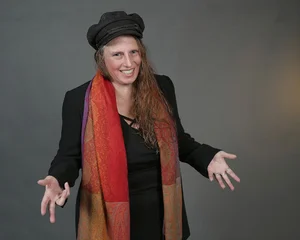
Letting Go of Hustle with Neely Kimey
Aicila: [00:00:00] Neely is an IDHD coach and content creator who helps burnt out people pleasing high achievers, unlearned ableism, ditch the neurotypical cosplay, and build self-trust and compassion by designing brain friendly systems that actually work for them.
Welcome to the show.
Neely: Thank you so much for having me. I'm so excited to be here.
Aicila: I've been looking forward to our chat and I, I really am super aligned with what you're up to. I'm sure you know, uh, we have a mutual who introduced us. We've, she's been on the show, Victoria. I could see why she thought we would have a great chat. There's a challenge that you mentioned that you see often, which is that neurodivergent adults and your obviously focus is Audi hds, can struggle with that self trust and that self-compassion, because they've been shamed frequently that I'm, I'm putting that part in because I've seen it.
Neely: Mm-hmm.
Aicila: There's a, a default expectation of how things need to be? Can you talk a little bit about that challenge and maybe how you approach it and also like an example of what that looks [00:01:00] like?
Neely: Yeah, so basically like something that I've noticed, how neurodivergent folks. And I'm saying that broadly, intentionally, because I think it applies to anyone, anyone that, identifies as neurodivergent. And that can be whether it's because of trauma or because of any number of different experiences.
But typically we experience trauma throughout our lives. And usually starting at a very young age. And we're constantly questioned or like corrected. We're like always getting those like little micro corrections. Or being told that we're, the way that we naturally operate isn't the right way and we need to fix that.
So we're, we are being told that we are the problem. That's what we're like conditioned to believe. Usually by the time we reach teenage or adulthood, we, that's like solidified for us. So what I do in my work is I really try to help folks. To reconnect [00:02:00] with, um, with their own and like rebuild their own self-trust within themselves.
And part of that is fostering self-compassion in the process and learning how to be kinder to themselves. And not take on everything as their fault or it's their responsibility to like take ownership and fix things. 'Cause a lot of times it's our environments that can and should be able to adapt in ways that feel more supportive for us rather than us feeling like we have to change.
Um, and so that's a challenge that I see in the vast majority of my clients. But another kind of piece to that, people sometimes wanna learn how to cosplay as neurotypical. And I've noticed that sometimes people will come to me, especially during our first discovery call. And I can, I'm hearing them say all of those buzzwords. Like, like they wanna be more productive, they wanna get stuff [00:03:00] done, they wanna be able to focus like all of these very like hustle oriented terms.
And if I'm noticing them saying that a lot, I always have to reset a little bit with their expectations and be like, Hey, I hear you and I totally get like why you wanna focus on goals and why you want to get stuff done. But we are gonna be really focusing on building that self, self-trust.
Again, reconnecting to yourself re and building self-compassion. And in the process, a really natural byproduct of having a more supportive life is going to be like, you're gonna be able to actually work toward your goals and the motivation is gonna be there. It's gonna be more intrinsic, um, because you're actually focusing on stuff that matters to you and that's important to you.
So it's just easier. I just want my clients to have a life of ease. And pretending to be something that they're not is [00:04:00] not the way to do that. We've been doing that now for who knows how long and it's not working, so we have to take a different approach. Yeah.
Aicila: I.
Neely: hope that answered your question.
Aicila: It did. No, that was really great. And then specifically, so when someone comes to you, what's the behavior they have, like you mentioned the buzzwords. But is there something, 'cause that might be hard, something people can recognize, like, oh, I, I've seen someone do that or I do that, and then what's the transformation that occurs when they start to understand that they can trust themselves and they can have some self-compassion.
Neely: Yeah, so a, a big, like, I'll say kind of a big example that I see of this is. Folks will come to me and it'll be very clear that they're very unhappy with whatever they're doing for work, whether that's the industry they're in, or the company they work for, they're done, they're burnt out, they're over it, and they don't feel like they have any other options.
So a big transformation I'll notice is a lot of my clients will end up. Making those big [00:05:00] scary steps, um, like quitting their job or switching industries. And that's like, that's definitely not, I like to call myself, um, a, a job quitting advocate. Um, I like to joke about that, but that's not like what, what I'm trying to convince people to do.
It's just kind of a natural thing where they're like, oh, I'm noticing I'm self abandoning a lot in this position. This doesn't, this actually doesn't feel supportive for me, even if I'm making good money, or even if, you know, I, there are certain things that I can, uh, convince myself, make it worth it. If I'm constantly just trying to convince myself of that maybe there's something else out there that feels more aligned for me.
So a lot of it's focusing on alignment, getting them, helping them to see what their values are and what alignment might even look or feel like if that's something they've never. Really experienced before. Um, so those are the big ones. But another like, kind of [00:06:00] like a smaller, more subtle change. 'cause we focus a lot on, like at the beginning of every coaching session, I ask them if they have any wins they wanna share.
Those can be big, like exciting, scary wins. Or they can be the smaller kind of like. Noticing things or like building awareness, like that kind of stuff. And so a lot of folks will come to me, you know, neurodivergent people, I'm gonna generalize here really quickly, but a lot of us are really funny. And part of the way that we express our humor sometimes is by being self-deprecating.
Um,
Aicila: Yeah.
Neely: and that's something that I, that stood out to me a lot as like. An indicator of kind of where someone's headspace is and what their world might feel like. That's usually, uh, an outward expression of some negative self-talk that they experience. And so I try to help them build awareness around when is that coming [00:07:00] up.
Is there a better, like a, a more supportive way that they can. Reframe whatever they're thinking. Um, and, and also just speaking more positively out loud about themselves, rather than putting that out into the universe of like, well, I'm, I'm just an idiot. Like typical Neely kind of thing like that, that's reinforcing something subconsciously for us.
So I'll notice that start to shift. Like they'll catch themselves during the session being like. Wait. I'm trying my best. I'm just doing my best and it'll all be fine. Like that's a really cool thing to watch happen in real time.
Aicila: Yeah, that is, that's, I love that too. I really feel that. One thing you talked about too is that you wish more people understood that coaching doesn't have to be about learning to adapt to things that are maybe causing you harm. But that that, that it can also be, and specifically with your focus [00:08:00] being neurodivergent folks, about liberation and finding a way to show up as yourself and build a world that actually works for you as well as a business. Can you talk more about that?
Neely: Yeah, of course. So a big piece of this, you'll hear me saying a lot of these words with like self blank, like self-trust, self-compassion, self abandonment comes up really often.
So when I'm talking about this self abandonment, it's typically it comes up whenever I notice that the, my clients are, people pleasing a lot, they are not really making decisions that, uh, seem aligned with their, not only their goals, but also their values and the things that are important to them. And what I really try to impart on my clients is that there's nothing inherently wrong with them as a person.
And as the way, like the way that they naturally think and [00:09:00] operate, I don't, I want to try to challenge that belief that they're the problem. 'cause I genuinely don't believe that they are. I genuinely believe that all of my clients have so many wonderful skills and strengths to show to the world.
And it's not about like your output or what you're able to accomplish, it's you're already worthy exactly as you are. Like you, whether you're accomplishing or like creating stuff or not. Just you existing makes you worthy. And so I'm, I try to kind of like distill it down to like that we start there like.
I'm constantly reminding them of that during sessions 'cause that repetition can be really important too. And so I think that folks sometimes kind of hope that when they come to me, I'm gonna be able to help transform them into some [00:10:00] mythical perfect version that they, uh, hope that they can one day become.
They're already that like. They're already that perfect version of themselves. It's really just, eliminating, like working to eliminate friction in their lives, whether that's personal, professional, all of it. And figuring out like ways to approach things that just feel more supportive for you.
Whether that means having more accommodations that feel supportive or. Getting, like eliminating people from your life who are draining your energy or pulling you down. Um, there, there are oftentimes where I'll have entire sessions that end up being dedicated to, Hey, I have this friend who I don't even know if I wanna be friends with them anymore.
They're like, X, Y, Z is happening. And it doesn't feel good. And it's a lot of just me being like. If that's not, if that [00:11:00] relationship isn't feeling supportive anymore or if it's holding you back, it's okay for you to make the choice to let go of it. They already played a, the role that they needed to play in your life, and it's okay to move on from that.
Um, so yeah, it, it's a lot to, like, we, we can cover a lot in, in a session, but it's such a, I love this work so much. It's so cool that I get to do this for a living.
Aicila: And I feel that. I'm right there with you and, and I, I feel like similarly, when I work with business owners. I'm all about tools and tactics and strategy. And you have to start, in my opinion from the way that you're doing it and, and your way is, is, is good. That's fine. There's no, you don't have to be something different. Like you got here because you discovered something or you persevered, and now maybe you're scaling. So you wanna find a way to do things a little bit differently. But if you're, if you, like you said, if you're abandoning yourself or you're not, or you're trying to be [00:12:00] someone you're not, then I'm like, no, no. Come back here. Like I, I don't know if this ever happens for you, but sometimes I feel like I end up fighting my clients for their vision.
Neely: Yeah.
Aicila: I get that you're exhausted probably because you're trying to do something that isn't right for you. So let's figure out what that is and not give up on this other thing that actually matters. And then if you need a tool that's great, like maybe. You, you know, an audio transcriber so you don't have to take notes or, you know, like there's lots of things, but it, but when it comes from that place of trusting your vision and trusting yourself, then it, it opens you up instead of confining you in my observation.
So I.
Neely: Yes, I absolutely agree with that. It's like. In theory, sure. You could come to me and ask me what tools I use or what like systems I use. Just because something might work for me is no indication of whether it might work for you. And getting to like the root of what are you naturally, how are you naturally inclined to operate?
And we try to figure that out [00:13:00] together. I'm not just gonna see it in you. We have to like suss that out together. Which is a very collaborative process. And then once we know that, that gives us a foundation of like, okay, are there tools that already exist? Do I need to build my own tool? Like what kind of systems are out there to explore?
And it's always experimentation.
Aicila: Mm-hmm. It's just so
Neely: Always. Yeah.
Aicila: something you talk about that IL totally am on board with is prioritizing fun and alignment in your entrepreneurship. And I, I think that's true for everybody. Playfulness and joy are such motivating and powerful experiences in general. And they, they really help to make the day go better.
And they, they build collaboration. How do you encourage people to prioritize that?
Neely: I think part of a big portion of how I encourage that is by modeling it honestly. For myself, I, I try to model that in. [00:14:00] My, in my business in every aspect. So like, um, I just, for, this is kind of like a silly example, but uh, it's true. I, um, am I allowed to curse on your podcast?
Okay. Um, so on, like, on a platform like LinkedIn, I'm very active on that platform. And I feel like me, shit, posting on LinkedIn of all places is part of how I draw people in. It's part of how I post things that are only for the purpose of being relatable or for being funny. Um, and it's a part of how like I try to impart joy onto others throughout their workday, and then I get joy in return.
So that's like. An aspect of it is just me modeling that and showing that I'm having fun in any of the events that I'm hosting. If it's, and also just being more like very, um, [00:15:00] honest about stuff that I struggle with too. That's also a part of it. It's not just all fun and games. Right. Um, but yeah, so it's like whenever I'm working with my clients in session, another way that I'll try to encourage.
That joy and that fun aspect of things. Whenever I notice them trying to kind of justify something that they're doing or trying to, uh, explain to me why it's worth it or something like that, I'll kind of pause, like have them pause for a second and I'll be like, do you like doing this
Aicila: Mm-hmm.
Neely: or. Or do you want to do whatever it is that you're striving to do?
Is that something you actually want to do or is that just something you have been told over and over again that you should do and just, just that simple question gets them, it gets their wheels turning and they're kind of like, wait a second, I don't wanna do this. [00:16:00] And then we can figure out, okay, why is that?
Is there a way to make this something that's fun for you? And if we can, awesome. Like everybody wins, right? But if there is not a way to make it fun for you, there might be just another approach you can take instead. Or we can just toss it in the bin like and go go in a different direction. So it's really, yeah.
I think that experimentation aspect too is a big piece of it. Like I'll, I tell people that everything we're doing is just an experiment. You're not locked in to anything. We're just seeing what feels good. So I think a lot of it's like that language too, just really always bringing it back to that as a foundation.
Aicila: Mm-hmm. I can, I can see why that would be really effective. What does success look like for you?
Neely: Success for me is a life of ease. Where I have an [00:17:00] abundance of time. Um, and honestly, joy, I, I think success for me is eliminating the Sunday scaries, which I feel like as soon as I took the leap to becoming a coach and starting my own business Sunday, scaries, like if those start to show up for me in any way at all.
That's a signal that something I need to address something. But it's so much, yeah, it's so much more rare now than it ever was prior to me starting my business. Um, so that's, that's an indicator for me. Um, yeah, just looking forward to anything that I do that I. Put in into the bracket of work for me. I wanna be able to look forward to all of that and I do.
So that's a really cool, like I'm not [00:18:00] rolling in money and that's not what it's about. I feel a lot of abundance in the work that I do and that's, I think that's success to me.
Aicila: I love that. What's your least favorite piece of a business advice, the one you'd ban if you could.
Neely: Okay, I'm gonna, all right. I'm gonna call something out here and I don't, yeah. And I don't mean this, as a dig at any particular person. I just wanna say but I, yeah. Right. No, but I am not an email person. I don't like emails. I don't like, I don't like responding to them. I don't like checking them. I always do.
I don't get me wrong, that's a, it's like a necessary evil, but I don't want, like, I have no interest in a, in having an email newsletter.
Aicila: Right.
Neely: And that's something that has like regularly been drilled into me [00:19:00] since I started my business. Oh, you need to be owning your audience, as they like to say. You need to be like collecting emails.
There's all these sketchy ways that you can covertly collect people's emails and force them onto your email newsletter. That's such a huge pet peeve of mine. If like, I sign up for something and they didn't tell me they were also going to sign me up for their email newsletter, I'm like. That's rude. Like you need consent for that kind of stuff.
And so all of this, I just imagine like everybody's inboxes constantly just overflowing with stuff that they can, they're never gonna catch up on that stuff. So I'm a huge fan of unsubscribing if I've ever subscribed to anybody's thing because I want to support them. I will eventually unsubscribe. And it's never personal.
It's always just, ah, I'm like, I'm done with this. I can't. And so what's what I've found with that? I've, I tell people that I don't like emails. [00:20:00] And I send out, very seldom I'll send out emails just to like give people a heads up. And that's the only way I can make sure to reach all of them. But I don't have an a newsletter and so I've been exploring these other platforms that almost take that legwork away from you, um, of like putting together a newsletter like Substack and Patreon, for example.
Whenever I post something, I can just act like I'm kind of posting on social media like I normally would. And then they get an email or they can opt out of getting the emails, but still they can, they'll, they can still check my stuff and see what I posted whenever it's their choice to do that. Um, so yeah, I, I'm just, I challenge this idea that we like have to have.
Emails and we have to constantly be in people's faces in order for them to remember that we exist. I don't even as someone with A DHD who forgets that people exist a lot. There's still [00:21:00] people that come into mind to me whenever I think about certain, uh, types of work I might need help with and things like that.
I just want people to naturally think of me when, um, if they identify with my content and with what I'm doing whenever they're ready for coaching.
Aicila: Mm-hmm.
Neely: You know,
Aicila: What advice would you give your 18-year-old self.
Neely: oh, this is, this feels very timely for me in my life right now. Um, I,
Aicila: No,
Neely: yeah, because I, I just stopped being 18 yesterday. No, um, um, I would say. So I've been doing a lot of like inner inner child and inner teen work, like in therapy and just in life, especially this year in particular. Um, I would tell my 18-year-old self that she's not gonna work at [00:22:00] Sonic Drive-in for the rest of her life.
Um, that's where she was working at the time, um, and that throughout her twenties. Yeah, that's gonna be an opportunity to experiment and fuck up and like figure things out. But it absolutely will get better. It like, I want her to, to know that like, don't worry, it will get better. It's not always gonna be this tough.
You're gonna find yourself when you least expect it. Um, and. Everything's gonna end up working out, and I, I truly feel that now, and I think she needed to hear that from, from a trusted adult at the time. That would've been nice.
Aicila: Yeah. That's awesome. That's a, that's a really [00:23:00] strong and powerful message. Thank you for sharing that. What's,
Neely: asking me that question.
Aicila: yeah, what's something that you're excited about in your business?
Neely: So I'm excited about a lot of things. But I, I'm excited to continue with getting more, uh, one-on-one coaching clients. That's really just kind of where I feel the most aligned is when I'm doing the one-on-one coaching. Um, so that I'm also feeling very inspired and creative right now.
And so that means I've been wanting to write more. Um, so I've been. Yapping it up on Substack a lot lately. I, I hope to continue to grow on TikTok and YouTube. I also have a podcast of my own called Intentional Oversharing, where literally the point is just. For me to either help like externally [00:24:00] process my own experiences and thoughts or to have guests on and we just talk about whatever their heart desires.
Basically just the main kind of through line with that is neurodivergence, like everything kind of ties back into that. Um, so I'm excited about all of those things. I am working on a Patreon page, TBD on that. Um, and then. I'm also, I'm collaborating with another coach and content creator named Haley Honeyman.
Right now we have a group coaching, um, offering where we meet every Wednesday and we've been offering like workshops, um, and stuff like that. Our main, both of our main niche niches, um, are Audi hds, and so I'm really excited about that. I can tell that that is growing. Um, and we're doing some really cool stuff and have some really cool ideas for, for the coming months.
So I [00:25:00] like, I could just keep going on and on, but I have a lot to be excited about and to look forward to. Yeah.
Aicila: I love that. Well, uh, for folks that are listening, how do they learn more? Follow you, get in touch. It sounds like they should tune in for Patreon and maybe get on an email newsletter in the meantime.
Neely: Yeah, I'm just at right after this.
Aicila: It's
Neely: Yeah.
Aicila: anyhow.
Neely: It's funny. Yeah, it's like right. As soon as we wrap, I'm gonna go start an email newsletter and, and totally dive into that. Um, no, you won't be getting emails from me. Um, but so I'm on. LinkedIn. I'm on TikTok. I'm on YouTube Substack. I am on Patreon. It's just not fully realized yet, but you can find me on there.
Um. And, uh, I also just wanna mention [00:26:00] I host, I have a couple of free offerings that are a really cool way to kind of get to know me and get, get to be a part of my community. Um, I have a book club, weird and Wired book club. Um, my website is weird-wired.com. Um, so you can find out about my book club on there.
We're gonna be starting a book called Rest is Resistance, um, in January, which is such a good one. Um. And then, uh, we meet weekly for that book club. It's really great. And then I also host body doubling sessions. Uh, every virtual body doubling, doubling sessions every weekday morning, um, from nine to 10:00 AM central time.
Um, and that's just a really cool space, like you can, with any of my events, you should show up exactly as you are. You don't have to be any certain way or engage any certain way. It's, it's there for you to use however feels most [00:27:00] supportive to you. So those are a couple of ways you can connect with me. Um, and yeah.
Yeah. Come check me out.
Aicila: Well, thank you so much for chatting with me today and I really appreciate it.
Neely: Yes. Thank you so much for having me. This was great. I really appreciate it too.
Aicila: Awesome.
Thank you for tuning into business as unusual, remember, in this ever evolving world of modern business, it's not about fitting in.
It's about standing out. See you next time. Stay curious, stay innovative, and always keep it unusual.