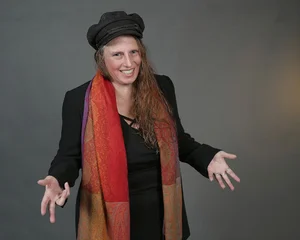
Peace Pilot with Robert DeLaurentis
Aicila: [00:00:00] Welcome to Business as Unusual, the podcast where we explore the innovative strategies and unconventional practices driving successful mission-driven leaders. I am thrilled to be joined today by Peace Pilot Robert Dees. Robert is a Navy Gulf War veteran and a real estate entrepreneur, but he is probably best known as an aviation
circumnavigate and the founder of the citizen of the World for the World Global Peace Movement. Through his bestselling books, including Flying Through Life, how to Grow Your Business and Relationships through Applied Spirituality, Robert teaches how to connect humanity through courageous action and meaningful impact.
Robert, I'm really excited to dive into your approach to scaling both a business and a movement, and to hear how you get from flying for the military to found a peace movement. Welcome to the show.
Robert: You know, technically I didn't fly in the military, Isla. Um, I was a naval officer, a lieutenant commander on a guided missile cruiser, but I didn't start flying [00:01:00] until I got out of the military. And I had the time. And the money. And, uh, those things come from business, right? A business that's working well and producing some extra money so we can go out and start chasing, uh, legacy projects.
Aicila: Yeah, that makes sense. Well, thank you. I'm excited to hear about your transformation and your story. Appreciate you joining me today.
Robert: Yeah, thank you. Um, and there's much more than just flying through life. The first book, there's a total of six. Three of 'em are children's books. Um, the trilogy is called The Little Plane That Could. And, uh, then there's bestselling books, uh, Zen Pilot Flight of Passion and the Journey Within. And then the most recent one, peace Pilot to the Ends of the Earth and Beyond.
And those last two both have audio books. And then of course, we just completed the movie Peace Pilot, which is available on Amazon Prime. Uh, apple TV and Google tv.
Aicila: Oh wow. So you've been, uh, you've been doing a couple of things in your spare time. Maybe you don't have spare time.
Robert: You know, I [00:02:00] retired at about uh, 37 and then I decided that was ridiculous and too early. So I went back to work until 43, and then I started working on my foundation and decided that. You know, making money wasn't the end. Um, wasn't about, you know, just nice cars and nice places to live and close. It was really about what you do with what you've been given.
And our goal was to go out in the world and make an impact. Uh, focusing on three of my favorite passion projects, which have been flying, spirituality, and of course, uh, business, which is really responsible for a lot of it.
Aicila: Yeah, I think that's interesting. I came up through the nonprofit world and I feel like I had to get an education in the ways in which business can be used for good. I had the prejudice and I feel like there was the prejudice of there business is always gonna be sort of opposed to good.
And I, the more that I've gotten into, the more I realize it's just not true. [00:03:00] That's a, that's a bad prejudice and it's, it's unhelpful.
Robert: You know, the first book called Flying Through Life was about incorporating spiritual practices in business. And when I started doing that, I was, uh, taking a graduate spiritual psychology class with, um, an emphasis in consciousness, health and healing, and my business tripled in size. And one of the 19 concepts that I talk about in that business is having a noble purpose.
So if your goal is to go out and make lots of money and get a fast car. Um, less likely that that's gonna happen than if your goal is to go out, make some money, and, uh, maybe improve people's lives, share what you've learned, you know, uh, promote peace, uh, happiness, joy, connection amongst people. I think your chances are better because I think the universe rewards good deeds.
Aicila: Yeah. Well, I also think a lot of things are a byproduct, right? Like if you [00:04:00] go out and pursue happiness, like we have that in the Constitution or, or the Declaration of Independence, it's really hard to pursue it and achieve it. But if you pursue purpose, I and service oftentimes happiness is a byproduct of those behaviors.
So I think there's a lot of times when we think we have to go after something directly, and actually it is usually a byproduct of something that we may not consider to be the the goal itself.
Robert: See, I am gonna go out on a ledge here and, uh, say something that's unusual and, um, it's that I think they got the constitution wrong. I think what we really want is joy. Happiness is, I got a new car, I got new clothes, I got a great house, and that's fleeting. Uh, joy is what you're born with, and it's like a little child that's walking.
Falls down and starts giggling and laughing, it's because that's inside them. And then as we move through our life, there are these barriers to joy, um, that are placed upon us. People [00:05:00] telling us, no, you shouldn't. You know, all these things. And, um, then we spend the remainder, I think, of our life trying to remove those barriers.
And there's a guy a lot smarter than me that came up with that. His name was Rumi. A famous Persian philosopher. So it's, um, rooted in history. Uh, but I think that's, you know, we want joy and happiness. But if I had to pick one, I'd take, uh, joy.
Aicila: Yeah, I would agree with you on that. So what's a challenge that you see in the work that you do?
Robert: I, um, well, the, the challenge I think is. The hardest part of, I think what we do at the Deis Foundation and most recently at deis International Airport is, uh, finding the people for our team. So we need fellow believers, um, people that support our cause. Uh, when I did the polar and equatorial circum navigations, I would always say when I was interviewed that it was a mission of many.
Not a mission of one. So [00:06:00] there are some people that share your passion and they'll come on board. I have some, what I call super volunteers at the airport, and these guys and ladies are amazing. They work, uh, very, very hard, sometimes harder than me, and we're joined in this common cause too. Improve our community to make the place safer for pilots to show, you know, the 14,000 private airports in the world that they should open up to the public. Which they don't always want to do 'cause there's some challenges with that. But you know, building that team that supports you, then you of course get the leverage. That's, this is true in business as well, right? You can do a lot more with a team of capable people because everybody has different skillsets.
And if you're all moving in the same direction, then ultimately you will, you know, get to your goal.
Aicila: Yeah, well, it's, there's a, a proverb, right? That if you wanna go fast, go alone. If you wanna go far, go with your, your group, your team. And so, and it's. [00:07:00] I often see, I work with a lot of entrepreneurs who are on that cusp of, they've gone, they've figured something out, they're building it, and now they have to expand into that team.
And, and there are things that you give up. You can't be quite as nimble and you can do more, you can have a bigger impact. The things that, that people take on on your team, they can get more specialized and focused, give it real attention. So I feel like that's, it's it, but it is a balance, right.
Robert: You know what I like about the team stuff? I mentioned that everybody has different skillset, but there's a tremendous opportunity to learn too.
Aicila: Yeah.
Robert: Um, one of the things I've learned from some of my volunteers is generosity. one of these guys, his name Skip, he was a asphalt paving guy for 28 years. I never saw anybody work so hard, and I never had anybody teach me so much about what it would take, you know, to make our runway wider and safer.
Um, not necessarily what I would've originally, uh, set out to do 10 years ago. But you know, in this moment in time, it's pretty [00:08:00] cool and I think that passion is contagious. Right?
Aicila: Mm-hmm. I think, and I personally also, I just think who you work with makes so much more of a difference than anything can be enjoyable with the right company, even, even getting your taxes ready.
Robert: I haven't experienced that one yet, but I'll take your word for.
Aicila: Uh, I was like, I'll put that out there. I think it can be, uh, what's something you wish.
Robert: Um, I wish more people knew about our movie, um, peace Pilot. Uh, and I don't say that 'cause I make any money. It all goes to the foundation. But, um, what we accomplished I think was truly amazing. Uh, you know, taking an aircraft that's designed to fly for six hours, modifying it so they could fly 18.1 and take it to the South and North pole conditions it never was designed for and connect.
Uh, the north and the South Poles, the two places on the planet where pieces always existed. And it wasn't just about flying around and dealing with [00:09:00] the incredible challenges, it was about, um, science as well. I carried a, um, a NASA wafer scale spacecraft, um, which was intended to be blasted out into the, uh.
The universe with an electromagnetic cannon and then used laser, uh, using lasers pushed even further. But I had the first one taken outside the lab and it was designed at uc, Santa Barbara by some amazing scientists funded by nasa. We also did a plastic particle experiment designed by a guy named Dr.
Dmitri de Hane. And what we did is we collected microfibers all around the planet, including over the poles. And what they determined was there was, uh. Sort of islands in the, the sky of plastic or accumulations, more microfibers over the poles than over the equator where all the population is. So that tells us a lot.
It explains why and how all these microfibers got on, [00:10:00] uh, all parts of the planet, including every body of water. And I think, uh, Dmitri's, setting himself up nicely for a Nobel Prize. Um, with respect to that, uh, we also did some tracking, uh, special tracking all the way around the planet. And then we used biofuels, um, over the poles for the first time.
And when I say we, again, it's me and the aircraft, the citizen of the world supported by many, many people on the ground as well.
Aicila: Mm-hmm. That's pretty, that is pretty awesome. Um. If you succeed in your goals, what would be different in the world or the industry that you are engaging in?
Robert: I think, uh, if I succeed, uh, people will understand that, uh. That there are more similarities than differences amongst people. And when I was traveling around, uh, stopping in 23 countries, interviewing people about what does it mean to be a citizen of the world, and how do you find peace in your world? You sort of scratch your head and you go, [00:11:00] wow.
Like this person on the other side of the planet who's living in totally different conditions, who's in a different socioeconomic group. Um, has, uh, you know, different religion, uh, different family structure. They're actually really a lot like me. Like we all want the same things and it's easy to, you know, make a nasty post or say something that's not so nice.
But when you're face to face with somebody, you, you see the connection, right? And you see that you're human. And that's what we talked about was that there was this oneness amongst all people. And it's not just people I came to find out. Um, I had a situation in Dakar Senegal where one of my fuel tanks burst inside the plane while I was pooling, and it sprayed jet fuel into my face, my chest, my arms, my groin, and my legs.
And I fell backwards out of the plane expecting it to catch on fire. There was a lot of hot equipment in the plane. I had just, uh, flown in from Brazil [00:12:00] and, um, before I hit the ground, I had this thought, thank God I at least made the South Pole. You know, on an earlier leg and, um, I can be true to my sponsors.
And, and it was funny 'cause I hit the ground, I yelled for water for my eyes, which somebody handed me, and then I jumped back in the plane. And what I realized is that the mission was more important than me.
Aicila: Hmm.
Robert: Um, you know, if you would've asked me if I would've done that, no, I would've said I wouldn't run for the Hills.
Right. Try and get away from that. So I guess the point of my story is just that, you know, life throws us these, uh, unimaginable challenges and we all end up suffering at some point. And that's actually the one thing that all living things experience is suffering. And it's a very Buddhist concept. You know, animals suffer.
You see a three-legged dog or you see a bush that's, you know, struggling 'cause the bugs are getting it. So [00:13:00] in the process of, you know, finding these connection points amongst people, we were very surprised to find that suffering is a key element and nobody's, you know, safe from that. Everybody gets to experience that sooner or later.
Aicila: Yeah.
Robert: long answer, but, um.
Aicila: Yeah. That's worth it. No, I appreciate that. And, um, what, so how would you talk about, like, is there a, an experience, you just shared that story. So, but like in terms of No. I am like, there's a, a way that I, I apologize. I've like, um, didn't get a chance to really read things, so some of my questions are a little bit off, off book. Um, how about what is a business wisdom that makes you roll your eyes every time you hear it?
Robert: Uh, excuses. [00:14:00] Um, in the Navy, one of the more important lessons I learned was no excuses. In fact, when you were asked to do something and then somebody would say, well, why didn't you do it? Or. You know, why didn't this happen? And you'd start to give an excuse. Um, a bunch of people would usually chime in and yell, no excuses.
And that's kind of how I've run my business, and that's kind of how I've run the foundation and the circumnavigation. Um, we're not looking for excuses or looking to get stuff done, and sometimes it's really, really difficult and taking responsibility for those things even when they. You know, seem like maybe they're outta your control is an important part of getting stuff done.
So, um, in fact, recently dealing with some stuff and I said, look, we've run out of excuses. There's no more, we just have to get this done now. And, um, I, I think that's so important. So important.
Aicila: I [00:15:00] agree. Oh, I feel like I see that it, there's a difference between acknowledging reality or dealing with your circumstances and seeing the first bump in the road and deciding, okay, we're done now. Like there's a, there's a very different. Um, way that I've experienced that in myself and in my teams and in the people that I work with.
They don't come with, oh, it couldn't happen because of this. They come with, these are the solutions, or these are the ideas, or these are the workarounds. I always say I'm the queen of the workaround, but, uh, yeah, it is a, I think that's a good idea.
Robert: Yeah, that's a great, great plan too, to have a solution, not just present the problem.
Aicila: Right. Well, people are really great at finding problems. That is what I've learned in my years is a lot of people like, and some people like they're experts at problem finding, and we need those people a hundred percent. They, they help us make the necessary plans, but I'm much more interested in how do I get from here to there than what are all the things between me and here and there.
Um, so I feel that with you. Let's [00:16:00] see. So what, in terms of the this, so you created this foundation, you did this flight, you've created a documentary. These are all kind of big endeavors. And there are lots of people that I think, especially now, that are really aware that, that we, you know, we're more connected in some ways than we ever have been and more isolated by that quote unquote connection.
What inspired you to take this action? There's something in you that called you to this, that was specific to you. Do you know what that is?
Robert: Well, maybe a couple things. Um, one of them is I had successfully done, uh, e equatorial circum navigation, and. Lemme start over. I had successfully done an equatorial circumnavigation in 2015, and I had completed that. We were successful at our first attempt, and then people started asking, well, what's next?
And I started thinking, well, what's the most difficult, challenging thing I could do with an airplane? You know, following on that earlier trip, and the south and [00:17:00] north poles are so dangerous, so deadly. Um, I used to say three times harder, and it actually took us three times longer to prepare for the South Pole, even with having more sponsors and more experience and more people, uh, and more, more resources.
So, um, you know, taking on a big challenge. It hadn't been done in this way before. And then, um, I don't know, I, I'm at this stage in my life, uh, where I want to create a legacy. And, um. You know, we look for things that'll last and keep the, the name alive. So the books, the movie, uh, the records, the science, um, and of course, uh, deis International Airport is set up to be funded for the next a hundred years through the foundation.
So, um, I think there's a bigger responsibility that people have. Right? A lot of 'em. [00:18:00] Struggle. They work hard, they have success in business, and then they go, I made it. You know, my dad used to tell me, why don't you just join the country club like all your friends and you know, not take these risks? He never really understood it, I think, unfortunately.
But, uh, I think there's a greater obligation to the planet, to people to maybe take some of that wisdom and resources and reinvest it. And make the world a better place. And somebody told me that I had a tremendous amount of karma that I could, um, benefit from at this stage in my life because I had done some good things.
And I think I mentioned earlier, I think the universe rewards us for our good deeds. And my life has continued to get better and better. I just had a big birthday the other day and people were asking me about, Hey, how does it feel to be 60? And I said, well, my life has continued to improve. So I don't really care so much about the number, but the fact that, uh, my life is, [00:19:00] um, something that I'm so grateful for, you know, and I'm in the space of gratitude.
So, um, I don't know. I, I think there's a life beyond business.
Aicila: Well, and so do you feel like that's always been there for you? Like what did, why didn't you just join the, the country club? Like you have this idea, but where did it come from?
Robert: Have you ever been to a country club?
Aicila: I mean, I mean, I'm just saying like, whatever your equivalent, you know. No, I, I, I don't think I have, so maybe that's what I, I need to go check that out to really understand the, the, of appeal, but.
Robert: I didn't find 'em all that exciting. You know, those weren't really my people to hang out with. Um. I don't know. Uh, I just wanted more outta my life and I was blessed to get some resources of time and money, like I mentioned earlier. Um, and I. I don't know. I just wanted to live a, a different life, right? You don't have to live the same life as [00:20:00] everybody else.
Uh, you can have different experiences. And I thought, what the heck? We'll give, you know, some things a try, some of 'em will work. Uh, some of 'em will fail miserably. But in the process, we'll learn and have a, a pretty good time. So.
Aicila: Mm-hmm. That makes sense. What advice would you give your 18-year-old self.
Robert: Uh, what would advice would I give? Um, actually the advice I would give would be that do something you love. I think, you know, you hear that a million times and I always discounted it. I thought, oh, well, you know, that's not gonna really take you anywhere. Um, for me, like flying a plane, let's say I decided I wanted to do that at 18.
I could be a commercial pilot and retire, and then that would kind of be it. Um, if I just wanted to do fun stuff, um. But in, can I start over?
Aicila: Yeah, please do. Absolutely.
Robert: and could you repeat the question? I think I got lost there a second.
Aicila: [00:21:00] What, what advice would you give your 18-year-old self.
Robert: I would say to my 18-year-old self, really pursue what you love. And I had heard that when I was 18, but I was under the misconception that I just needed to make money. I needed to get ahead, I needed to compete with these other people in the world and I wasn't gonna do it doing something that I loved.
Um, but in hindsight, now I'm doing something that I love. Right now I'm combining my three passions, which are flying, uh, spirituality and aviation. And I think if you don't truly love what you're doing, you're not gonna put as much effort into it. You're not gonna work the extra hours, you're not gonna spend that extra time thinking about, you know, how do I solve a problem?
Uh, it's, it's really important to have that extra energy and drive that comes from loving what you're doing.
Aicila: Yeah. Did some like what, talk more about the competition piece. Like you, you [00:22:00] felt like you had to get out there and hustle and win, and now it sounds like you've maybe, maybe redefined winning, but I'm curious what that transition was.
Robert: Well, you know, it's interesting. It's, that's a great question. Um. If you go to business school, chances are you're gonna be reading some, uh, Harvard case studies and all the business schools use them, right? And we talk about them. We come up with solutions, and then you graduate and you have the same education as the person sitting to your left and to your right, and then you can battle it out.
What I was looking for was an edge, and for me, what the edge was was incorporating spirituality into business. And that was just enough to help us win, um, on a pretty regular basis. And the concepts that I talk about in that book, flying Through Life, are those things. Uh, one of 'em, for example, is completing incomplete cycles of action.
And I [00:23:00] had a situation with a business partner. We exited kind of on. Bad terms and I probably got a better side of the deal. And several years later I was still thinking about that. And I went back and I made the situation, right? This person I made one of my investors, um, you know, grabbed what I thought I had gotten, that maybe I shouldn't have paid it back and then set them up, uh, long term as an investor.
And I remember telling that story to somebody in, uh, one of my classes. And I wasn't saying it as a point of pride, it was kind of, um, I was embarrassed that I had not done the right thing the first time, and this person came back to me and said, Hey, I wanna invest with you. And I said, why would you wanna do that?
I just told you how, you know, I handled this situation. And, and she said, yeah, but you went back and you made it right. I got some money. Uh, she became another one of my, um, early investors and we made a lot of money together. [00:24:00] And you'd think, okay, that's the end of the story, right? Happy ending. Well, it turns out she told her boyfriend who was an attorney and he invested as well.
So he made a bunch of money. I made a bunch of money. Eventually they got paid off. But, uh, I think that cycle was then completed, right? I hadn't let it linger and it wasn't on my mind. It eventually got turned into a positive. So there's little stories like that, um, that involve the, the spiritual component of business.
And I, I think very rarely do people. Think in terms of, you know, what is the spiritually correct thing to do? And that noble purpose was another thing, um, that falls under that list of 19 items. Authentic communication is another one. I had a situation where we're bringing some new software on to manage some of my rental properties and the coding to get it set up.
There was some mistakes because we had entered like, um, 1931 [00:25:00] and a half. Let's say Market Street. Well, a computer doesn't know, 1931 and a half it, it needed to be 1930 1.5. So that, you know, turned the software upside down. And I was arguing with the president and you know, there's a mention of a lawsuit and she just shut down completely.
And I said, you know what? I haven't sued anybody in years. I'm not gonna sue you, but we're scared and we're hemorrhaging money and we need your help. Desperately, and he said, I'll call you back in five minutes. And five minutes later she had two coders, one sitting on each side of her and they just started fixing the problems and we were finished with it all in about an hour and saved, you know.
Thousands of dollars and letters from attorneys, and it would've taken six months and in the end everybody would've just gone their separate, separate way, upset.
Aicila: Hmm.
Robert: And the phone call ended with her telling me about, you know, the fact that her father was coming into [00:26:00] town and she was excited and, uh, happy to be working with us and glad we could work through the problem.
So a simple concept, you know, putting your egos aside and speaking authentically. Um. Was another thing that, you know, translates into dollars, right? Like
Aicila: Mm-hmm.
Robert: So yeah. So you have to have an edge, I think.
Aicila: I love that. I really love that. Thank you for sharing those, those stories. They, um, they're very touching. I, I appreciate it. Well, is there anything coming up, obviously of your movie out, can people watch it or like they could watch it on Prime? Is it showing anywhere else or what's that?
Robert: Yeah, on Apple TV and Google tv,
Aicila: Okay.
Robert: it's gonna cost them, it's gonna cost them big bucks. I think it's like 3 95 or 2 95, but, um, we think it's a, a excellent movie. And you know, when I watch it, I'm supposed to watch it with one of my [00:27:00] friends, uh, this Friday. But, um, it certainly takes you through the range of emotions.
So I think you'll laugh. I think you'll be sad. I think you'll cry. And I think you'll be inspired. And when I watch it, uh, and I've watched it many times, um, I just think, God, who is this crazy person? Because it cannot be me. And it sort of reminds you that, that you sign up for stuff. That you have no idea, you know what's gonna be involved.
And it gets more complicated and more involved and more expensive, and there's no way you can walk away from it once you start. Right? So it gets to the point where it's overwhelming and there is many moments in peace Pilot. Um. I like to say, you know, sometimes in a situation you get lucky and then, uh, if it happens a second time, you're really lucky.
Three times you're really, really lucky. And if it happens like 10 or 20 times, you need a better [00:28:00] explanation
Aicila: Yeah.
Robert: uh, that's what you'll experience with the movie. And I think for me the explanation was this noble purpose that, you know, I was being guided and um, the universe was kind of behind it. And you can throw in any word you want, you know, any religious figure, God, whatever.
But I think it was, um, important and that was my mission in life, was completing that. The thing that scared me though was that, uh, I was being, becoming stronger, more focused, um, almost prepared. And I thought, oh my God, what am I being prepared for? That could be more difficult than this. 'cause there were times when.
You know, the tears were just streaming off my face. Um, when I was headed back from the South Pole, for example, uh, I haven't, this isn't even in the movie. Um, I, I didn't think I had enough fuel to make it back and it was gonna be really close. And I texted my mentor, a lady named Susan [00:29:00] Gilbert. I don't think I'm gonna make it.
Aicila: Oh no.
Robert: Um. You know, I can't, I can't imagine what it was like to receive that. And I ended up, uh, landing with about 15 minutes of fuel on a 18.1 hour flight. So, um, you know, there's terrifying moments, but it's, uh, a testament to persistence and faith and, um, you know, just, uh, having a, a great cause.
Aicila: Well, and you're pointing to something that I wanna highlight because whenever we've accomplished something, it's obvious that we would've done it. And we often look at things, whether it's in business or in life or in in culture, and, and we think, oh, that person, they achieve this because they, they, they were the one or whatever.
But the reality is whenever you start something truly. Transformational or big challenging, you are always walking into it with a lot of uncertainty [00:30:00] that you don't start out with that confidence in the the, the achievement per se. You maybe have confidence in yourself, and you have confidence in your persistence or your purpose, and you're gonna give it a hundred percent.
But it's not guaranteed. And I feel like sometimes we wanna guarantee, and the reality is the the most amazing things that I know I've accomplished or the people that I know have accomplished, there's no guarantee that it was gonna work out. There was just their faith, their commitment, their persistence, and their drive to do it.
Robert: You know, that's a great point. Um, I remember, uh, I set the last, you know, the polar circum navigation up so that. I would cross the South Pole in the first part of the trip and that was gonna be the hardest part so I could get past that. I wouldn't have to worry about it for months. And after I completed the South Pole, uh, I was talking to our, uh, Nat Geo cinematographer and I said, the rest of this is gonna be a global victory lap.
And he just laughed, [00:31:00] like belly laughed at me and I was kind of confused and pissed. And, um, it turned out that the rest of the trip was a. Global ass kicking. And it was just one situation after another, after another. And I just thought to myself, my God, when is this gonna end? You know, how much freaking torture can I take?
And that fuel leak that I mentioned before, the fuel, the tank that burst, um, when I would swallow. Because there were still a hundred gallons of fuel underneath the floorboards. We couldn't get out. I was flying from country to country like that. When I would swallow, I could taste jet fuel in my throat. I would burn my eyes and my sinuses on every trip.
And, uh, when I would get out of the plane and go, you know, to my hotel, like people would go, what's that smell? And I'd say That's, which stands for Jet A? Um, I said, it's a type of cologne that we pilots wear.
Aicila: Oh my [00:32:00] goodness.
Robert: And, uh, they looked at me like it was just weird, you know? But, uh. There's some funny moments, uh, for sure. But yeah, and I certainly wasn't humble, right. And I've had other experiences like that getting ready for the trip and the, I just, every time I, I got humbled in some way, and now I'm a little more cautious when I say something like that.
Like I start waiting for something to fall in my head or something to happen. But, um, yeah, you gotta, you gotta be humble too.
Aicila: Yeah, it's true. I didn't think pilots were known for being humble, though. That's not a, that's not an equation I've ever heard.
Robert: Yeah. And if I,
Aicila: That's good. uh, are you doing any watch parties for the movie? Anything where people can hop in and, and hear you talk about it or anything like that?
Robert: you know, I do, uh, occasional speaking engagements, um, [00:33:00] the Boeing Museum. did the launch and I came and I spoke, uh, and then, you know, people watched it and then I said some more words afterwards. So it's kind of on a case by case basis. It's an hour and 52 minutes long and. Part of our kids program that I haven't mentioned so much is, um, that on the island where I live, part of the year would be island just off the coast of Seattle.
We have, uh, a few high schools. So we're gonna put together a program where the kids get to see the movie for free at their high school, and then I'll talk about it and they'll come to the airport, they'll get to meet our training plane, which we've named Sugar, which is a fairly advanced training plane.
Beautiful plane. Latest avionics and technology. And you know, I say sugar is sweet. It's a beautiful plane that they'll get a ride in after they do this hour tour, they'll get to meet a mechanic, they'll get to meet a flight instructor, they'll get to meet our RC club, [00:34:00] uh, president, and then they'll come back another day for the third part, which is to get the fly in sugar.
So, um, I forget where I was going with that, but, uh, certainly. What's that?
Aicila: You were, I just had asked if you were doing watch parties and you were sharing the kids program 'cause we hadn't talked about it so.
Robert: Yeah. So, um, you know, that's sort of unfolding the last year I've been doing some podcasts and getting some articles written on it and, uh, doing speaking engagements. So I love to do that. It's fun. It's really. Uh, cool to see the response that people have. Uh, hour and 52 minutes can be a commitment for some people, but, um, I think it's well worth it.
I have not gotten a bad review on that movie, so.
Aicila: I was thinking, I'm gonna, I'm gonna get it. And what I do, I have a friend and I live in separate states. And so what we do is we, we watch things and then we talk to each other on the phone. So that was like, and Edward James almost live tweeted when Twitter first started. You could, [00:35:00] you could sync up with him, uh, to watch Blade Runner.
And then he tweeted out things from like behind the scenes and stories while you were watching was, uh, yeah, it was really fun. It was back before, right in the beginning of Twitter. There were some pretty cool things that happened. That was one of them. So
Robert: a great idea. I like that.
Aicila: something like that. I don't know. Anyhow, I have ideas, but, so folks that are listening, how do they learn more?
Follow you, get in touch.
Robert: They can, uh, find me on Facebook, on Instagram. Um, there's a bunch of different, uh, social media platform forms that we're on. Uh, or you can go to the website and type in pull to pull flight.com. There's uh, peace Pilot the movie.com. Which is a way to get, uh, to some of those links. Or you can just type in Robert Dees Peace Pilot or Zen Pilot.
Uh, we're all over the place and if you wanna do some reading or watch videos, the website, uh, will keep you busy for days, if not weeks.
Aicila: [00:36:00] Wonderful. Thank you so much for taking the time to talk to me today. I really appreciate it.
Robert: Thank you. I appreciate your interest in our project and um, your questions are great. They helped me sort of get clarity as well, and, um, it, it keeps our, our passion going, so thank you.
Aicila: Thank you. Awesome. I see give it.