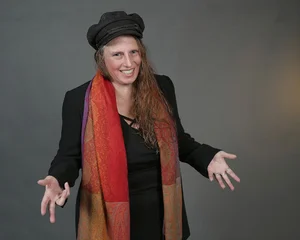
The Business of Freedom with Maureen Gilbert
[00:00:00]
Aicila: Welcome to Business as Unusual, a podcast where we explore the innovative strategies and unconventional practices driving success for mission-driven leaders. Joining me today is Maureen. She's an author and entrepreneur who completely redefined her version of success. Back in 2002, Maureen had it all on paper: a six-figure corporate career, a canal house in Amsterdam, and a baby on the way. But despite a life that looked picture perfect on the outside, she realized she lacked the time, peace, and definition of success that actually fit the life she wanted to live. she did something highly unusual. She walked away. traded quarterly reports for serving breakfast, bought a boutique hotel, and set out to build a business around her life rather than the other way around. Now she's written the guide she wishes she had back then to help other women who are asking, do I really do this differently?" [00:01:00] I am so excited to have you on the show, Maureen, and to dive into your story.
Maureen Gilbert: Oh, thanks, and thank you for having me
Aicila: , Let's start with you have published your book The Business of Freedom. Is that...
Maureen Gilbert: Yep. Yes.
Aicila: that?
Maureen Gilbert: I know. It's there. The book is out
Aicila: Nice. So, so it's ready. People can go grab it anywhere, anytime.
Maureen Gilbert: Thank you.
Aicila: All right. Um, now let me dive in a little bit. So I've talked about this on the show a little bit, like the ways that people sort of self-exploit. You write about how we carry systems built by someone else into our business, and how do you see this, like, or these systems showing up most often in women who think they've finally found freedom by coming, by becoming their own boss?
Maureen Gilbert: Yeah. So I think one of the things that surprises people when they talk to me is that I'm not saying that I'm against [00:02:00] people being solopreneurs, but in some ways it's, um, it's not much different than having to show up and get a paycheck from a corporation. Because you're still tying your income to hours put in, right?
If you're, if you are not showing up and whatever it is, coaching or podcasting or, uh, you know, uh, you know, being a, a hairdresser, you know, whatever that, that looks like. Even, you know, I t- I talk about how, you know, some very high-paid professionals, think of lawyers, um, think about doctors, right, who might have their own practice.
It might look from the outside like they are entrepreneurs, but for me, what I really am trying to get, well, all people, but women in particular, to realize is that as long as your income is tied to your hours, there's always going to [00:03:00] be a certain lack of freedom.
Aicila: Yeah.
Maureen Gilbert: I think it's important because, oh my gosh, there's so many podcasters out there, and, uh, so many people can make it sound like, you know, just, you know, you can just buy a business for zero down and seller financing and, you know, only work 10 hours a week, you know, whatever that fantasy is that they're trying to selling.
And I will be, you know, very upfront and, and very honest and practical with people that owning your own business is, is work, and at times it's very hard work, right? And I, I talk about that in, in my story how, you know, I think m- in the very first chapter I talk about how, you know, it's like 11:00 at night, I'm in bed.
I would, you know, my kids are in bed sleeping with me, and the phone rings. And when it's your own business, as, as you know, being a business owner yourself, it's not like you can be like, "Yeah, I think I'll, you know, call in sick," or, you know, "I'll just let it go." It's like no, [00:04:00] you're the one that shows up. So from that standpoint, right, I don't want to, to sugarcoat what that, quote, "freedom" looks like.
It's not, you know, Instagram freedom. However When you start to think about decoupling your income from your hours put in, something fundamentally shifts in your life. And I think in particular for women, but again, any, you know, there's so many dads out there that are highly involved with their kids. But for really any parent, once you have something else that you are needing to take care of, right?
All of a sudden, creating that time freedom I think becomes so much more important.
Aicila: Yeah.
Maureen Gilbert: seeing, uh, again, people... I think I'm a little bit older than you. Uh, but you know, so I'm, I'll be 56 in a couple weeks, and you and, uh, a lot of, uh, you know, [00:05:00] friends, uh, you know, former colleagues, now they're going, "Oh, my aging parents need my time and help."
Right? So it doesn't necessarily just apply to parents taking care of kids. Whether you have even your own, um, health crisis, right, which happens all the time, and all of a sudden it's like, "Oh, wow. If I'm not showing up, I'm not getting paid?" And, and that's what I think is both interesting and surprising is that for me, in some ways it doesn't matter if you're working and making minimum wage or, you know, a lawyer billing out at $450 an hour, right?
They're, they still have the same fundamental problem. Unless they are showing up and, and billing out or working, they're not getting paid. And so I think that, in and of itself, is something that people don't often think about. Like, "Oh, I wanna get some time freedom back, and I also want the security of income."
And if they're [00:06:00] completely linked together, you know, how does that work?
Aicila: Great. Well, and something that, that you talk about is, you know, there's this massive assumption in traditional business that success equals scale. And I
Maureen Gilbert: Yes
Aicila: when you... How do you help women untangle their worth from that pressure to constantly 10X their business and instead build a structure that doesn't require self-sacrifice?
Maureen Gilbert: First of all, it's really hard. And, uh, I, again, I suffered from it as well. I talk about in the book when I went back to my MBA reunion, and I was a little bit embarrassed to go back, right? Because a lot of my classmates had continued down the normal path and had, you know, large scale businesses they had started or they had stayed in the corporate world and had achieved a great success.
And here I was with, you know, what was a, a modest, a small business, and I, I almost felt like [00:07:00] embarrassed, like, you know, this is not, uh, what you would have as an MBA poster child, if you will. Yeah. The thing that fascinated me and surprised me is how many people wanted to talk to me about how I had done that and, you know, they were fascinated by the lifestyle and the aspect of, you know, being able to step out of that traditional role.
So I guess to partially answer your question, I'd say it's not easy. The thing that I think- Yeah ... is the most important is that we start having that conversation, right? Where... And that's where I really want people to come together in community to be able to say, "Hey, uh, this is not working for me. I want to do something different."
And it's scary, and it's hard because everyone else is, you know, doing business as usual. Uh, which is also one of the reasons I love your podcast, right? Because just by having those conversations and [00:08:00] normalizing that one path to success is not going to work for everyone. I think, um, the more that we can talk and support each other, the, the easier it becomes.
Aicila: Yeah, no, I really feel like that's true, that we need to see there are other options to stop feeling that sense of why don't I, why doesn't this work for me? And it's
Maureen Gilbert: Yeah
Aicila: never intended to. And I-- there's a lot of chaos right now in a lot of different ways and, and there's obviously negatives to that.
I think one of the positives is that people are questioning the way things are and the way things have been done, and really trying to sort out what does and doesn't work for them. And I'm hopeful that by that part of it will create more thriving opportunities for people instead of being sort of locked into things that didn't work, but feeling like that's all I've got.
Maureen Gilbert: Mm-hmm. No, absolutely. Well, and the other thing which is interesting too is I think, uh, what's happening is a lot of the basic assumptions are really being turned on their head, right? Uh, a steady paycheck is not [00:09:00] so steady anymore. And yet if that's all you know or you think that's all of your options are, then it becomes very scary.
But the more conversations that people have about no, there, there are alternatives than the traditional path, I think, um, it's exciting because then people can start looking at alternatives than what they had on- you know, were, what they thought was available to them.
Aicila: Something that
Maureen Gilbert: Excuse me.
Aicila: that I thought was really interesting, I'm hoping you'll talk a little bit about it, is women only receive about 2% of VC capital. That's venture capital. And we do... Def- there's definitely a perception that we have more of a seat at the table, and clearly, if that's true, we're still missing something or struggling.
Can you talk a little bit about ways, like maybe why that happens and, and ways that we can be more successful?
Maureen Gilbert: Yeah, absolutely. Uh, so just to give a reference point, so I joined a venture capital fund called Masters Fund three years ago, and, [00:10:00] uh, they only invest in female-founded companies. There needs to be at least one founder that has at least, you know, 50% of the, the equity in the company and is actively working in it.
And it was there that I realized just how much disparity there is in the venture capital world in terms of capital going to women. Now, the interesting thing is that women though led companies actually are outperforming male-led companies by a huge factor. So you would think that smart VCs were like, "Hey, you know, we want return on our capital.
Let's, you know, go where the performance is."
Aicila: Right
Maureen Gilbert: what I dis- what I discovered, which is really interesting, is that even though I'm sure a lot of venture capital people would say, "No, we, we look at the spreadsheets, we're looking at the P&Ls," right? That's profit and loss. "That's how we make our decisions." A lot of decisions are made emotionally, and they're made by that reptilian part of our [00:11:00] brain that seeks familiarity.
Because it's not just women that are underrepresented. It's minorities, right? It's, um, you know, people of color. Like, if you take a look at what i- where the capital is going, it tends to be to tall, so, you know, over six foot, baritone white men. And, and it's not to say that there's, um, uh, that there aren't some great men that fit that category that also have great businesses that should be invested in.
But what's interesting is that our brains seek familiarity, right? And so if you look at the traditional venture capital world, and, you know, most of the founders also fit that description, all of a sudden their brain goes, "Oh, this... I don't know why, but I trust this guy more. It seems like he has a better handle on his company than the woman or, you know, the, the Latino gentleman," right?
I mean, it's just [00:12:00] interesting how it's an emotional decision that really doesn't have anything to do necessarily with what the numbers actually or the performance, uh, demonstrates. Right. So-
Aicila: are there ways that we can, as women, make ourselves more familiar or
Maureen Gilbert: Well, one of the things that I, uh, coach some founders on is that there are some, I think, biases in that, that women can train themselves to do better, especially, for example, like in pitch competitions or when they're working towards, uh, raising funds. For example, one of the things that I think makes women, uh, unique and why I like working with them is that we don't tend to oversell ourselves.
We tend to be forthright and, and a little bit more honest. Whereas, um, men in pitch competitions, uh, are going to be much more inclined to, you know, promise the world, [00:13:00] right? So it's interesting because when I am at a pitch competition and I hear someone being very, you know, measured about their growth, you know, prospects, I immediately go, "Oh, that's great.
I trust you because you're not, you know, telling me we're gonna have a, you know, 100X growth in, uh, three years."
Aicila: Right
Maureen Gilbert: But what, what's interesting is that isn't where the money often goes. So I mean, part of it, I think, is learning to, uh, know your audience and what they wanna hear, and being able to present yourself in a way that, not to be disingenuous, but also to know that, um, it's okay to not have to, you know, uh, play by the rules that you would normally play by if you're trying to achieve a particular outcome, if that makes sense.
Aicila: It does.
Maureen Gilbert: Yeah.
Aicila: like you said, I, I, I think of it sometimes as translation. You know? Like, I have
Maureen Gilbert: Yeah.
Aicila: my language into language [00:14:00] that, that you c- 'cause if we try to make people do extra work, you can't assume they're gonna step to you, especially when you're pitching. You have to step to them, and
Maureen Gilbert: That's a great word
Aicila: way it works.
Maureen Gilbert: Yeah, translation is a great word. It's like you're speaking a foreign language,
Aicila: Yep
Maureen Gilbert: You're going into the VC world, so learn to speak in a way that they're going to go like, "Oh, okay, great. This is a company we can invest in."
Aicila: So talk about, moms don't necessarily need better time management to thrive as entrepreneurs, and I, I often talk about the energy equation, how our success requires managing your time, your money, and your energy.
Maureen Gilbert: Mm-hmm.
Aicila: So what... When you talk about that, what are the actual resources or systems that you have seen?
Obviously, you can't get into too many, but maybe one or two that would really help, that you've seen really be helpful protecting energy or helping them to thrive as opposed to this time approach
Maureen Gilbert: Yeah. [00:15:00] So one of the reasons that I encourage, women in particular to buy an existing business is that there's actually a lot of built-in safety in that. Because even though in theory what you're buying is, you know, obviously a business that does certain things, you're really buying cashflow. You're, you're buying income.
And as much as I have so much respect for people who start businesses from the ground up, as a working mom and also having been a, a solo parent for so many years, I never felt like I had the, the bandwidth to wait for the time that it often takes to really get to the point where a new business is, is making enough money that you can live off of.
Whereas, so that's one of, I'll call it, the hacks of if you buy an existing business, you've circumvented, you know, what can be the first, say, three to five years of real lean years and [00:16:00] scarcity and uncertainty, and you're buying effectively that time back and getting to the point where the business is already making money that you can live off of and put into your pocket.
So I think that's a, a huge thing to, to consider. Um, and again, for me, it combines the two things that I think are so important, which is the, the security and the freedom, right? The, the other piece of it is, um, when you're buying an existing business, if you think about it, what you're buying is a system, right?
And, and that's the other piece of it, right? Is that I think it's so easy to think, "Well, if I own a business, I have to be able to do everything. I need to know everything." And it's like, no, you're buying a system for how to make some money, and it's really by understanding the system where there might not be a system, maybe putting one in place, and making sure that you have both the [00:17:00] systems and the people in place so that it's not all on you.
And then the third thing, which I've, I've gotten better at, uh, is, uh, knowing just when to say no, which I know sounds like, of course, simple, but I'll tell a cute story. So again, it was the, the first business I bought, the boutique hotel, and the first three years I hadn't taken a vacation. I mean, little day trips, but nothing really serious.
And I was getting ready to go on this vacation, and of course, I was being, uh, neurotic because I didn't want anything to go wrong while I wasn't there because, of course, I was the only one who could make sure everything was working perfectly. Because, again, I was a new business owner and still thought that if I wasn't there, you know, holding up the sky, it was going to fall.
Aicila: Yeah.
Maureen Gilbert: And my, my manager, who was fabulous, her name was Jenny, she looked at me and she said, "You know what, Maureen? Things are probably not gonna go exactly how you [00:18:00] want while you're gone, but we're not a hospital. Nobody's gonna die." And, and it was such a good, like, reality check
Aicila: Yeah
Maureen Gilbert: Yeah ... right? Because it's true, right?
Things don't always go perfectly, and especially if you step away, things might not exactly have happened the way you might have f- wanted them to or how they would have if you were there. But the upside of that is, like, you're not there.
Aicila: Right
Maureen Gilbert: And that is precious. , So I only give that advice knowing I had to take it and learn it myself, because it can be very hard to be able to step back and, and trust that things are gonna be okay enough, and that anything that doesn't go okay, you can trust the people or the systems or what have you to kind of dr- pick up the dropped balls.
Aicila: So honestly, you're pointing to something that I think is a really hard and also really [00:19:00] important lesson for most people that are going into their own boss, entrepreneurs, owning a business, bossing, you know, being the boss of a group, is learning how to identify, I would say, the space between micromanaging and abdication. Like
Maureen Gilbert: Yep
Aicila: to- they're so hands-off. They're, they're completely uninvolved, and that's wh- it's the opposite side of the micromanaging where you try to be in every detail. And so you either become a bottleneck or a surprise problem, because when you do pay attention, they- it's suddenly, you know, you're in it or something goes wrong and there's a lot of blame. And there's a real art to knowing how to have that light touch. So
Maureen Gilbert: Mm-hmm. I love that you call it an art because I would love for there to be this formula where it's like, "Oh yeah, this is when you, you know, need to step in and control, and this is where you need to let go." But it's, it is. It's an art, and it changes depending on the staff you have [00:20:00] in, you know, all kinds of aspects that can influence that.
So, but yes, that is probably one of the best lessons, uh, that you can learn.
Aicila: I like that. It's not, it's not a hospital. You'll be probably fine. If it is a hospital, probably just, just to talk to somebody else. I do wanna put in a little bit, like, my understanding of what you do, you talk about it in the book, but it's also something you do when you work with women, is you help them to comprehend some of the nuts and bolts of purchasing a business that, while it's not rocket science, like anything, there are some details that might be more helpful to have somebody walk you through.
You talked about the guide that you've created. Will you talk a little bit about that? Because I think it is important for people to understand s- that there is some craft to that part as well
Maureen Gilbert: Yeah, absolutely. So one of the things I think might surprise people is that even though I had a, [00:21:00] a master's in business, right? You would think, "Oh, you know everything there is to know about business." Like, that's what you got your degree in. The actual practicality of what it takes to, to buy a small business, how to get financing, all of those details, I didn't do know how to do it until the first time. And the thing that I think is, um, surprising for most people is when they realize that it doesn't take as much money as they may have thought, right? So I talk about in the book how, you know, I couldn't have afforded, at the time, a million dollar house. So I just in my brain was like, "Oh, well, therefore, I, I can't buy a million dollar business."
And what I, I didn't realize is that it's effectively the business that is qualifying for the loan, not you as the, the individual, right? And for me, that was just ... Maybe f- maybe people understand that and I was just incredibly naive, but for [00:22:00] me, that was what completely opened up the door to the possibilities in this, this other world, right?
And so that's one of the things I, I really want people to realize, is that if you thought, "Oh, well, business ownership can't be for me, I don't have enough money," I ... right? It's, it's actually far more doable than you might have realized. Um, and a huge shout-out to the Small Business Administration because, um, literally without that type of a program, there would not be the access to capital that there is for, you know, entrepreneurs, small business acquisition.
That, um, makes it a lot doable, more doable. Now granted, there's all kinds of rules and there are things that you have to know in order to, to get a loan, but, uh, it, it's far more, uh, easy and achievable than a lot of people would actually think. Um, and then I guess the, the, the second thing that I think [00:23:00] is interesting, again, one of those surprising things that I never really thought about until I had my first business, is that when you have a business, you actually get paid three times.
And so the first is the work that you're doing in the business, right? So with the business I just bought, I,
Aicila: do
Maureen Gilbert: I do the accounting, I do marketing, right? There's functions that if I wasn't doing it, I would be, you know, paying someone else. So when I do it, I get that as, you know, my, my paycheck, if you will, right?
But then the business itself is also making money, so you're getting the profits of the business as well as a second form of income. But then the third thing is, is that let's just say you've worked in the business for 10 years, and a typical small business administration loan is 10 years. So if you've bought the business for, you know, 200,000 or 500,000 or a million, the [00:24:00] loan is paid off.
The loan has been paid for by the business's, you know, cash flow, and now you own that asset, and you can go and sell it and, you know, get that as a, a third form of income. And, you know, that's the thing that... Well, I, I actually had a conversation with my daughter because, um, classic, uh, just because I've been an entrepreneur all this time, she wants nothing to do with business ownership, and, uh, she wants to work in corporate America.
Which is great, right? But I said to her, I said, "That's great, sweetheart. Very happy for you, and what happens in 10 or 20 years of, you know, working for a company, right?" I- Maybe you've had a pension, maybe they've done some matching of a 401, but the reality is, is you end your career and you don't really have anything to show for it, right?
You have to have saved yourself to, you know, have money to retire off of. [00:25:00] If you've owned your own business for 10 to 20 years, you've built up an asset that's worth something that then you can go and, and sell and, and it has value. Which I think is really exciting for a lot of people, to really think about that even as a retirement strategy.
Aicila: Oh, it is great. So what is a piece of business wisdom that makes you roll your eyes every time you hear it?
Maureen Gilbert: Well, I, I mentioned before, um, you know, there's a lot of Instagram and podcasters, et cetera, that make it look like you can just go out there absolutely no money down, buy a business, and, you know, work minimally. You know, they'll talk about, "Oh, yeah, and you can be a completely absentee owner, hands-off, you know, remote work, et cetera, and be a great success."
And as I mentioned, I've, I've now bought three businesses. I'm in the process of looking at a fourth. [00:26:00] And I'd say that for each one of them, I probably looked at maybe 500 listings out there. And it took me, for each one of them, a good year to a year and a half to find one that I went, "No, this is actually solid."
Because, yeah, there's a lot of businesses for sale out there, and a lot of them are priced ridiculously. They don't actually cashflow if you need to buy it with debt. Um, right there's... You know, you really have to, to look at that. I also, uh, hate when people are like, "Oh, and you can do any industry." Right?
Well, I'll, I'll give you an example because, you know, I, I, I like to think that I, um, also try to think out of the box myself, right? To... I don't get into my own rut. So I was listening to a podcaster, who I won't mention, and he was talking about, you know, service industries, right? [00:27:00] And I was like, "Okay, you're right.
They're, they're solid, you know, they're kind of recession-proof." So I decided to, to look at some of them, and I found a crawl space remediation business. And the numbers looked great. It was a couple that was retiring. I already knew what I could do to improve sales, marketing, et cetera, so I was kind of excited about what I could do with it.
And I put in an offer, and I was in, like, the first week of due diligence, and their lead technician quit. And I was like, "Oh." And then it was like, okay, so am I gonna be able to crawl under buildings and install vapor barrier and, you know, all the things? And I was like, yeah, you know, I don't think that this is a business that I actually want to consider pursuing because I did not feel like I had the ability to, to step into a key person role.[00:28:00]
And if you can't, then you're gonna be very vulnerable, right? Because you can't control when someone like that is potentially going to leave. So for me at least, my version of, of safety says that I don't wanna buy a business that I don't think that I could step in and take on a key role if required. Not that it means I am designing the business that way that I have to, but I- I always like to know that I have the skillset and the ability to if I had to.
Aicila: What I would say, like thinking about that, I would say also have the knowledge to find that key person. Like, you wouldn't know how to
Maureen Gilbert: Absolutely
Aicila: you wouldn't know how to vet that person. But if it
Maureen Gilbert: Yeah
Aicila: industry, like I, I know someone who's, you know, they're a programmer and a cybersecurity expert, so they could buy a business and yes, they could step in, but they could also find a person to replace a key
Maureen Gilbert: 100%.
Aicila: and know if they were talking out of their or actually knew
Maureen Gilbert: Yes, [00:29:00] please
Aicila: And I think that's the, like having either the ability to do it or the skill to assess somebody's ability to do it, that makes sense to me that, you know, otherwise you're just at the mercy of whatever people are able to convince you of, and that's not a great place to be. Especially not when it's not just your business, but other people are relying on you to make it function. That...
Maureen Gilbert: Yeah. Very much so. I also... It's why I'm also a big fan of everyone taking, like, basic accounting. Even if you go, "I'm gonna hire a bookkeeper or have an accountant do my books for me," what have you, I feel like it's so important to be able to at least understand enough to be able to know if your accountant is, you know, telling you the truth or not or ju- You know, I feel like it's, it's one of those basic skills similar to the ability- Yeah
to hire someone that you just need to know enough so that you can make intelligent decisions about the finances of your business.
Aicila: Yeah, that makes a
Maureen Gilbert: Yeah.
Aicila: sense. advice would you give your 18-year-old self?[00:30:00]
Maureen Gilbert: Hmm, that's a great question. Um, so one of the pieces of advice that I had heard, I can't even remember who, it's embarrassing, but it was, "How you spend your days is how you spend your life." And I don't think I gave that enough consideration, right? In terms of I had periods in my life where I was like, "Well, I'm doing this because I want to get to this goal," right?
Or this future version of, you know, what my life was gonna look like. Um, and didn't really go like, "Is this what I enjoy doing on a day-to-day basis?" So I'll give you, uh, an example. I spent some about three years working for a mortgage company. I had, um, moved back from living in Indonesia and, you know, kind of was looking for a certain income, et cetera.
And I thought, "Well, this is great. I, I know how to read, you know, people's tax [00:31:00] statements," right? I... The, the whole, that side of it, I was really good at. Um, what I didn't realize is how much of it involves going out, and I'll call it, like, cold calling, selling to real estate agents to refer you, and that is something I am not good at.
I am great at, you know, teaching, explaining, doing things. In terms of me, like, knocking on doors and being like, "Hi, I would like you to use my service," that is not one of my... Like, it does not make me happy in the morning.
Aicila: Right
Maureen Gilbert: so- Right ... yeah, I just, I didn't really think through, like, if I have to do this every day in order to be successful, am I going to be happy?
And of course, for me, the answer was no. Um, of course, I continued doing it for another, you know, few years while I was getting my next business, uh, keyed up to buy. Uh, but I don't think I gave my- gave that enough importance, right? [00:32:00] What, what does the actual day-to-day of your life and your job look like? And is that something you enjoy and makes you happy?
Aicila: That's really,
Maureen Gilbert: That's really grand-
Aicila: advice and just a good question to ask.
Maureen Gilbert: Mm-hmm.
Aicila: Folks that are listening, they want to learn more, follow you, get in touch, buy the book, what do they do?
Maureen Gilbert: Yeah. So, um, I have a website where if people want more details and if they want to actually go through, I have a course, it's really affordably priced, where you can get each chapter and then there's a recording and there's some exercises and works that you can do that kinda makes it more in-depth than just the book.
Um, but you can also find the, the book and also e-book, uh, on Amazon. And, uh, and then again, I am loving, uh, having one-on-one conversations with people. Since the book has come out, a lot of people have come to me and [00:33:00] they've said, "Hey, how do I get started?" Right? And so that's where it's wonderful to have conversations.
And again, I am happy to, uh, have calls with people who are just like, "All right. I need to know how to get started. I wanna talk to a real human." And, uh, it's really gratifying. Part of what I, I really see in terms of where I'd like to go in the next few years is creating ways that people can be mentored through the process of small business acquisition and ownership.
Um, I've done it twice now for people, you know, individually, but I'd love for it to be almost a collective so that, you know, there can be that more community and built-in support. Because if you've never done it before, that first year of business ownership, it's a lot, right? Um, yeah. And the thing I want most is for people [00:34:00] not to feel so alone in the process.
Aicila: So
Maureen Gilbert: I think that makes sense. Yeah.
Aicila: Thank you so
Maureen Gilbert: Thank you so much.
Aicila: Is there anything that you didn't mention that you wanna talk about?
Maureen Gilbert: Not that I can think of, but thanks. That's a great question
Aicila: Well, I just really appreciate what you're up to and you taking the time to talk to me today. Thank you so much
Maureen Gilbert: My pleasure. Thank you
thank you for tuning into business as unusual, remember, in this ever evolving world of modern business, it's not about fitting in.
It's about standing out. See you next time. Stay curious, stay innovative, and always keep it unusual.6/8 -EDIT - s5e22 Maureen Gilbert
[00:00:00]
Aicila: Welcome to Business as Unusual, a podcast where we explore the innovative strategies and unconventional practices driving success for mission-driven leaders. Joining me today is Maureen. She's an author and entrepreneur who completely redefined her version of success. Back in 2002, Maureen had it all on paper: a six-figure corporate career, a canal house in Amsterdam, and a baby on the way. But despite a life that looked picture perfect on the outside, she realized she lacked the time, peace, and definition of success that actually fit the life she wanted to live. she did something highly unusual. She walked away. traded quarterly reports for serving breakfast, bought a boutique hotel, and set out to build a business around her life rather than the other way around. Now she's written the guide she wishes she had back then to help other women who are asking, do I really do this differently?" [00:01:00] I am so excited to have you on the show, Maureen, and to dive into your story.
Maureen Gilbert: Oh, thanks, and thank you for having me
Aicila: , Let's start with you have published your book The Business of Freedom. Is that...
Maureen Gilbert: Yep. Yes.
Aicila: that?
Maureen Gilbert: I know. It's there. The book is out
Aicila: Nice. So, so it's ready. People can go grab it anywhere, anytime.
Maureen Gilbert: Thank you.
Aicila: All right. Um, now let me dive in a little bit. So I've talked about this on the show a little bit, like the ways that people sort of self-exploit. You write about how we carry systems built by someone else into our business, and how do you see this, like, or these systems showing up most often in women who think they've finally found freedom by coming, by becoming their own boss?
Maureen Gilbert: Yeah. So I think one of the things that surprises people when they talk to me is that I'm not saying that I'm against [00:02:00] people being solopreneurs, but in some ways it's, um, it's not much different than having to show up and get a paycheck from a corporation. Because you're still tying your income to hours put in, right?
If you're, if you are not showing up and whatever it is, coaching or podcasting or, uh, you know, uh, you know, being a, a hairdresser, you know, whatever that, that looks like. Even, you know, I t- I talk about how, you know, some very high-paid professionals, think of lawyers, um, think about doctors, right, who might have their own practice.
It might look from the outside like they are entrepreneurs, but for me, what I really am trying to get, well, all people, but women in particular, to realize is that as long as your income is tied to your hours, there's always going to [00:03:00] be a certain lack of freedom.
Aicila: Yeah.
Maureen Gilbert: I think it's important because, oh my gosh, there's so many podcasters out there, and, uh, so many people can make it sound like, you know, just, you know, you can just buy a business for zero down and seller financing and, you know, only work 10 hours a week, you know, whatever that fantasy is that they're trying to selling.
And I will be, you know, very upfront and, and very honest and practical with people that owning your own business is, is work, and at times it's very hard work, right? And I, I talk about that in, in my story how, you know, I think m- in the very first chapter I talk about how, you know, it's like 11:00 at night, I'm in bed.
I would, you know, my kids are in bed sleeping with me, and the phone rings. And when it's your own business, as, as you know, being a business owner yourself, it's not like you can be like, "Yeah, I think I'll, you know, call in sick," or, you know, "I'll just let it go." It's like no, [00:04:00] you're the one that shows up. So from that standpoint, right, I don't want to, to sugarcoat what that, quote, "freedom" looks like.
It's not, you know, Instagram freedom. However When you start to think about decoupling your income from your hours put in, something fundamentally shifts in your life. And I think in particular for women, but again, any, you know, there's so many dads out there that are highly involved with their kids. But for really any parent, once you have something else that you are needing to take care of, right?
All of a sudden, creating that time freedom I think becomes so much more important.
Aicila: Yeah.
Maureen Gilbert: seeing, uh, again, people... I think I'm a little bit older than you. Uh, but you know, so I'm, I'll be 56 in a couple weeks, and you and, uh, a lot of, uh, you know, [00:05:00] friends, uh, you know, former colleagues, now they're going, "Oh, my aging parents need my time and help."
Right? So it doesn't necessarily just apply to parents taking care of kids. Whether you have even your own, um, health crisis, right, which happens all the time, and all of a sudden it's like, "Oh, wow. If I'm not showing up, I'm not getting paid?" And, and that's what I think is both interesting and surprising is that for me, in some ways it doesn't matter if you're working and making minimum wage or, you know, a lawyer billing out at $450 an hour, right?
They're, they still have the same fundamental problem. Unless they are showing up and, and billing out or working, they're not getting paid. And so I think that, in and of itself, is something that people don't often think about. Like, "Oh, I wanna get some time freedom back, and I also want the security of income."
And if they're [00:06:00] completely linked together, you know, how does that work?
Aicila: Great. Well, and something that, that you talk about is, you know, there's this massive assumption in traditional business that success equals scale. And I
Maureen Gilbert: Yes
Aicila: when you... How do you help women untangle their worth from that pressure to constantly 10X their business and instead build a structure that doesn't require self-sacrifice?
Maureen Gilbert: First of all, it's really hard. And, uh, I, again, I suffered from it as well. I talk about in the book when I went back to my MBA reunion, and I was a little bit embarrassed to go back, right? Because a lot of my classmates had continued down the normal path and had, you know, large scale businesses they had started or they had stayed in the corporate world and had achieved a great success.
And here I was with, you know, what was a, a modest, a small business, and I, I almost felt like [00:07:00] embarrassed, like, you know, this is not, uh, what you would have as an MBA poster child, if you will. Yeah. The thing that fascinated me and surprised me is how many people wanted to talk to me about how I had done that and, you know, they were fascinated by the lifestyle and the aspect of, you know, being able to step out of that traditional role.
So I guess to partially answer your question, I'd say it's not easy. The thing that I think- Yeah ... is the most important is that we start having that conversation, right? Where... And that's where I really want people to come together in community to be able to say, "Hey, uh, this is not working for me. I want to do something different."
And it's scary, and it's hard because everyone else is, you know, doing business as usual. Uh, which is also one of the reasons I love your podcast, right? Because just by having those conversations and [00:08:00] normalizing that one path to success is not going to work for everyone. I think, um, the more that we can talk and support each other, the, the easier it becomes.
Aicila: Yeah, no, I really feel like that's true, that we need to see there are other options to stop feeling that sense of why don't I, why doesn't this work for me? And it's
Maureen Gilbert: Yeah
Aicila: never intended to. And I-- there's a lot of chaos right now in a lot of different ways and, and there's obviously negatives to that.
I think one of the positives is that people are questioning the way things are and the way things have been done, and really trying to sort out what does and doesn't work for them. And I'm hopeful that by that part of it will create more thriving opportunities for people instead of being sort of locked into things that didn't work, but feeling like that's all I've got.
Maureen Gilbert: Mm-hmm. No, absolutely. Well, and the other thing which is interesting too is I think, uh, what's happening is a lot of the basic assumptions are really being turned on their head, right? Uh, a steady paycheck is not [00:09:00] so steady anymore. And yet if that's all you know or you think that's all of your options are, then it becomes very scary.
But the more conversations that people have about no, there, there are alternatives than the traditional path, I think, um, it's exciting because then people can start looking at alternatives than what they had on- you know, were, what they thought was available to them.
Aicila: Something that
Maureen Gilbert: Excuse me.
Aicila: that I thought was really interesting, I'm hoping you'll talk a little bit about it, is women only receive about 2% of VC capital. That's venture capital. And we do... Def- there's definitely a perception that we have more of a seat at the table, and clearly, if that's true, we're still missing something or struggling.
Can you talk a little bit about ways, like maybe why that happens and, and ways that we can be more successful?
Maureen Gilbert: Yeah, absolutely. Uh, so just to give a reference point, so I joined a venture capital fund called Masters Fund three years ago, and, [00:10:00] uh, they only invest in female-founded companies. There needs to be at least one founder that has at least, you know, 50% of the, the equity in the company and is actively working in it.
And it was there that I realized just how much disparity there is in the venture capital world in terms of capital going to women. Now, the interesting thing is that women though led companies actually are outperforming male-led companies by a huge factor. So you would think that smart VCs were like, "Hey, you know, we want return on our capital.
Let's, you know, go where the performance is."
Aicila: Right
Maureen Gilbert: what I dis- what I discovered, which is really interesting, is that even though I'm sure a lot of venture capital people would say, "No, we, we look at the spreadsheets, we're looking at the P&Ls," right? That's profit and loss. "That's how we make our decisions." A lot of decisions are made emotionally, and they're made by that reptilian part of our [00:11:00] brain that seeks familiarity.
Because it's not just women that are underrepresented. It's minorities, right? It's, um, you know, people of color. Like, if you take a look at what i- where the capital is going, it tends to be to tall, so, you know, over six foot, baritone white men. And, and it's not to say that there's, um, uh, that there aren't some great men that fit that category that also have great businesses that should be invested in.
But what's interesting is that our brains seek familiarity, right? And so if you look at the traditional venture capital world, and, you know, most of the founders also fit that description, all of a sudden their brain goes, "Oh, this... I don't know why, but I trust this guy more. It seems like he has a better handle on his company than the woman or, you know, the, the Latino gentleman," right?
I mean, it's just [00:12:00] interesting how it's an emotional decision that really doesn't have anything to do necessarily with what the numbers actually or the performance, uh, demonstrates. Right. So-
Aicila: are there ways that we can, as women, make ourselves more familiar or
Maureen Gilbert: Well, one of the things that I, uh, coach some founders on is that there are some, I think, biases in that, that women can train themselves to do better, especially, for example, like in pitch competitions or when they're working towards, uh, raising funds. For example, one of the things that I think makes women, uh, unique and why I like working with them is that we don't tend to oversell ourselves.
We tend to be forthright and, and a little bit more honest. Whereas, um, men in pitch competitions, uh, are going to be much more inclined to, you know, promise the world, [00:13:00] right? So it's interesting because when I am at a pitch competition and I hear someone being very, you know, measured about their growth, you know, prospects, I immediately go, "Oh, that's great.
I trust you because you're not, you know, telling me we're gonna have a, you know, 100X growth in, uh, three years."
Aicila: Right
Maureen Gilbert: But what, what's interesting is that isn't where the money often goes. So I mean, part of it, I think, is learning to, uh, know your audience and what they wanna hear, and being able to present yourself in a way that, not to be disingenuous, but also to know that, um, it's okay to not have to, you know, uh, play by the rules that you would normally play by if you're trying to achieve a particular outcome, if that makes sense.
Aicila: It does.
Maureen Gilbert: Yeah.
Aicila: like you said, I, I, I think of it sometimes as translation. You know? Like, I have
Maureen Gilbert: Yeah.
Aicila: my language into language [00:14:00] that, that you c- 'cause if we try to make people do extra work, you can't assume they're gonna step to you, especially when you're pitching. You have to step to them, and
Maureen Gilbert: That's a great word
Aicila: way it works.
Maureen Gilbert: Yeah, translation is a great word. It's like you're speaking a foreign language,
Aicila: Yep
Maureen Gilbert: You're going into the VC world, so learn to speak in a way that they're going to go like, "Oh, okay, great. This is a company we can invest in."
Aicila: So talk about, moms don't necessarily need better time management to thrive as entrepreneurs, and I, I often talk about the energy equation, how our success requires managing your time, your money, and your energy.
Maureen Gilbert: Mm-hmm.
Aicila: So what... When you talk about that, what are the actual resources or systems that you have seen?
Obviously, you can't get into too many, but maybe one or two that would really help, that you've seen really be helpful protecting energy or helping them to thrive as opposed to this time approach
Maureen Gilbert: Yeah. [00:15:00] So one of the reasons that I encourage, women in particular to buy an existing business is that there's actually a lot of built-in safety in that. Because even though in theory what you're buying is, you know, obviously a business that does certain things, you're really buying cashflow. You're, you're buying income.
And as much as I have so much respect for people who start businesses from the ground up, as a working mom and also having been a, a solo parent for so many years, I never felt like I had the, the bandwidth to wait for the time that it often takes to really get to the point where a new business is, is making enough money that you can live off of.
Whereas, so that's one of, I'll call it, the hacks of if you buy an existing business, you've circumvented, you know, what can be the first, say, three to five years of real lean years and [00:16:00] scarcity and uncertainty, and you're buying effectively that time back and getting to the point where the business is already making money that you can live off of and put into your pocket.
So I think that's a, a huge thing to, to consider. Um, and again, for me, it combines the two things that I think are so important, which is the, the security and the freedom, right? The, the other piece of it is, um, when you're buying an existing business, if you think about it, what you're buying is a system, right?
And, and that's the other piece of it, right? Is that I think it's so easy to think, "Well, if I own a business, I have to be able to do everything. I need to know everything." And it's like, no, you're buying a system for how to make some money, and it's really by understanding the system where there might not be a system, maybe putting one in place, and making sure that you have both the [00:17:00] systems and the people in place so that it's not all on you.
And then the third thing, which I've, I've gotten better at, uh, is, uh, knowing just when to say no, which I know sounds like, of course, simple, but I'll tell a cute story. So again, it was the, the first business I bought, the boutique hotel, and the first three years I hadn't taken a vacation. I mean, little day trips, but nothing really serious.
And I was getting ready to go on this vacation, and of course, I was being, uh, neurotic because I didn't want anything to go wrong while I wasn't there because, of course, I was the only one who could make sure everything was working perfectly. Because, again, I was a new business owner and still thought that if I wasn't there, you know, holding up the sky, it was going to fall.
Aicila: Yeah.
Maureen Gilbert: And my, my manager, who was fabulous, her name was Jenny, she looked at me and she said, "You know what, Maureen? Things are probably not gonna go exactly how you [00:18:00] want while you're gone, but we're not a hospital. Nobody's gonna die." And, and it was such a good, like, reality check
Aicila: Yeah
Maureen Gilbert: Yeah ... right? Because it's true, right?
Things don't always go perfectly, and especially if you step away, things might not exactly have happened the way you might have f- wanted them to or how they would have if you were there. But the upside of that is, like, you're not there.
Aicila: Right
Maureen Gilbert: And that is precious. , So I only give that advice knowing I had to take it and learn it myself, because it can be very hard to be able to step back and, and trust that things are gonna be okay enough, and that anything that doesn't go okay, you can trust the people or the systems or what have you to kind of dr- pick up the dropped balls.
Aicila: So honestly, you're pointing to something that I think is a really hard and also really [00:19:00] important lesson for most people that are going into their own boss, entrepreneurs, owning a business, bossing, you know, being the boss of a group, is learning how to identify, I would say, the space between micromanaging and abdication. Like
Maureen Gilbert: Yep
Aicila: to- they're so hands-off. They're, they're completely uninvolved, and that's wh- it's the opposite side of the micromanaging where you try to be in every detail. And so you either become a bottleneck or a surprise problem, because when you do pay attention, they- it's suddenly, you know, you're in it or something goes wrong and there's a lot of blame. And there's a real art to knowing how to have that light touch. So
Maureen Gilbert: Mm-hmm. I love that you call it an art because I would love for there to be this formula where it's like, "Oh yeah, this is when you, you know, need to step in and control, and this is where you need to let go." But it's, it is. It's an art, and it changes depending on the staff you have [00:20:00] in, you know, all kinds of aspects that can influence that.
So, but yes, that is probably one of the best lessons, uh, that you can learn.
Aicila: I like that. It's not, it's not a hospital. You'll be probably fine. If it is a hospital, probably just, just to talk to somebody else. I do wanna put in a little bit, like, my understanding of what you do, you talk about it in the book, but it's also something you do when you work with women, is you help them to comprehend some of the nuts and bolts of purchasing a business that, while it's not rocket science, like anything, there are some details that might be more helpful to have somebody walk you through.
You talked about the guide that you've created. Will you talk a little bit about that? Because I think it is important for people to understand s- that there is some craft to that part as well
Maureen Gilbert: Yeah, absolutely. So one of the things I think might surprise people is that even though I had a, [00:21:00] a master's in business, right? You would think, "Oh, you know everything there is to know about business." Like, that's what you got your degree in. The actual practicality of what it takes to, to buy a small business, how to get financing, all of those details, I didn't do know how to do it until the first time. And the thing that I think is, um, surprising for most people is when they realize that it doesn't take as much money as they may have thought, right? So I talk about in the book how, you know, I couldn't have afforded, at the time, a million dollar house. So I just in my brain was like, "Oh, well, therefore, I, I can't buy a million dollar business."
And what I, I didn't realize is that it's effectively the business that is qualifying for the loan, not you as the, the individual, right? And for me, that was just ... Maybe f- maybe people understand that and I was just incredibly naive, but for [00:22:00] me, that was what completely opened up the door to the possibilities in this, this other world, right?
And so that's one of the things I, I really want people to realize, is that if you thought, "Oh, well, business ownership can't be for me, I don't have enough money," I ... right? It's, it's actually far more doable than you might have realized. Um, and a huge shout-out to the Small Business Administration because, um, literally without that type of a program, there would not be the access to capital that there is for, you know, entrepreneurs, small business acquisition.
That, um, makes it a lot doable, more doable. Now granted, there's all kinds of rules and there are things that you have to know in order to, to get a loan, but, uh, it, it's far more, uh, easy and achievable than a lot of people would actually think. Um, and then I guess the, the, the second thing that I think [00:23:00] is interesting, again, one of those surprising things that I never really thought about until I had my first business, is that when you have a business, you actually get paid three times.
And so the first is the work that you're doing in the business, right? So with the business I just bought, I,
Aicila: do
Maureen Gilbert: I do the accounting, I do marketing, right? There's functions that if I wasn't doing it, I would be, you know, paying someone else. So when I do it, I get that as, you know, my, my paycheck, if you will, right?
But then the business itself is also making money, so you're getting the profits of the business as well as a second form of income. But then the third thing is, is that let's just say you've worked in the business for 10 years, and a typical small business administration loan is 10 years. So if you've bought the business for, you know, 200,000 or 500,000 or a million, the [00:24:00] loan is paid off.
The loan has been paid for by the business's, you know, cash flow, and now you own that asset, and you can go and sell it and, you know, get that as a, a third form of income. And, you know, that's the thing that... Well, I, I actually had a conversation with my daughter because, um, classic, uh, just because I've been an entrepreneur all this time, she wants nothing to do with business ownership, and, uh, she wants to work in corporate America.
Which is great, right? But I said to her, I said, "That's great, sweetheart. Very happy for you, and what happens in 10 or 20 years of, you know, working for a company, right?" I- Maybe you've had a pension, maybe they've done some matching of a 401, but the reality is, is you end your career and you don't really have anything to show for it, right?
You have to have saved yourself to, you know, have money to retire off of. [00:25:00] If you've owned your own business for 10 to 20 years, you've built up an asset that's worth something that then you can go and, and sell and, and it has value. Which I think is really exciting for a lot of people, to really think about that even as a retirement strategy.
Aicila: Oh, it is great. So what is a piece of business wisdom that makes you roll your eyes every time you hear it?
Maureen Gilbert: Well, I, I mentioned before, um, you know, there's a lot of Instagram and podcasters, et cetera, that make it look like you can just go out there absolutely no money down, buy a business, and, you know, work minimally. You know, they'll talk about, "Oh, yeah, and you can be a completely absentee owner, hands-off, you know, remote work, et cetera, and be a great success."
And as I mentioned, I've, I've now bought three businesses. I'm in the process of looking at a fourth. [00:26:00] And I'd say that for each one of them, I probably looked at maybe 500 listings out there. And it took me, for each one of them, a good year to a year and a half to find one that I went, "No, this is actually solid."
Because, yeah, there's a lot of businesses for sale out there, and a lot of them are priced ridiculously. They don't actually cashflow if you need to buy it with debt. Um, right there's... You know, you really have to, to look at that. I also, uh, hate when people are like, "Oh, and you can do any industry." Right?
Well, I'll, I'll give you an example because, you know, I, I, I like to think that I, um, also try to think out of the box myself, right? To... I don't get into my own rut. So I was listening to a podcaster, who I won't mention, and he was talking about, you know, service industries, right? [00:27:00] And I was like, "Okay, you're right.
They're, they're solid, you know, they're kind of recession-proof." So I decided to, to look at some of them, and I found a crawl space remediation business. And the numbers looked great. It was a couple that was retiring. I already knew what I could do to improve sales, marketing, et cetera, so I was kind of excited about what I could do with it.
And I put in an offer, and I was in, like, the first week of due diligence, and their lead technician quit. And I was like, "Oh." And then it was like, okay, so am I gonna be able to crawl under buildings and install vapor barrier and, you know, all the things? And I was like, yeah, you know, I don't think that this is a business that I actually want to consider pursuing because I did not feel like I had the ability to, to step into a key person role.[00:28:00]
And if you can't, then you're gonna be very vulnerable, right? Because you can't control when someone like that is potentially going to leave. So for me at least, my version of, of safety says that I don't wanna buy a business that I don't think that I could step in and take on a key role if required. Not that it means I am designing the business that way that I have to, but I- I always like to know that I have the skillset and the ability to if I had to.
Aicila: What I would say, like thinking about that, I would say also have the knowledge to find that key person. Like, you wouldn't know how to
Maureen Gilbert: Absolutely
Aicila: you wouldn't know how to vet that person. But if it
Maureen Gilbert: Yeah
Aicila: industry, like I, I know someone who's, you know, they're a programmer and a cybersecurity expert, so they could buy a business and yes, they could step in, but they could also find a person to replace a key
Maureen Gilbert: 100%.
Aicila: and know if they were talking out of their or actually knew
Maureen Gilbert: Yes, [00:29:00] please
Aicila: And I think that's the, like having either the ability to do it or the skill to assess somebody's ability to do it, that makes sense to me that, you know, otherwise you're just at the mercy of whatever people are able to convince you of, and that's not a great place to be. Especially not when it's not just your business, but other people are relying on you to make it function. That...
Maureen Gilbert: Yeah. Very much so. I also... It's why I'm also a big fan of everyone taking, like, basic accounting. Even if you go, "I'm gonna hire a bookkeeper or have an accountant do my books for me," what have you, I feel like it's so important to be able to at least understand enough to be able to know if your accountant is, you know, telling you the truth or not or ju- You know, I feel like it's, it's one of those basic skills similar to the ability- Yeah
to hire someone that you just need to know enough so that you can make intelligent decisions about the finances of your business.
Aicila: Yeah, that makes a
Maureen Gilbert: Yeah.
Aicila: sense. advice would you give your 18-year-old self?[00:30:00]
Maureen Gilbert: Hmm, that's a great question. Um, so one of the pieces of advice that I had heard, I can't even remember who, it's embarrassing, but it was, "How you spend your days is how you spend your life." And I don't think I gave that enough consideration, right? In terms of I had periods in my life where I was like, "Well, I'm doing this because I want to get to this goal," right?
Or this future version of, you know, what my life was gonna look like. Um, and didn't really go like, "Is this what I enjoy doing on a day-to-day basis?" So I'll give you, uh, an example. I spent some about three years working for a mortgage company. I had, um, moved back from living in Indonesia and, you know, kind of was looking for a certain income, et cetera.
And I thought, "Well, this is great. I, I know how to read, you know, people's tax [00:31:00] statements," right? I... The, the whole, that side of it, I was really good at. Um, what I didn't realize is how much of it involves going out, and I'll call it, like, cold calling, selling to real estate agents to refer you, and that is something I am not good at.
I am great at, you know, teaching, explaining, doing things. In terms of me, like, knocking on doors and being like, "Hi, I would like you to use my service," that is not one of my... Like, it does not make me happy in the morning.
Aicila: Right
Maureen Gilbert: so- Right ... yeah, I just, I didn't really think through, like, if I have to do this every day in order to be successful, am I going to be happy?
And of course, for me, the answer was no. Um, of course, I continued doing it for another, you know, few years while I was getting my next business, uh, keyed up to buy. Uh, but I don't think I gave my- gave that enough importance, right? [00:32:00] What, what does the actual day-to-day of your life and your job look like? And is that something you enjoy and makes you happy?
Aicila: That's really,
Maureen Gilbert: That's really grand-
Aicila: advice and just a good question to ask.
Maureen Gilbert: Mm-hmm.
Aicila: Folks that are listening, they want to learn more, follow you, get in touch, buy the book, what do they do?
Maureen Gilbert: Yeah. So, um, I have a website where if people want more details and if they want to actually go through, I have a course, it's really affordably priced, where you can get each chapter and then there's a recording and there's some exercises and works that you can do that kinda makes it more in-depth than just the book.
Um, but you can also find the, the book and also e-book, uh, on Amazon. And, uh, and then again, I am loving, uh, having one-on-one conversations with people. Since the book has come out, a lot of people have come to me and [00:33:00] they've said, "Hey, how do I get started?" Right? And so that's where it's wonderful to have conversations.
And again, I am happy to, uh, have calls with people who are just like, "All right. I need to know how to get started. I wanna talk to a real human." And, uh, it's really gratifying. Part of what I, I really see in terms of where I'd like to go in the next few years is creating ways that people can be mentored through the process of small business acquisition and ownership.
Um, I've done it twice now for people, you know, individually, but I'd love for it to be almost a collective so that, you know, there can be that more community and built-in support. Because if you've never done it before, that first year of business ownership, it's a lot, right? Um, yeah. And the thing I want most is for people [00:34:00] not to feel so alone in the process.
Aicila: So
Maureen Gilbert: I think that makes sense. Yeah.
Aicila: Thank you so
Maureen Gilbert: Thank you so much.
Aicila: Is there anything that you didn't mention that you wanna talk about?
Maureen Gilbert: Not that I can think of, but thanks. That's a great question
Aicila: Well, I just really appreciate what you're up to and you taking the time to talk to me today. Thank you so much
Maureen Gilbert: My pleasure. Thank you
thank you for tuning into business as unusual, remember, in this ever evolving world of modern business, it's not about fitting in.
It's about standing out. See you next time. Stay curious, stay innovative, and always keep it unusual.