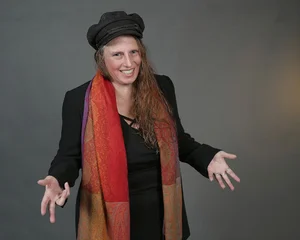
Beyond Downloads with Chloe Williamson
Aicila: [00:00:00] So welcome to Business as Unusual, the podcast where we explore the innovative strategies and uncon- and unconventional practices driving successful leaders. Joining me today is Chloe Williamson, a podcast marketing strategist at Interview Valet.
Chloe helps entrepreneurs, brands, and thought leaders turn podcast conversations into lasting visibility and powerful evergreen marketing assets. By blending audience research, strategic outreach, and storytelling, she helps her clients reach new audiences. Her focus is on the health and wellness space, and from that perspective, she works to find deep, authentic, long-form conversations that build trust and connection in the ways that the short-form marketing simply can't.
So thank you so much. As you know, I love podcasts, Chloe, so welcome to the show.
Chloe Williamson: Ah, thank you so much for having me. I feel like I'm meeting a celebrity. We've emailed for so many years. It's so nice to finally be in front of you. I'm excited
Aicila: Yeah. Yeah, actually, so, uh, I wonder, it was a few years ago that I had your, uh, I think, ch- Tom Schwab, the founder,[00:01:00]
Chloe Williamson: It's
Aicila: on the show a while back. And it was, it was, it's been such a great partnership, and one of the things that as a podcaster I'll, I guess, promote Interview Valet a little bit here, which is that as a podcaster, finding guests that are aligned takes a lot of time.
And, and especially when you're doing something niche or focused like I am, that time is both important and precious. And when Interview Valley found me a few years ago and said, "You know, we work with people looking to get on podcasts, and would you be interested in us sharing contacts with you?"
I was like, "Yeah, that'd be great." And they're not the only group to have done that, but they are by far and away the most thoughtful and clearly aligned. Like, once I made, you know, once I... A couple back and forth, almost every guest they've sent me has been r- spot on. I've gotten to talk to some amazing people because of all the work that they do to really try to find that alignment.
So I'll just do that little pitch for you guys right there. Because it's been really helpful to, to ha- know that I can trust the [00:02:00] recommendations.
Chloe Williamson: Appreciate that. And that's, that's everything it's all about. Uh, I will say for me personally, I love people. I always have. I'm sure this is relatable to you because you are a podcast host, but I find when I meet new people, I kind of inadvertently interview them because I'm so curious and so interested in who they are.
It comes very naturally to me. also am a bit of a matchmaker. A lot of my friends are currently still married to someone that I introduced them to, and if
Aicila: Oh.
Chloe Williamson: may vary on that. Time will tell. But so far, it's working out well, and so it was very natural that I found myself at Interview Valet because it's a business of people.
It's very important to me to help people get in front of the right audiences and craft their message so that they can reach their goals and expand their influence in a way that they either never thought or are just incapable of doing themselves, which is no reason to feel bad. Most people that we find usually are [00:03:00] off the mark a bit.
That's, uh, that's why they tend to work with us. And that's why I think whether you're going to work with an agency for something like podcast interview marketing, or if you're even just looking at a broad scope of marketing and advertising, knowing your audience is the most important step that you can take.
It's more important than anything, and it's the first step, too. I, I see a lot of people who get very excited with the bells and the whistles and think about the last step first of what their marketing is going to be, and they don't even know who it is that they're trying to talk to. And that's such an important step that, again, sometimes people need some help doing, and I'm happy to help
Aicila: Often it's hard when you're in it. Uh, I work with a marketer who, he talks, he talks about Marmite. He said, "You know, when you're in the jar, you can't see the label."
Chloe Williamson: Mm-hmm.
Aicila: And, and if you don't see the label, you don't know what's in the jar. And so that's sometimes what, what we need is somebody who's outside to help us understand who actually is our best audience.
Uh, so you- you've talked about that, you know, that that's a challenge, not knowing the right audience, not knowing where to start. [00:04:00] Do you have any tips or guidance that you could offer people or things they should reflect on to be more honed into that?
Chloe Williamson: Yeah, definitely. So I would say most people who are off the mark are usually in one of two areas. And we see people who are way too broad who will come to us and they say, "I wanna talk to business people." of sentence. They just leave it at that. And we have to dig into some more things there. we have people on the opposite end who say, "I wanna talk to multifamily real estate investors only in the Lower, uh, Manhattan area, and they can only be making this much money, and also I can only record on Fridays at noon." So you are too zoomed out, it can be really difficult to get there, and when you're too zoomed in, it can be difficult to get there. And the easiest way that I find to kind of get to the root of where we need to go with people on either end of that is the power of asking why. You know, this is not something I've made up.
It's, it's a very common thing in sales [00:05:00] that you need to ask why five times to get to the solid answer, and it's the same here. So if I have someone who wants to talk to business people, I say, "Okay, why?" And they say, "Well, because I'm a business consultant." And I say, "Okay, why?" And they say, "I was a corporate CFO for 12 years, and I had to get out of it."
And I say, "Okay, there. So we're talking about finance. So who do you actually help?" 'Cause if you just say business, okay, well, I can give you a small business owner who makes less than a million dollars a year in revenue, but that's probably not who you wanna talk to. So you have to be willing to ask a lot of questions.
I also urge people, and this is very tough for some people. Again, sometimes this is where my job comes in to kind of provide that hand-holding with them because a lot of people have a hard time breaking out of what they naturally think. But you also have to... Hold on, Alicia, I lost my train of thought [00:06:00] I'll take it a different direction. Uh, they might need that handholding that I can tend to help them with. Uh, you also have to sometimes look at your competitors, I even kind of balk to say that. I- it's-- maybe it's just me being very optimistic. Uh, I don't like to think of other people as our competitors.
I think in almost every industry, there really is room for everyone, and just because someone does the same thing you do does not mean they do it in the same way you do, or that they generate the same results, or that they even resonate with the same people. So sometimes it's as simple as looking at someone that you think is your competitor, and who are they talking to? maybe if it's a podcast host, who are they featuring? Okay, where are those people also talking? What kind of masterminds do these people attend? What kind of programs do they run? What kind of newsletters do they even send out? There are so many answers in other people's marketing and advertising that really can s- reveal so much to [00:07:00] what you can do s- or even what you can't do.
That helps a lot of people kind of bridge the gap of what they want and what they're actually capable of doing and what they should be doing
Aicila: Well, that, that makes sense. I actually heard someone talk about, um, the concept of competitors, 'cause I agree, I don't think it's so much competitors, it's, um, what, you know, we sh- we share customers then because they, you know, they're gonna go where they need to go. But if you think about it like a burger joint, whether you eat burgers or not, you know what they are, uh, just to be clear.
Chloe Williamson: Yes
Aicila: Um, y- you know, I, I live in a city. I go outside, um, there's probably eight burger joints in a two-block radius. And to, yes, to a certain extent they are competing, but also it depends on, you know, what kind of burger you want and what kind of options you want and what kind of price point you wanna pay. Do you wanna sit inside or not sit inside?
And so,
Chloe Williamson: Mm-hmm.
Aicila: you know, they... And they're all doing fine, so there's plenty of room for all the burger joints. And that doesn't even include all the other kinds of food that exist within a two-block [00:08:00] radius. So I think that, you know, really recognizing that you don't have to be doing something unique that no one ever's done, and in fact, when you can align with things that people expect and understand that that's what gets people to understand what you're doing, it actually helps to bring people in
Chloe Williamson: And look, even if you do wanna do something completely different than what your competitors are doing, that still doesn't mean that that audience is not the right audience for
Aicila: Exactly
Chloe Williamson: you're, yeah, perhaps you're solving a problem that your competitor isn't solving. That's how you do it. Another thing I like to say, and again, a lot of people struggle with this one 'cause it's so counterintuitive to what we know as people just navigating the world, but really have to be willing to put yourself in a box because the truth of the matter is that the audience is gonna put you in a box whether you like it or not.
That is just the way that people navigate these things, and I'm not saying it has to be a tiny little shoebox or a ring box. It can be a totally massive box that serves a lot of different people, and it doesn't have to be a preexisting box. You know, you can create [00:09:00] your own box, but have to be able to find a way to organically categorize yourself, or the people that you're talking to are not gonna know what to do with you.
You could be a very exciting speaker and offer all these amazing things, but if you're talking to the wrong people, it's not going to matter, and that's,
Aicila: Mm-hmm.
Chloe Williamson: it is so important. It's, it's
Aicila: Well,
Chloe Williamson: of people struggle with that
Aicila: yeah, or talking to the right people without o- without resonating. They don't understand you can serve their need. So it's a, I, I, I really agree. It's a struggle because, y- you know, we are all special snowflakes, and...
Chloe Williamson: Yeah
Aicila: So one of the things that you talked about that I find really interesting is you said that podcast downloads are the wrong metric to measure, and that, that you, there's a different measure that you recommend.
Can you talk a little bit about that?
Chloe Williamson: Yeah, I love that you asked me that. Thank you so much. If I could scream this from every rooftop in the world, I totally would. So, uh, several years ago, podcast downloads were the kind of be-all, end-all measurement of a podcast impact. And as time [00:10:00] went on and people's habits change, because, uh, it's no secret to anyone listening, especially to you, a podcast host, uh, podcasting is still very much the Wild West in a sense.
It's come a long way. It's a lot more part of our everyday lives, but it's still a fairly new industry, so there are still metrics and data points that come and go in terms of relevancy, download numbers is one of these. Because as people's habits changed with podcasts, we were starting to figure out, we within the industry, I mean, uh, a lot of people, you know, if you're subscribed to a podcast, let's say on Apple Podcasts, uh, if you don't have auto downloads turned off, time you're subscribed to a show, an episode gets automatically downloaded. That doesn't mean you're listening to it, so potentially false data. Similarly, uh, I know for me, would only ever download a podcast if I were gonna be getting on a plane or, like, very specific circumstances. So that doesn't mean I'm not listening to the other episodes of this show. I'm just only listening to this one.
I only downloaded this one for that [00:11:00] reason. So that kind of metric was becoming either under-captured or over-inflated. So then we moved on to listenership, and listenership was defined as, uh, the number of listens a podcast episode gets in an average in the first 30 days, and it's a full listen, so not counting anyone who kind of signs off before the final ad read or something like that. that became an accurate measure, but then things like bots came along, and we were finding, again, a lot of times that's inflated, and a lot of databases don't always have the most accurate data. I know, I know for us at Interview Valet, license a number of databases, a pretty large number, because the data's kind of different everywhere, so we have to kind of look at every single spot to get the best estimate that we can.
And now global ranking is kind of the high point of data that you wanna be looking at. And so far, that's the most accurate. Again, in two years from now, there's no telling. That, that may wind up being bunked too, but we can only go as it comes. But I [00:12:00] like to focus even deeper than that on kind of the human element of everything, and that really goes back to the target audience and identifying who you wanna talk to. Because podcast interviews are such a specific marketing tool that is kind of incomparable to other things. Like, sure, you can have your meta ads, gonna be seen by a million people, but that's kind of the com- lowest common denominator of people. Anybody that visits your site is going to see that.
That doesn't mean they're gonna do anything with it. And even as humans, again, coming, coming back to how we evolve and how trends diff, uh, differentiate We all kind of develop a muscle memory where we don't even look at ads a lot of the time. So, like, you could spend so much money on these meta ads, it's not even gonna do anything. But a podcast interview is not just an interview, it's not just an ad, it's a conversation.
Aicila: Yeah
Chloe Williamson: And there is something so special and so human about a conversation that not any other form of advertising typically can offer that to [00:13:00] you. And I even think, think about celebrity interviews that you've seen, even if 100,000 other people were watching that interview too, it feels like you're getting an exclusive look into a very sacred conversation between two people that other people aren't getting, and it makes you feel.
Aicila: Yeah
Chloe Williamson: another thing I believe that scares people. Business is very emotional. I know the age-old thing is that there's no room for emotion in business. I really challenge that. And I'm not being glib. I understand what that means, like, in real-time application. I, I do understand that. But I think emotion drives everything we do, and the emotion that can happen between two people having a conversation is so important and just can't be captured otherwise.
And that is part of why I do what I do, because it's not just helping my clients reach their goals and hit all of these listeners and everything. It's like, no, what did you and that person experience in that moment, and what are the listeners re- what is resonating with them that is gonna drive them to then want to work with you?
Because [00:14:00] anybody can see an ad, but these people took 20 to 45 minutes out of their time to listen to you. They know you a lot better, and they're already-- they already got that one foot in the door 'cause they're already listening to it. So really, as long as you're saying what you need to say and the right people are hearing it, that's what's going to make the difference
Aicila: I really agree with that, and that the return to trust and that ability to con- obviously I do a podcast. I do it because I love podcasts. I'm just obsessed with them. But, um, but I also feel like there's a lot of, like, opportunity for connection. And, um, so, uh Well, I, as I noted, and I'm, I may have answered this question before you, but like I, I have a lot of people reach out to me and say, "Hey, can you have...
Can we send you leads?" And I'll, I'll be, uh, frank, I say no to most of them after I vet them because, um, there, there's, there's not the same level of thoughtfulness, right? Like, they, they just wanna send me a long list of people that I have to then go through, which if I were in a different place, that might be [00:15:00] useful to me.
So I'm not d- like, my, ha- like judging it or whatever. But I feel like you guys do things a little bit differently. Can you talk about that?
Chloe Williamson: Yeah, totally. I'll give you a little peek behind the curtain here. It's no problem. we have a lot of different people on the team with different roles. My, in, mine in particular, like you said, I'm a st- I'm a strategist. I work with our clients. So we have three distinct roles in our team, so we employ, deploy a triple-layer approach to finding the right shows for our clients.
So we have people on our team that dig into our podcast database, and they will send the people that do my role a bunch of suggestions of, based on everything that I know about your client, with all the information that we have, all of the intake information we've gotten, the onboarding information, everything that exists already, these are shows that I think might be a fit.
I go in and I decide, this is, this isn't, this isn't. Then it goes to people on the team who have the relationship with the podcast host. So [00:16:00] you typically get emails from the same person. That's the person that's assigned to your show. That way, because they're the ones, they may not know the clients as well, 'cause they're not the ones having the meetings with them, but they know you guys really well.
So just because that one person on the team thought the show would be a good fit, I think it would be a good fit. Once it gets to that third person, they may be like, "No, I know my host. They're gonna hate this person, so we're, like, not even going to s- we're not even gonna send it." And it's a lot of collaboration, so again, it's a lot of humans, and it's a lot of these weird human variables where just because on paper this looks like it's a no-brainer, this person on the team knows something that I don't know about this host or about this client that is gonna make the difference between this will be a dynamite fit or this is gonna be wasting somebody's time and I'm not even going to do it. So it's a lot of work on our end. It's a lot of collaboration. It's a lot of communication, and it's a lot of testing. Because even sometimes I'll think it's a really good fit for my [00:17:00] client, the person on the team comes back and says, "No, my host would hate this," and I'll leave, uh, depending on how I feel, how strongly I feel about it, I might be like, "Mm, but have you considered this article that they wrote where they said exactly this, and they had an episode 10 epis- 10 weeks back where they talked about exactly this?"
And then maybe there's room for collaboration. So it's a lot, again, it's a lot of humans doing this and kind of putting our emotions into it and seeing what magic we can make.
Aicila: Yeah. And just for the listeners, uh, the, the, the, uh, business model is that as a podcaster, they do not charge me. Some, some organizations charge both podcasters and, uh, guests, and The Interview Valet is very clear that they feel like that kinda creates a conflict of interest for them.
Chloe Williamson: Definitely
Aicila: so, and I'm, I mean, I love that, so I feel like I get
Chloe Williamson: Of
Aicila: this great opportunity to have guests that are a great fit.
Um, and, and it does feel good to know that, like, there is a focus. You know, I don't ever question that, you know, your [00:18:00] focus is to make the right match for your client, to not try and get more money out of a podcast or vice versa, and I do think there's a cleanliness to that that makes sense. But just so folks understand, that's sort of how the relationship works from a business model perspective.
What business wisdom makes you roll your eyes every time you hear it?
Chloe Williamson: Yeah. Um, uh, probably putting, kind of diluting it here, but I kind of can't stand when people come in and they wanna get on, let's say, Joe Rogan, or they wanna get on Brene Brown, and they only wanna get on those shows because it's kind of the only podcasts they've ever heard of. Like, they think, "Oh, okay, well, that's my fast track to just getting where I need to go.
I need to speak to as many people as possible." And that is where I really, no, I don't think that's true at all. You could be talking to a room of 100,000 people, and if 90,000 of them do not care what you have to say, you're really not talking to a room of 100,000 people. And [00:19:00] that's, again, that's a pretty big mental roadblock we have to come with people.
Like, I do understand everything in business oftentimes comes down to a numbers game, and I'm not saying if you went on Brene Brown w- doors wouldn't open up for you. Like, I'm sure some would. Of course they would. I'm not gonna sit here and act like they aren't. But that's not a strategy. Just getting in front of as many people as possible is, there's no strategic value behind that.
That's just kind of, that's kind of a pipe dream, really. That's just kind of hoping for fame, like how little kids wanna be famous one day and they picture themselves singing in front of a crowd of a million people. That's essentially all you're doing. And that's fun. fun to think about, but that's not what's going t- that's not what's going to move the needle. So that tends to frustrate me, is that, like, well, the more eyes on it, the better it is, and it's, it's not. One of our big philosophies at Interview Valet is bigger is not better. Better is better. Just because something is big and seems like it's the perfect opportunity doesn't mean it is, and there's a lot of research and [00:20:00] insight that goes into how it may or may not be.
And that's the kind of trust I hope that the guests that we work with kind of instill in us, that like, no, no, no, we've done this for a long time and I know that just because you think this is a good fit doesn't necessarily mean it is. And that doesn't mean I can't have a conversation. For anyone listening, I'm not saying if you come to us, I'm calling all the shots and you have to listen.
This, this is as much of a relationship as the one between the host and the guest is. But if you're coming to me for strategy, that's kind of a hard line that you have to, that we have to talk about, is, uh, those expectations and where we actually need to focus our energy.
Aicila: Yeah. And I, and I see that a lot in, in many different industries. It's, you know, it's what we know, and so it's easy to think of that as being the solution, right? And to, to have somebody who can kind of help you navigate too so that you don't feel like you're just throwing spaghetti against the wall, and also that you're, um, you're not chasing something that's n- that you, that you've pinned all your hopes [00:21:00] on.
I feel like that's, that's a tr- a truism I've seen repeatedly. If you think, "Oh, I'm gonna go to this conference and speak, so I'm gonna put everything into it," or, "I did this big sponsorship and it's gonna change everything," usually it's consistency rather than the grand gesture that creates your long-term impact.
Uh, like you said, it's not that we can't win the lottery, but winning the lottery is not a strategy.
Chloe Williamson: Yeah. And if you think, and if your be all, end all goal is to win the lottery, it, every time you win $20, it's gonna feel like a failure, when really you just won $20. You know? Like, you can't, have it too high because then everything is gonna be a disappointment after the fact. And if we're disappointed before we even start, it's not, it's not gonna feel good
Aicila: Yeah. All right, so we've got a couple tips here with, you know, podcasts with the, you know, be connective, find the right audience, really get clear expectations. Do you have any other tips? Like, somebody's out there and they're like, "I think I wanna use podcasts as a strategy." What, you know, what would you recommend?
Chloe Williamson: I would recommend you could definitely do a free [00:22:00] consultation call with us. Absolutely, I'll plug us as much as I can. But even if you don't wanna go the route of hiring an agency, which a lot of people, that doesn't work for them, that's totally fine. Uh, kinda going back to what we said at the beginning, you have to try and figure out what your target audience is, and you can approach this research a lot of different ways.
Uh, you could certainly conduct paid market research if you want to. You don't even really have to do that, I don't find. Like I said, tap into your peers, tap into your competitors, look at who they're talking to, look at who those people are talking to. Kind of build a web, because that web could very well become your community or your customer base, however you wanna look at it like that.
That's your first thing. Also, determine your goals. That's the other kind of side of the coin that, uh, when we get new people, that's something we really identify. If your goals are new clients, there's a strategy for that. If your goal is just to educate people, 'cause I especially work very closely with health and wellness practitioners, and a, we see a lot of people come through [00:23:00] who just have some sort of scientific knowledge that the layman's person doesn't have, and their whole goal is to just reach as many people as possible to get the word out there. And if you wanna reach as many people because of education, that's a little bit more, uh, tenable than if you're just trying to reach people for the fame of it all. So, determine what your goal and your target audience is, and then you can figure out the areas you need to go to. And then look at podcast charts.
Uh, the ones that aren't charting, the audience is still meaningful there. So, look at the ones that are charting, see the See Also sections. It's a lot of research, and again, that's why people do tend to come to us, 'cause they don't have time or patience to do that level of research, but that's, that's where we can really help you. But do your research, kind of. Uh, kind of be vulnerable with yourself, too. Like I said, you gotta put yourself in a box. That's very hard for some people. What can you do? What can't you do? What do other people do that you can't? what do other people not do that you can? It, it, [00:24:00] you can kinda drive yourself crazy.
It becomes a very big game of comparison, but that, that's how you can differentiate yourself. So, you kinda have to take a good hard look in the mirror, and that can be really scary for some people, but I promise you, that's, that's the first step, and that really does make a difference
Aicila: That was a good advice. Uh, speaking of advice, what advice would you give your 18-year-old self?
Chloe Williamson: Oh gosh, c- slow down. It's, it's advice I'd, I- it's the same advice I'd give my current 34-year-old self. Slow down. I think so fast and I talk so fast and I expect things to happen so fast, and it makes me so anxious sometimes and probably annoying to some of the people around me, which it's okay.
You're gonna annoy somebody along the way. It's not a big deal. But I, I would say slow down. Just because people around you are doing things that you deem more important than you're doing doesn't mean they are and it doesn't mean that that's not coming to you soon. So trust the process a bit and, uh, take some time[00:25:00]
Aicila: Awesome. Thank you. So for folks that are listening, how do they learn more, follow you, get in touch?
Chloe Williamson: If you wanna know more about me specifically, you can go to interviewvalet.com/chloe. That's C-H-L-O-E. That's my personal landing page where you can find out more about what I'm talking about specifically, but it's also navigable through our main website, interviewvalet.com. And there, e- again, even if you don't wanna sign up with us, you certainly don't have to.
There are tons of free resources and informational guides on our website that you can dive into if you want information on identifying your audience, how to promote and repurpose an interview after it goes live. that is on there. You, you can book a free consultation call if you have the gumption for it.
If you really just kinda wanna test the waters, by all means, just go to the website and see what's out there. There's a lot, a lot of really valuable info on there
Aicila: Thank you. I appreciate your time today
Chloe Williamson: Thank you so much [00:26:00] for having me. I had a great time
Thank you for tuning into business as unusual, remember, in this ever evolving world of modern business, it's not about fitting in.
It's about standing out. See you next time. Stay curious, stay innovative, and always keep it unusual.