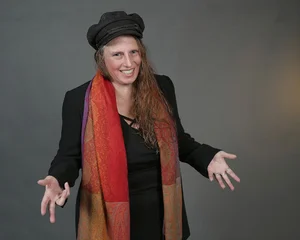
Sales as Service with Sebastian Hidalgo
[00:00:00]
Aicila: Hello. Today I am joined by Sebastian Algo, a Venezuelan born entrepreneur raised in Italy, who blends the art of sales with tactics straight out of hostage negotiation and psychological operations.
Sebastian pioneered his own sWAT sales system.
In author,
consultant, and co-founder of Dornell and BOD Care. He's here to show us how unconventional strategies can turn ordinary deals into extraordinary wins.
Welcome to the show, Sebastian.
Sebastian: Thank you for having me. Uh, such a pleasure to be here. Super grateful that we got connected. How's your day going? Honestly, it's
Aicila: it's been kind of stressful and I was really looking forward to this chat.
It gets me outta my own head when I get to talk to people. So
Sebastian: relaxing for me to,
I spend most of the day in calls and the first off of the day writing, so it's good to be here and get a moment to settle and just, you know, have a conversation. Yeah.
Aicila: Yeah.
Well, and so right before, uh, we recorded, Sebastian had sent me a couple articles, [00:01:00] and
I will say that one of the things that's really intriguing to me about what you're doing is.
You're doing effective sales but not manipulation. Like that was a big part of what I talked about. Influence over strong arm tactics.
And I would love to hear a little bit more about how you developed that 'cause mostly I think when we think of sales, we think of people tricking us.
Sebastian: Well, I, I, we could tackle this conversation from dozens of different angles. I think my favorite one is that sales is, to me, an act of service. I
see it as a service profession. So yes, we have this reputation in the sales world, like the used car salesmen, we have all of these things that paint salespeople as the bad guy, as the bad people. When in reality, salespeople are the one category of people that move the world economy. If there were no salespeople, things wouldn't get sold.
And, you know, stock wouldn't go up or down. You couldn't have anything to trade. Anything to [00:02:00] buy anything to eat. Sales is the lifeblood of any economy. However, I do understand where people come from. Salespeople have become famous for and notorious for strong arming you into trying to make a buying decision.
And all of this comes from a bunch of bad players that actually don't know anything about sales. And it comes from a time where society was different, where the line between what was good and what was what wasn't, what was ethical and unethical was very blurry. Now that we have a better, a clear idea on what's ethical and what is not and that, you know, I think people learned a lot to listen and trust, uh, their own experience and also to listen to, um, to be more attuned to energy. I call it commission breath. We smell when somebody has commission breath. We, we smell when somebody wants to get something out of us. Uh, we, we smell when somebody wants to get some something out of us. So I call that commission breath [00:03:00] and. The way you defeat that is not by just doing more of what we've been doing this past like 30 years of selling.
It's by introducing something new, which is what I did. And you know, we touch on the topic of influence. I think, yes, what I do can totally be used for manipulation and for pressure. It is, I cannot control who uses for that. But as of right now, I don't think any of my students has been using it for the wrong reasons or to achieve things that they shouldn't be doing.
Aicila: How do you see that? As you know, this is a big topic right now is there's a lot of AI slop, and there's definitely a lot of.
Sebastian: Um, a lot of
Aicila: a lot of that moving into sales and marketing. Do you, how do you see that affecting the kind of work that you do? Do you think it'll make being more human, I guess, in the interaction, uh, a, a key differentiator, or
Sebastian: I
Aicila: do you think people will care?
Sebastian: I like that you touch on that because probably I, I'll first, I'll start with the [00:04:00] question. How do you feel about logging on any social media platform seeing AI. You mean
Aicila: You mean like, just like that? It, it that I, that it's asked me. I would say, please, no, I don't wanna use that. But you mean just in the world or,
I don't think I always
see it. I think,
I don't, I don't think I necessarily see it half the time,
Sebastian: Okay. And, and you see like, you don't necessarily also want, wanna see all that AI content and stuff like that. People especially, you know. When was the last time that you were excited to receive a call DM that then you realized was written by ai? Probably never.
The thing is aI is accelerating what I call the return to trust. And the return to trust is people simply going back to the old school, rubbing elbows and shaking hands, and I wanna see you in person, and I wanna see you in a video.
And they want to make sure that you're trustworthy, that you're a real person, that you're not an ai, because as much as you know, the proponents of cold outreach will, will tell you that, yeah, this, um, this creates [00:05:00] predictable revenue. Yes, it does, but it, it attracts the lowest common denominator of clients. And it also burns a bunch of bridges because if you reach out to me and you keep following up with AI and I see you in my inbox every second week, eventually I'll remember you and I realize, okay, that's the company that's using ai, that's bothering me. And if I see a friend of mine who's about to buy from you, I'll tell them, don't buy from them. Why? Because they
keep spamming with ai. These, these are not good people. This is not a good company, and this is controversial. Salespeople don't like it. But reality is AI is making the human component. More important. While at the same time, I believe there is a role for AI in sales, and that role is probably more in the realm of sales coaching,
helping, helping support what you learn in sales training. That's where I see AI become more important. Yeah. Yeah. I think
Aicila: no, I think it's like,
and as, as a side,
a whole,
or rabbit hole, but, um, side quest I guess,
which
is that[00:06:00]
it's
like a computer. It's like a computer or calculator. It has a function in its tool, but it's not gonna replace
Sebastian: the
Aicila: the the need to understand.
How to do the job or to think strategically. I mean, if it is, it's gonna be a long time from now, that's for sure.
Sebastian: Agree. I mean, I think sales is gonna be conducted by humans for as long as humans are involved in the sales process. I don't think you can take the
human out of the process. 'cause sales is problem solving. Sales is diagnosing a pain and providing a solution to that pain. So as long as humans are involved in the sales process, there will be. There would be no need for AI to overtake completely and, and it will just not happen. Now if robots
start selling to each other, we have a different conversation. Right?
Aicila: Right. That's just a little bit what's happening right now. Robots have to prove to robots that they're not a robot. It's the, the little capture things. It's kind of hilarious.
Sebastian: so one of the
Aicila: one of the challenges that you said you see is that it, selling in competitive markets is hard where you have to [00:07:00] stand out, but customer budgets can be tight
And that one of the things that you do is you take technical experts or people that are not.
Traditionally sales focused like founders are very passionate about their idea, but maybe and feel uncomfortable with sales, and you help them become great sellers. Can you talk a little bit about that?
Sebastian: The beauty of nons sellers that are in business is that they have no bad habits ingrained into them
by years of practice, of years of influences from different teams or different leaders. So. They are some of my favorite case studies because I've noticed that when I apply SWAT to them, they tend to follow it really accurately. And not only that, they tend to grasp more the concept of empathy used in sales as a way to diagnose a problem. And they, these people tend to be very good at conversation, right? They are highly skilled, they are very qualified. Their only problem is they feel gross asking for money. In
Aicila: Mm-hmm.
Sebastian: expertise.
Of course, [00:08:00] there are layers here. There are self-esteem issues. There are, um, issues with the, how they view money. There are issues with their self-worth. However, it seems like SWOTs has been able to overcome that for them by giving them a structured process to just, hey. This is my value. I diagnosed you.
Here's how we could work together. Let's work together so it doesn't become a a thing about, oh, let's ask you for money for this thing I want to do for you. It's not a money extraction for my students. It is becomes more about feeling confidently capable of taking somebody from stranger to somebody that trusts you and then closing the deal. And this happens all over
trust building, concentrated in a short period of time, which is one, two, or three sales calls. I, I lemme know if that
Aicila: Hmm.
Sebastian: question. Yeah.
Aicila: Yeah, I think I did well, and it's interesting, I had a woman on the show last year who talked about
she really wants, if she could give her one phrase, it would be,[00:09:00]
uh, charge
what you're worth, because it, it equates your value with your identity. And I feel like, you know, talking about that, I think a lot of founders especially really do equate their value with what they're providing.
And so separating that.
And selling the product or the process or the transformation as opposed to them
Sebastian: probably is really
Aicila: is really helpful.
Sebastian: Yes. And
you know, people struggle with that. You know, charging what you're worth is something I keep telling my clients, but it's, at some point you need some separation. Even if you, as, as bad as it is to say, even if you yourself have problems with your self esteem, it should be completely separate from who you are as a professional and the value you provide to the market. And those are two different things, and, and people can overcome that. It just becomes a matter of. Framing to yourself the fact that you, the professional is a super, a different person from you, the person in your personal life and charging. The other [00:10:00] issue is people are so used to trading time for money that they don't
realize that at some point you are not selling your time anymore. You are selling the return on investment That person is buying. So
if I make you a a million dollars, is it feasible for me to ask you for a hundred thousand? Most likely, yes. Is it feasible for me, for me to ask you for 200,000? Most likely, yes. That's still a five XROI. So if you frame the value of what you sell in terms of the return, that they get it because much easier to charge the proper price.
Great.
Aicila: Right.
Sebastian: That's
Aicila: really, that's really helpful. Do you ever break that down with your clients, like talk to them about how to, how to
position what they're the, the price they have? Or is that something they usually have
done on
their own?
Sebastian: I talk to them about it. You know, me being a consultant, the whole position and thing is a conversation that keeps, keeps popping up.
So I do talk to them about it. Even my, my pure sales students, they still get a lot of [00:11:00] recommendations on how to price, how to save the price correctly. In which order to save the price of your price range. All these little details that in the end compound into you closing the deal.
Aicila: Hmm.
Do
you have a, a story or a short.
Sebastian: like
Aicila: case study, some, then something that can kind of illustrate how this would work so people can understand that a little more.
Sebastian: Which part of the process?
Um.
Aicila: I
don't know, like what's the, what do you think is the most, like the, the sales as service or, um,
Sebastian: where you've
Aicila: you've seen like the most transformation or the most success? Like, just something that could give people some sense of, oh, that's what you're
talking about.
Sebastian: Okay. So two things. One more theoretical. The first, the second one more tactical. The.
Theoretical One is that I am a firm believer in the fact that you have an ethical obligation to sell. [00:12:00] Because if you believe that what you provide is valuable, and if you also are aware that the market in the industry is full of players that don't provide the value that they promise, then every person that doesn't work with you is somebody you're sending to a competitor that will hurt them, which means you, that comes with a responsibility for you to sell what you're selling. Otherwise, you're doing a disservice to the person that should be getting that service. That's the theoretical part. Now, the tactical part is getting, getting sellers to understand that you don't have to be an extrovert. You don't have to do most of the talking. You don't have to create 35 slides or even five slides to pull up to show your prospect The jfa salary is much easier. Becomes much simpler when you frame it as you have to have the mindset of a doctor, meaning that person is in front of you because they have a [00:13:00] problem. Your job is understanding if you can solve that problem or if somebody else can solve it and you're not a good fit. Now, how do you find that out, and how do you create urgency?
Because that's the other obstacle. People come to me all the time, oh my, my prospects want to think about it for two quarters, and then they don't come back to me. The reason that happens is because you're talking too much probably. So what I guide my students to do is to ask calibrated questions that diagnose the problem. To ask people what, where, how to ask them what are they currently doing to change their specific situation? What have they tried in the past to fix that situation? Who is involved in fixing that? Is there a budget for that? Is how much is our priority? This is. The whole sales process. If you, if we are in a sales conversation, it will look more like you interviewing me than it will look like
Aicila: Hmm.
Sebastian: right now. In this case, you'd be
the seller because you are the one who [00:14:00] are, who's prompting me with questions. That's what my sellers
do. They sit back and they prompt their prospect until they put together the full picture, and they're able to then offer up a solution that. Feels tailored and what my whole sales process does, one of the many things that it does is the solution that my students and my sellers and the solution that you end up proposing to the person in front of you, since you listen to them so actively and so deeply, that solution, we feel like it was made, tailor made for them, and that
dramatically increases the chances of you closing the deal.
Yeah, no,
Aicila: no, that makes sense.
And,
and it sounds like really letting go of like your own
Sebastian: agenda
Aicila: or, or. You know, trying to make it away, but actually really being there to hear what they actually want and try to put it together effectively.
Sebastian: I, [00:15:00] I think there is a lot of humility involved in becoming
a proper closer as much as there is fascination for closers as much as there is. Hype and it, because it's a certain status to be a closer, it requires the humility to put yourself in second place and prioritize the person in front of you.
Aicila: Mm-hmm.
Sebastian: how you close.
Aicila: That makes a lot of sense.
Sebastian: Thank
Aicila: Thank you. Um,
what does success look like for you?
Sebastian: Wow, that's, I wasn't expecting that one. Uh, success for me, I would say success is first of all, is being able to execute to the fullest of my God given purpose, which I believe we all have the same purpose, which is to please God [00:16:00] and to serve people. So if I am able to be of service to others, I am fulfilling my purpose. And the second layer that is of. At most priority for me is being able to provide for the people I love and, and that's how I define success.
Aicila: That's beautiful.
Thank you.
Sebastian: What
Aicila: piece of,
what
common business tip do you think does more harm than good?
Sebastian: Oh, many. I am thinking because in the last month I've attended so many events where I saw people talking on stage, people who are supposed to know what they're talking about, and they were rehashing playbooks from 12, 15 years ago. I I think something that does a lot of harm is telling people that they have to do this is not sales [00:17:00] related, but telling people that they have to be productive. Meaning that you always have to find something to do to be successful in business, when in reality and there, there is a, there is a stage in business when you're starting out with, yes, you will maximize productivity because you will be alone or you will be a small team. When in reality, when your business stops, P starts picking up steam, you become an absolute obstacle to it. You are a massive bottleneck to your own business. The more you grow, so your job becomes not being productive. But finding ways to include in your processes, people that can do things for you, which means that, that at many stages you'll feel like you have less things to do, and you will get self-conscious about that. You will ask yourself, am I doing enough? You will ask yourself, will my business crash if I'm not on 24, like 24 7? And you will be on 24 7 mentally. [00:18:00] But you don't have to be sending an email writing a post at all times of the day. As you delegate, you'll find out that your job as a business owner becomes more elevating yourself to a part, to a position where you deliver for clients, guide the vision and guide the people. But the, the, this thing that somehow we ended up. Doing that. Everybody, every founder has this burden of I have to do and do, do, do. And then at some point they grow their business, they hire people and they start panicking because I'm not used to,
Yeah.
To all of this. Like they're taking things off my table.
And that's when you, and that's how you also become a micromanager, because you feel so
much the need to do that. You want to oversee everybody who's doing the things that you were doing before, but then that defeats the purpose of hiring. So that's one of the
pieces of advice, advice that, not even advice, but it's one of the things in business culture that I've [00:19:00] noticed hurts a lot. And you know, in, in terms of sales, I think advice that really hurts your sales process is have a slide degraded to show to your customer or like show
a case study at the beginning of the call. It's all these little things in sales that are all about you. It's all me, me, me. Look at my case studies, look at my slide deck. Look at this, look at
that. It's, it's about them. It's way simpler than we make it sometimes.
Aicila: Mm-hmm.
That's a really good point.
Now, I've seen a lot with, uh, business owners. I work, I love that transition time. It's an, it's, it's a,
Sebastian: it's
Aicila: it's overwhelming and chaotic, and I just love that time where people are, they're at that point where they've been so successful that they need to delegate,
but
they're too busy to figure it out.
It's a, it's a fun puzzle to unlock, but what I've seen the most is people have a real struggle in general with
either
they abdicate, they just.
they
throw at someone and they disappear
or [00:20:00] they
micromanage
and they don't know that thing in the middle where they're still invested and showing up and paying attention, but also not mentally on 24 7 and not micromanaging.
It's a very delicate space to land, but the people that get it, I think are the ones that
continue to do well.
Sebastian: Every stage of business requires a different version of you, like
Aicila: Mm-hmm.
Sebastian: the founder, the solo founder, or the the small founder team.
It is not the same team after they get funding and it's not the same team after 50 employees, and it's not the, the same team at 500 employees. Every ver, every staging business really requires you to change. And if you don't change, that's where you stall or you fail. So it,
it is fascinating to me to, to see how, how businesses develop, grow, and crash.
'cause there's so much to learn in every step along the way. I love it. [00:21:00] Yeah. No,
Aicila: No, that's really, it's a fun puzzle. What advice would you give your 18-year-old self?
I,
Sebastian: Don't underestimate your knowledge. I
think the short sales method, you know, I'm a big believer. Everything happens for a reason. But the advice I would give, I would give my 18-year-old self is don't underestimate your knowledge, because the salt cells method is something I could have come up with probably five years earlier. Right?
Aicila: Hmm.
Sebastian: But I made the mistake of putting my knowledge in silos. You know what a learning hostage negotiation training. Was in one silo. What I learned in university was in another silo, uh, all the psychology studies that I did in my free time, [00:22:00] just because I love the human brain, that was in another silo.
And so at some point I had all these experiences, but there was nothing connecting them. It was, it was when I took PSYOPs training that, and, and I talk about this in, in my book, I took PSYOPs training and towards the end there was a moment in the classroom. Or the trainer said something and I completely phased out, and I, and I connected all these dots and I was like, oh, wow.
I, I, I've been, I've been holding myself back for so many years just because I, I never realized that all the knowledge that I've accumulated could actually benefit me and others. Right.
Aicila: Right.
That makes sense. Wow.
Sebastian: Um,
Aicila: what's something you're excited about in your business?
Sebastian: Many things. Um, [00:23:00] you know, the business is young. It's been growing fast. I'm excited about the book I'm writing to establish the sales methodology. I am excited about next year we are going, we are growing more and more in the defense tech industry, which is an environment that I, I've come to love. I'm excited because, you know, I've always wanted to move to the United States and probably business is getting me there, and that's where this, the, all the signs are putting in that, in pointing in that direction. So there's a lot to look forward to next year that I'm, I'm, I'm really grateful and excited for.
Aicila: Okay.
And
for folks that are listening, how do they learn more? Follow you,
Sebastian: in touch.
So I used to have more social media presence. I'll be working on Instagram. Um, I'll try to work on Instagram next year, but if you want to connect with me, probably LinkedIn is the best place. You
know. I know. Not fancy. Maybe [00:24:00] bit boring. If you don't use LinkedIn, you can send me an email@sebastianatdwindle.com. And yes, those are the two platforms you where you mainly find me.
Aicila: Wonderful.
Well
thank you so much for your
Sebastian: today. I
really appreciate it.
Aicila: it.
Sebastian: Thank you for your time. I really appreciate this interview and yes, thanks. Was a pleasure to be here.
I.
Thank you for tuning into business as unusual, remember, in this ever evolving world of modern business, it's not about fitting in.
It's about standing out. See you next time. Stay curious, stay innovative, and always keep it unusual.