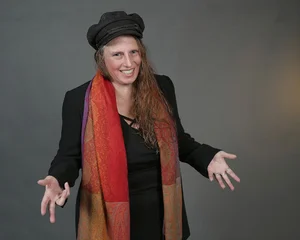
Peers Not Fears with Lorraine Connel
Aicila: [00:00:00] Hello. Welcome to Business as Unusual.
Joining me today is lorraine Connell, a distinguished expert in Teen Leadership Coaching and the founder of Peers Not Fears. Lorraine is also the author of a Teacher's Story, how One Act of Leadership inspired Many and Your Voice Matters, uncovering your unique leadership, a leadership workbook.
With over two decades of experience, Lorraine specializes in cultivating leadership skills in youth through intentional research-based programs. Her philosophy challenges the traditional notion that leaders are born, emphasizing instead, the transformative power of practice, resilience and deliberate growth.
Lorraine, your focus on cultivating leadership through deliberate growth speaks directly to the framework of our show. Very excited to have you on.
Lorraine: I'm excited to be here. Thank you so much for hosting this and having me.
Aicila: I'm gonna, I'm gonna start with, you told me some news and I want you to tell our, our listeners, this is very exciting.
Lorraine: Yeah, so I have been in the process of applying [00:01:00] to be a TED speaker for probably three and a half years now, and this past. November, I was given the green light that they have accepted my talk for this coming February, February, 2026. And so I will be doing a TEDx talk at the TEDx Southern New Hampshire University.
Aicila: Wow. Okay. That's exciting.
Lorraine: It is exciting and you know, it's so interesting. Uh, we actually met in a like tell your story kind of environment and you know, it, the story that I thought I wanted to tell is very different that the story that I am gonna end up sharing. So it's, it's been a journey and I love that.
Aicila: Yeah. Isn't that interesting? When, when you dig [00:02:00] in, sometimes you find things that are. I don't know. Is it more resonant or, or, or hit something different and, and it's not what you thought it was.
Lorraine: No, no. I mean, my whole being is about bringing in the unassuming leader, right? So the, the quiet, the shy, the class clown, the behavior child, the rebel, all the kids that we are like, that's not a leader. That's not a leader. So that's what I thought my, my talk was gonna be about, but it's evolved. I thought I was gonna then say, okay, well I'm giving permission to those students or those individuals who don't see themselves as leaders, and the final version.
It's actually about how we minimize ourselves with the word just and the impact of the minimization that it does on us to those around us. And so [00:03:00] it's, it's this impact that I was having on students in my classroom and my own children by calling myself just a teacher or just a mom and. For me, it just felt, it felt like I was just kind of staying in my lane, not being too big for my britches, but what it was doing was sending this message to everyone around me that if I didn't think I was enough to be a teacher, a mom, what did that mean for them?
My mom is just a mom. Feels kind of big to me. I guess. I'm not very big either, and so like the impact of realization
Aicila: Mm-hmm.
Lorraine: that I had in this journey of coming up with the talk. Is profound and so many of us, now that I've [00:04:00] said that word and I hear it, I hear it everywhere. People are minimizing ourself because we're told we're supposed to be small.
We don't wanna, you know, come off as too big. And it is having an impact on others, how others see themselves.
Aicila: Mm-hmm. No, it really does. I, I read this book a couple years ago, that profoundly affected me around that. It's the experience machine. it talks about how our brains are predictive modeling machines. And basically we, they hears everything we say. And so when you say, I'm just this, you hear it. And it, it cha it, it, and it works.
We are, we're predictive modeling machines. We wanna, we wanna produce the results that we've said we want. So what happens is you say that, and then everything in your being works to create that. You're just that. And it's, it's a little irritating to me because I always used to be snarky and judgy of the whole affirmation thing.
And I'm like, they were so right. And I'm so wrong about it. And I mean, you know, it's okay. [00:05:00] I just, I. Uh, it's fine. It, but it's like one of those realizations where you're just like, oh, man, I, I couldn't have been more wrong.
Lorraine: I know, I know. Well, and it feels so like fluffy and woo woo when you're starting, right? Like, okay, I am enough, I'm worthy. Like obviously that's what I think, but like, no, it's actually not what I'm thinking because I'm having a really hard time saying those words and then. I like, I honestly can't even tell you the transformation saying those affirmations had for me about two or three years ago, and now to be writing this talk about how powerful that four letter word was
Aicila: Right.
Lorraine: such a long time in my life.
Aicila: Yep. Well, and to to, to realize that. Yeah. Like the, I think it's, I don't [00:06:00] know if you were sa Saturday Night Live fan, because that's where it was for me. It's like the Stewart Molly, I'd be like, you're good enough, you're smart enough, and dog on it. People like, I just like, that's how I felt about it. And then to realize, oh, I actually, even saying that in jest was probably good for me.
Lorraine: Right. Better than the, the alternative of what I'm actually saying in my head.
Aicila: Yeah, so, well, and it's interesting to me too, the, I don't have an inner, I have a condition called aphantasia. So I have no inner monologue, I don't have inner visuals or anything like that. Um, so I didn't know that that was the other thing that can happen, like something like 60 to 80% of you walk around literally with a voice in your head talking to you, saying these horrible things.
Lorraine: A very, very mean yes. My, I'm like the meanest person to myself,
Aicila: Yeah. You would never treat anyone that way. I had a, a a I, an acquaintance who we were, we were doing something and she like forgot her wallet and she started saying, and I was [00:07:00] like, why are you talking like this about yourself? And I, and she's like, oh, that's what I always say, just saying it out loud right now.
And I'm like, I don't wanna hear that. Like,
Lorraine: Right. Right.
Aicila: it hurts. Like not in a, you know, but. I, yeah. So at any rate, I, I feel like that's a, a, a whole other level of when you have like that unbidden monologue, I guess, in there. You have to be very careful about what you say out loud if you have that,
Lorraine: Yes, yes.
Aicila: So thank you for that. I, that was a great, uh, introduction to the whole story of who you are. And then in this specific instance that we were gonna talk about with the teenagers, one of the challenges that, that you see in, working with kids is that building culture and community through engagement with these groups that are often perceived as being unengaged when maybe they're just differently engaged. Can you talk a little bit about that?
Lorraine: Yeah, I actually love that question and I, I'm gonna answer it in maybe not the direct way that you expected me to, [00:08:00] because I started working with a group of middle school seventh graders about March in 2025, and I have always known that the work that I'm doing has the power to make big changes. I was not prepared.
For the changes that were going to come. In the beginning when I met my students, so this group of students were chosen where 30% of the students were your shy kids, the ones who maybe don't have enough confidence yet, and then the other 70% of these students are what we call tier two and tier three. So they have been identified at risk.
Maybe it's behavior, maybe it's attendance, maybe it's academic. And so 70% and 30%. We started [00:09:00] as a group, there were 25 of them, and I was calling them leaders and the first thing that happened with that group was. Every typical behavior you would expect from a kid who is behaving poorly. They were asking to leave, they were mouthing off, they were being silly, they were doing all of these things, and I thought in the very beginning that this, this program wasn't gonna work.
I was like, oh my gosh, this is like, this is gonna be a disaster.
Aicila: Right.
Lorraine: Upon my reflection, I realized that every one of those kids that had been chosen had never been called a leader. They have never worn that label, which could be positive, but also is a very heavy, full weight. [00:10:00] Right. So anybody we think is a leader has all of these qualities that we think we don't have.
So the behaviors, the challenges, all of these kids were demonstrating it to me. Fast forward, we're in December. About six and a half months later, every one of those kids is now either 20% more confident or a hundred percent more confident than they were in March. I actually literally just asked them today, and the results were astounding.
The fact that every one of these kids has improved in their confidence.
Aicila: Right.
Lorraine: It tells me that this is working now it's working with them, but it's also rippling through the school. So those then seventh graders are now eighth graders who are working with the sixth graders in the school and they're building connections and they're building community and [00:11:00] it's un unbelievable.
They're, they're proceeding through the work that I'm doing way faster than I expected them to, and. It's working and I'm so excited because I knew that it was gonna work, but they are showing me how beautiful this work will actually be for every kid in that school.
Aicila: Right, right. Well, and that, that. So what I'm hearing too, and it segues a little bit into one of the things that you wish more people knew, which is that leadership and confidence are skills and that those skills can be developed if we work on our abilities. And so what, what do you see? It's, I'm curious if calling them a leader was contributory to that, or could you expand a little bit more on that and that elu or the development that you saw there?
Lorraine: Yeah, I, I mean it. It is happening in every space that I go in with teenagers, I ask what the definition of [00:12:00] a leader is or what leadership is, and every person in that space has a variation on a theme that is different than the other person. And so when I say leader or leader, you should be in leadership.
We all have a very different definition of what that looks like. And so for me to tell. Uh, I think like 13, 14-year-old that I think they're a leader is, is a lot because they think it's one thing. I think it's another thing, and every other kid in that room thinks it's something different. And I also ask like, what do you think the one quality of being a leader is?
And they list every single quality. Every quality. Um, sorry, the question I ask is, what's the requirement? Right. So leadership, confidence, public speaking, decision making, empathy, they list them all [00:13:00] out. None of them are requirements, they're just qualities. So like leadership, like confidence, every single one of the qualities that we think a leader should have. Is something that you can get better at, but there's one requirement and you can't get better or worse at this requirement. It just has to be, and we're all doing it every day. It's just making a decision because when you make a decision, you have to choose a path.
Aicila: Yeah. Right. And that and that, do you think that that's where they get stuck or is that what your skillset you help them
Lorraine: Yeah, I think they get stuck in calling themselves a leader because they've been labeled in all of these other ways in their entire lives. Maybe it's only been 13 years, but for 13 years they've heard that leaders are this leadership as this and they've been labeled as that, and that not the same thing.
So how can I, how [00:14:00] can I come to this understanding that Lorraine has come in and she says that I'm a leader when I know. That I'm not what they say leaders are. And so it's like dismantling the misconception of what a leader is.
Aicila: I like that. I really like that reframe. It's not, it's not trying to teach them to be different. It's teaching, it's showing them the, the, the limitations in the word and the concept.
Lorraine: Yeah.
Aicila: And then they can step into what really works for them. So another thing, and I, I'm, I am, uh, biased, I really much agree with you on this, that teens, you don't have to try and control the environment or control everything.
I, I had a I had a very positive experience with my kids in, in that way. But it's not something I hear often from educators, you know, like that there's a, that, that there's this fear adults have about letting go of control with teenagers, and yet I feel like they're usually very trustable and very sensible.[00:15:00]
It, you just need to like, you know. Obviously sometimes, I mean, adults make mistakes too. Let's be clear.
Lorraine: Yeah.
Aicila: So I dunno, but can you talk a little bit more about like either how you learned that or what, how you've seen that show up or what you think could be beneficial to people who wanna have maybe more positive interactions with
Lorraine: Yeah. Yeah. I mean, I was, I was a teacher who thought I needed control of my classroom, and that's the message that I received from those who were supervising me, right? Like if you came into my classroom and there was noise and there was movement, then. My classroom was out of control. Right. But really, when we are truly learning, it's loud, it's, it's chaotic, it's controlled chaos, but there's movement, there's like aha moments.
Like the control is just a misnomer. You have no control over anything. It's about like [00:16:00] holding them down is essentially what it felt like. When I started to let go of control, oh my gosh. I mean, I can tell you that the difference of like knowing somebody might walk by my classroom in this chaos versus knowing somebody who's gonna walk by my classroom when my classroom was quiet, I mean, I shut my door.
I was so nervous that somebody would make the decision that learning wasn't happening in my classroom. But I have got to tell you that when I let go of control, my learning went way up. I felt more engaged in the classroom, I felt more excited and it's, you have absolutely identified it is that kids are really trustworthy and.
They, they're gonna make the mistakes. We wanna be [00:17:00] there and help them navigate those mistakes. It's really bad when they make mistakes and they have nowhere to turn. And so that's when you know that that other misconception about what a leader is, is that a leader is perfect. I believed that, I really did believe that leaders couldn't make mistakes, and that holds us back from learning, right?
And so if a leader makes a mistake, and we all think leaders should be perfect, what is that leader doing with that mistake? They're literally hiding it, right? So they're doing whatever they can. Maybe they're blaming it on somebody else. They're like, don't look over here. Don't look over here. They're hiding their mistakes, and so we missed the opportunity to problem solve, to talk through what decision led to that mistake and navigating the learning that is so [00:18:00] valuable.
From those mistakes and, you know, I was, I was a party to that. You know, it's, it's all about this evolution and this growth that happened to me as a teacher that put me in this position that I'm in right now to allow kids to make mistakes, to own my own mistakes. And the best way to learn that is through playing games.
Aicila: Yeah.
Lorraine: make a mistake in a game, it's not so. Punitive. I mean, it hurts a little bit, you know, maybe I'm in tag and I get out and now I'm it. Right? That stinks. Nobody wants to be it, but like when we debrief that game as a group, we learn new skills and it's incredible.
Aicila: Right. Well, and it's, it's moving from a, um. I don't know. I hate, I hate buzzwords. And they, they, they, it's moving into [00:19:00] like that, that more collaborative space that, that I feel like most of us thrive in. Like they talk about wolf packs. There's no alpha wolf, right? It's whoever knows the situation best kind of leads. And so the group is together, the group is committed to their success, and then one, one wolf goes forward or another one, but there's not like one person always in charge.
It's the same thing, like if you're in a crisis and there's a fire, you need a hierarchy because you need someone who's con, who's looking at the situation, who's coordinating things. Because it's urgent, it has to go quickly. Most situations can do with a little bit more of that organic back and forth where people are getting to like show their expertise or their passion.
And I think even in a learning environment as a teacher, you are there to facilitate and provide conditions, right? But the learning is something that the students have to come up with on their own. And when they can get in invested and passionate and take the lead in something that's gonna be so much more powerful for them and for the rest of the class [00:20:00] and for you.
Lorraine: Yes. And it's way more engaging, which means there's more noise, which means there's more energy, and it doesn't look like that controlled classroom that I thought meant learning was happening.
Aicila: Yeah. No, that makes a lot of sense. You must have been a fun te, are you still teaching?
Lorraine: I am not. But yeah, I, I loved teaching. I loved what kids taught me, and yeah, I, I really, I, you know, part of my story is that I felt. I felt like I got in trouble,
Aicila: Hmm.
Lorraine: for sort of empowering the not perfect leaders. And the evolution of that comes from a couple of different points of view. One, I had a student who was identified as a student leader and they made a mistake.
It was a pretty big one. And a lot of times when role models make a mistake. We make a role model out of them. [00:21:00] And what happened was, you know, we, we essentially put this student up on a pedestal. We gave them a student leadership title, and when they made a mistake, we pulled the pedestal out from underneath them.
And watch them fall. I was the person, I feel like I was the person who pulled the pedestal out. Um, 'cause I thought that's what I was supposed to do. I was supposed to send the message to every other kid that you can't make this mistake. I was. Fortunate to be able to have a conversation with that student many years later.
And they told, I asked what they learned in that situation and they, they were very honest with me. And, um, I think this was like one of my big turning points was they told me that they learned that, um, that they were a failure. They learned that they can't make mistakes and if they did make mistakes, they had to hide them.
And that that isn't. [00:22:00] Exactly, exactly what that lesson taught, that student and, and the message that I thought was being sent, like, don't make this mistake was actually being relayed in a way that was like, oh, I, I know I make mistakes, and that's what happened to that girl or that person. I'm, I'm not gonna throw my name into that hat because I already know that pedestals coming out from underneath me.
So no thanks.
Aicila: Yeah. Wow, that sounds really painful.
Lorraine: Yeah, and, and I loved teaching. I loved the classroom. Inside the classroom. It was all the other stuff that were ha was happening outside of the classroom. And again, it really was about my classroom didn't look controlled.
Aicila: Right. I mean, the other thing about controlling things is then you can only get the outcome that you can anticipate.
Lorraine: Oh, yeah.
Aicila: when you let things, uh, be [00:23:00] unexpected, then you can, you can find in discover a lot more powerful things. I, I did a, a, a women's retreat many years ago and my kids were still at home.
And they did this thing called the Theater of Oppression. And at the end of it, y'all come together. And it, once again, I, I hear myself talk and I'm like, man, but, and we're in this, you know, and you have to shout out things that you're oppressed by. And there's someone from like behind me in the left who is like, I'm oppressed by other people's view of my potential. And that went right through me. I was like, crap, I do that to my kids.
Lorraine: Yeah.
Aicila: I think I know what they could. I don't know, like maybe we, I don't know what anybody else's potential is, right? Like all I can see is the limited version of the reality in the future that's available to me. And, and maybe it's inspiring, but maybe it's limiting.
And that's what we have to remember about control, right? Like when we can, when we have things under control, then it's limited to [00:24:00] what we can come up with.
Lorraine: Yeah. Yeah. It's profound, right? I mean, and, and it's a classroom, right? This is where learning and education is happening, and the, the idea that it has to be controlled is quite stifling.
Aicila: Mm-hmm. Yeah. What does success look like for you?
Lorraine: Mm. Yeah. I think for me, success is an evolution. I think this was another challenge that I had through the evolution of teaching, right? I thought success on an assessment was perfection, right? Getting everything right, and then I realized. Isn't success, just getting it a little bit better than you got it the first time.
And that's not how our grading system worked. And so again, that was another challenge for me. And so now I define success as being better than I was. [00:25:00] Before. And so that means I have to measure, right? I have to evaluate where I am now to know where I wanna go. There comes that decision making again. And so like, what is my goal?
Am I going towards that goal? Great. If I'm not, what's holding me back and what's evaluating, you know, those kind of things. So success is really. Super individual, and I think that that's one of the things that is such a challenge, especially in our teen world right now, especially with social media. I can't know what success is unless I see somebody else being successful.
And so how am I measuring up to that person rather than how am I measuring up to who I was yesterday, who I was a month ago?
Aicila: Yeah. Yeah. that's really wise to like, I think, you know, hold, [00:26:00] give yourself some opportunity for growth without, like, the pressure to be away or outside based on other people, like external factors. What is, what's some business wisdom that makes you roll your eyes every time you hear it?
Lorraine: Um, I. I'm actually not sure of an answer to that question, but I wanna say that what makes me roll my eyes is when a teacher says There's nothing else I can do besides teach. I really, I believed that so strongly, especially when that moment of my. Um, my teaching career was like, I have to make another decision.
I was like, there's nothing else I can do. And so it really makes me roll my eyes when we. Educators think that's the only thing that we can do because in order to be a teacher, you're [00:27:00] doing a million other things. And so as I embarked on starting my own business, I knew nothing, but I had all of the resources on how to get to where I wanted to be because I knew how to.
Apply and pull people in and ask for help and you know, all of those things. So I think, you know, assuming you can't do something because you have never done it, that makes me roll my eyes. I don't know if it makes me roll my eyes, but it makes me sad because there's so many different ways that you can build a skill and so many things that we don't know are skills.
Aicila: Yeah, that's really true. What advice would you give your 18-year-old self?
Lorraine: Hmm. Oh my God. I think I would give myself the advice that I give to students all the [00:28:00] time is that leadership isn't what you think it is. It really isn't this big audacious job. It's your everyday actions, and if nobody follows you, that doesn't mean you're a leader because you are following you. If somebody's following you, that's extra leadership, but it's not making or breaking you as a leader.
If nobody's choosing to follow you, they're just not following you yet.
Aicila: Yeah, that's a good point. Uh, what's something you're excited about in your business? I'm mean a TED Talk, so.
Lorraine: Yes, I am excited about my TED Talk. I am excited about the results I am getting with the peer Impact program that's happening in the middle school because. I really see this as a possible option for schools everywhere and in a time where we need Communic community in a time where we need [00:29:00] mentorship in a time where we need connection.
This program does that and so much more.
Aicila: That's awesome. For folks that are listening and they wanna learn more, follow you, get in touch. What do you recommend?
Lorraine: Uh, well, I think really Instagram is where I'm showing up the most. Uh, you can follow me. Peers, not fears all one word. My website is the same thing. And, um. I try to be on TikTok for anybody who's under, you know, the age of 18. That's where I'm trying to connect with them. But like I am definitely not rule in the TikTok world.
Aicila: You gotta get your dance shoes on, right?
Lorraine: I know, I know.
Aicila: Oh my goodness. Well, thank you so much for taking the time to talk to me today. I really appreciate
Lorraine: Oh, I appreciate you hosting and having me. Thank you so much.
Thank you for tuning into business as unusual, remember, in this ever evolving world of [00:30:00] modern business, it's not about fitting in.
It's about standing out. See you next time. Stay curious, stay innovative, and always keep it unusual.