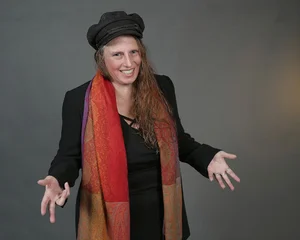
Myth Slayer with Scott Mason
Aicila: [00:00:00] Welcome to Business Is Unusual, the podcast for innovators and unconventional thinkers. Joining me today is Scott Mason, or as I like to call him the Myth Slayer.
A former attorney and senior executive leader, Scott rebuilt his career from total collapse into a purpose driven reinvention. Now a two time TEDx speaker and executive coach, he helps high achieving professionals dismantle the internal narratives that drain their energy and keep them stuck in successful misery. Scott, I am thrilled to welcome you and your unique framework that blends Greek mythology with leadership psychology.
So happy to have you on the show.
Scott: To be here as well. Thank you for having me.
Aicila: So we've already geeked out about literature and business and all these other things, so we're just gonna dive right into it. And one of the things, so I actually saw Scott speak at an online exposition. I had the privilege of working with him as part of the setup and hearing him talk about the ways in which we have these [00:01:00] internal narratives that really challenge our ability to be successful and also kind of happy or balanced in our life.
Do you wanna speak a little bit about that framework before I dive into some of the specific questions I have?
Scott: Sure. It's my belief that at the end of the day, people who are doing pretty well moderately successful, but not hitting their full potential or blocked from having breakthroughs by not their skills, but the narratives that they tell themselves inside
Aicila: Mm-hmm.
Scott: Narratives that keep you playing small that hurt your ability to stand in self-belief that limit your imagination or make you overly risk averse. All can be broken down into five categories that have [00:02:00] allegories. By the way, in Greek myths, I call these categories of destructive personal narratives, toxic myths,
Aicila: Hmm.
Scott: If you are able to name that toxic myth, throw it away and write a new heroic myth for your future, that breakthrough can happen.
Aicila: Mm-hmm. So there are lots of literature majors out there who love mythology. And there's lots of business people who see people stuck and wanna help them. What about you do you think really made this avenue, zing? How did that arise in you?
Scott: First and foremost, having been there myself and having experienced its power,
Aicila: Mm-hmm.
Scott: [00:03:00] you mentioned in the bio, I spent many years as an attorney and as an executive with a career, most people would envy
Aicila: Mm-hmm.
Scott: On the outside. I had it all. I had an incredible title. I had a huge office. My office was actually bigger than my apartment. And I had a great, uh, great salary, uh, everything that you would want, but inside I felt trapped and alienated.
I couldn't figure out what was wrong. And I couldn't experience my own breakthrough that would allow me to feel aligned enough with my purpose, with why I was here, uh, in order to begin to escalate and truly move from a, a career that, like I said, looked great into one that I [00:04:00] experienced as profoundly engaging, motivating, and also was able to take me to a extraordinary level of success.
I had loved Greek myths ever since I was a boy, I'd always understood that they were allegories that taught us things that we needed to know, uh, in order to live the ideal life or to avoid, uh, a lot of the pitfalls that keep people from failing, whether in their personal experiences or in their careers. But it wasn't until I had a series of personal experiences that took me from a career high into a personal and professional utter incomplete depth, that I had the revelation that these myths are not just entertaining stories. [00:05:00] They're thought patterns. They are ways of being. And once I understood that and was able to then frame them, um, into a way that I could use to rebuild my own life. I, I couldn't help it. I had to share them with others. And the zing couldn't help but be there either.
Uh, when you feel the power of something and you see it change your own life, how can you not want to pass the message on?
Aicila: Mm-hmm. I get that. Can do you have, I know, and, and I know that you talk about your story in, in a lot of, in your public presentations. I'm wondering is there a, a moment you can share when you were working with someone where they were able to shift what was happening for them?
Scott: Yeah. I have like a long-term client [00:06:00] who came to me because that person is an extraordinarily creative, non-linear and brilliant thinker who. Was and is in a career that is extraordinarily linear. And although this person going to the people that this framework works best for, uh, she was doing well enough, she was moderately successful, but again, knew there was something more that she was destined to do.
She just couldn't figure out how to put it together and she didn't understand. What was keeping her from being able to figure it out? So when we began to work together, we spent a lot of time talking to her, more or less about what her. Goals and aspirations were, from a general perspective, what [00:07:00] made her think that she was destined for more?
And then we went through the five toxic myths that I mentioned earlier in depth, and I asked her to review her entire personal and professional life to see which of those applied to her at all, whether or not she felt that they were keeping her from having a breakthrough. She did. She identified three of the five as experiences that were driving her internal personal narrative and affecting the way she dealt with the world.
We. As with all of my clients, then began to explore what is the role that you're playing in your myth? There are five toxic roles that drive these toxic narratives. These roles are also derived from Greek myths, and once you identify this role as she did, we work to then figure out how to change the behaviors that are [00:08:00] driving the patterns that ultimately make your internal personal myths toxic. With those toxic myths gone empower you to write heroic myths and when. Changes began to happen fast. We're able to, for instance, have her visit her inner Oracle and we spent a lot of messy time together figuring out based on all of the different areas in her life that that she had had success in, or failures or that had been experiences, joy or pain, and help begin to mold them together almost as if.
Message from the ancient prophets as to what she was meant to be. Ultimately, we refined a, uh, new narrative that was based on, um, a, a character from Greek mythology that she actually ended up viewing as her North Star and guide. Uh. [00:09:00] While all of this was happening by creating this new heroic narrative, she was able to be a different person at her job, uh, that she ultimately ended up leaving. Getting a $50,000 raise after putting out just a few resumes for a new job. And although actually, although they offered her a $50,000 raise, raise, she negotiated and got even more while at the same time has in place the foundations for a new business, uh, that. We actually think will really be successful, that is truly unique and brings together all of these qualities that she has at the same time, uh, we believe will help her generate probably a five book series.
And so that's an example of what this process can do. What naming your toxic myths, throwing them aside, writing a hero narrative, can provide as an outcome.
Aicila: That's [00:10:00] amazing. She must be very happy.
Scott: Uh, I, I hope she's ha she better be happy. I'll tell you, I'm happy for her because when you see people break through like that, not only did she get this massive raise, but um, she also was recently told by her boss that they would like to put her on a C-suite track, which I don't think that she would've imagined for herself.
So if, if she's not happy about this, I don't know what's the matter with her, but I'm pretty sure she is.
Aicila: Well, what is Zoom, right? What, what does this, what does success look like for you?
Scott: Success for me or for my clients.
Aicila: Either way.
Scott: For my clients, it is them feeling fully aligned and connected with what they're doing and seeing the professional and personal and embedded within that financial outcomes that they are seeking. Those outcomes might not be, by the way, what they. Originally [00:11:00] sought. Many times these toxic myths are blocking what people can even imagine for themselves, and I have an incredible client story around that.
If you're, if you're interested in hearing, I want it to thank you. I want it to be something that's, um, as
Aicila: I.
Scott: huge in scope and impact and remuneration as possible. That client was another long-term client of mine who owns a small. Service business B2C, and when I first talked to him, he wasn't sure what his annual revenue was.
He had no idea. He was completely disorganized and didn't understand finance. He thought it was around 125,000 or so per year, but really didn't know. He had no idea what he wanted to be. In terms of, uh, his larger as, as a presence in his field, and he listed himself and called himself the managing director of this company that he was [00:12:00] the sole owner and sole full-time employee of.
So the first thing that we did was busted the toxic myth that he wasn't capable of being a CEO or that he wasn't capable of being anything more than. His father who had founded the business had been, I remember telling him, you've gotta stop calling yourself a managing director. You need to start saying with power like Zeus, I'm a CEO.
He said, uh, that sounds like I think I'm big stuff. Well, yeah, we're gonna make you big stuff.
Aicila: Hmm.
Scott: Years later, he just passed his 1 million per year revenue mark. He still is the only owner and uh, full-time employee of this business. He has a successful YouTube channel, has written a book, has been on the board of directors of the National Speakers, associations of New York City chapter is [00:13:00] speaking all over the place and is regularly approached by people who are saying, what have you done? You are one of the big shots now. He owns that. He's one of those big, important people. He owns that. He's a CEO. Oh, and by the way, couple years ago he also bought his second home. Something he never thought was possible.
It all.
Aicila: Wow. That is beautiful. It's, it's so wonderful when people can, can really express themselves in their business and achieve that kind of, not just outside success, because that's a success I think comes from the inside confidence and belief. Oh, do you have something I wanna.
Scott: Uh, yeah. If you do not believe it inside, then it ain't going anywhere. Luck. Fortune only favors the bold and only rewards people who are willing to pray at her altar. I.
Aicila: [00:14:00] Hmm. What business wisdom makes you roll your eyes every time you hear it?
Scott: This one's controversial, but I stand by it. Work life balance is something that we should aspire to. I do not believe that at all. Now, integration is a different story.
Aicila: Mm-hmm.
Scott: I spent. Close to 20 years working in the government sector as a practicing attorney and then an increasingly um, senior executive. And after that I was a C-Suite executive In the nonprofit sector, there were those that truly did aspire to and believe in.
Work life balance as an objective. In other words, where there was that sense of equilibrium [00:15:00] between their time at home and away from job, uh, the job and their time at work, and they put very strict boundaries around that, more power to them. That being said, if you want to hit elite level success, understand that there are always people. Like the person I was who viewed those, who did that as wonderful. The best sort of competitors you. I could conceivably have, 'cause I could always outwork them. I could always outproduce them. I could always outperform them. At the end of the day, we live right now for better or worse, and I hope that this actually changes.
But for now, we live in a world where KPIs, productivity, the ability to have tangible outcome. Puts or complete projects are ultimately the measures [00:16:00] for success at an elite level. And if you've drawn boundaries around your willingness to commit to that, you are always going to be at a competitive value or competitive disadvantage.
Now, if you say to yourself, I don't care about competitive advantage, I'm happy to be where I am, because work-life balance is what I really strive for. Understand though that when it comes to unexpected black swan events, um, that. Can lead to layoffs or that can lead to demotions or that can lead to careers and financial stability and financial opportunity, as well as other opportunities being, uh, being awarded you are always going to be at a disadvantage.
And so really making sure that professionally. Any individual, whether they're an entrepreneur or someone working for a large organization, is [00:17:00] deeply aligned with what they're doing. They feel connected to it as a matter of purpose, mission, and ethics is of huge importance because then that integration happens and it doesn't matter.
What you put in is so connected to who you are that you're going with the flow and able to be that person that. All but untouchable because you're enjoying yourself and producing accordingly.
Aicila: Hmm. Yeah, I feel that, and I think it's, I think it's all life anyway. I think it depends. I, I think on what you're doing, but, uh, but I'm, I'm definitely in that space. I, I always, I, I, I ask this question to people and I was like, what would I say if I was asked this question? And I think for me, it's retiring early.
Because actually what I want is a life. I don't like a work life that I don't have to retire from, that I don't want to retire from, right? Like do things I love. I and I, that was my goal [00:18:00] for success. I wanna do things that I love, that I'm good at for people I respect, who are doing work that I believe in. And I now have, I have that.
That's my client list, and it's so motivating. Why would I ever wanna retire from that?
Scott: I am so unbelievably glad you said that. Another thing that I saw all the time, particularly in government, were people who were lifelong civil servants, who literally. We're watching the clock every day and counting down the days, months, hours till they hit that magical retirement. Mark could get out and then receive their pensions, and I assume begin to relax and live the life they wanted to.
I cannot tell you how many of them died within months, sometimes even longer than that of that, even if they retired young. And I think a lot of that goes as to exactly what you are talking about. [00:19:00] They had nothing to live for. Their work was so separate from who and what they were inside that when the chance came to to be something else, there was nothing there.
They weren't like you saying, I, I don't wanna retire 'cause I love what I'm doing so much. And their brains and their bodies shut down accordingly.
Aicila: Mm-hmm. No, I've heard that it's, it's actually really sad that people wait and then they don't get to have any part and you the tomorrow. The other part of it is tomorrow's not guaranteed. You get now. That's it. So what are you doing right now? To create a life that, that you can be satisfied and fulfilled and have purpose in and, and be of service to others.
'cause that's what you have is this moment.
Scott: Yeah, that's, I know from personal experience, that's profoundly true. It can be easy to set aside in our brains and pretend it isn't a reality, but. Reality has this way of knocking on the door and bursting into your world, [00:20:00] whether you wanna pretend that it's there or not.
Aicila: It's annoyingly, so
Scott: Yeah.
Aicila: Like, it's like, oh my gosh.
What advice would you give your 18-year-old self? And you don't have to promise you would've listened to it, by the way, just what, what you've said.
Scott: I grew up in a working class rural environment. My mom worked for a dog food factory. My father worked for the highway patrol, and they had a mentality that is shared by many in their economic and social milieu that. I believe is utterly poisonous and it poisoned me. I went to college as was [00:21:00] not necessarily expected of someone from my background, but then after that I really felt I need to process everything that I experienced in college.
I need to have time to let the growth that I went through here, both intellectually and personally, and as a leader, settle in and then figure out what I want to do, and their attitude was. That's what rich white people do. That's not what we do. You need to get your blankety blank out there and either get in a professional school or get a job.
Now you are not one of those people. In other words, they were planning in my head and it was ultimately. My choice to accept it. One of these five toxic myths, the tragic origin myth that the circumstances of your birth or your, or your personal background guide who and what you become in the future. And so I went [00:22:00] into law school right away.
I really wasn't ready. I didn't have the real world experience. I am a creative at my heart Law school is not the place. To express that in any way whatsoever, and, and I felt very alienated from it. I actually wanted to quit law school within my first month there and they said, look, you are not gonna have a job.
Uh, you're going to be perceived as a failure. You've go, you start it. You might as well do it. I think their advice in that respect was actually right. It was to my long-term benefit to just finish the damn thing. But looking back on it. The advice that I would've given myself would've been to ignore what anyone else is telling you about what you should do and go with that gut.
If inside you're saying, I'm not ready, or I need to figure out what I'm doing, or I wanna do something fun, don't talk yourself into it. Don't manufacture excitement and commitment to it my [00:23:00] whole first year of law school, because of that, I. Around. I only studied when I had to, I focused more on going to the gym and to New York City hot, you know, hot cool dance clubs, stuff like that.
Rather than really settling on what I needed to, had, I felt that alignment with, with the school that I was paying hundreds of thousands of dollars. My career, on the one hand wouldn't have been what it is now, and I'm grateful for that. But nonetheless, I would've been satisfied, excited, and engaged a lot earlier and not gone through a lot of the grief that I went through.
Had I listened to this hypothetical advice that I would've given myself, e and I, even if I had given it, yeah, you're right. I don't know if I would've listened to it or not, but to have at least heard that voice. Hey.
Aicila: I think trusting yourself at any age is good advice to get right. So we, I think that's a great me message and hopefully [00:24:00] your 18-year-old self would've listened. But thank you. That's fantastic. What's something you are excited about in your business right now?
Scott: Oh, I'll tell you what that is. I and I cannot be more excited about that. I am about halfway through writing a four book series called The Myth Slayer, a leadership epic, which is a retelling of Greek myths as actionable leadership. And personal development allegories. This book is heavily illustrated.
The Greek myths are retold in a cool, futuristic, uh, post-apocalyptic alternative world where the Greek gods are real. They're still walking among us. Aphrodite, the goddess of love, has a beauty shop on Mount Olympus. Mount Olympus itself is a spaceship. The gorgons Medusa and her ilk are underworld gangsters that will turn your family to stone if you don't do what the crime over.
One, all of that sort of fun stuff. I [00:25:00] want it to be a book that people actually will read, but also have a whole host of real world applicable learning lessons that they can bring into their lives and change. And so I'm hoping that the first one will be out by the middle of the year, the second one later in the year, and the other two in 22 in 2027.
That's what I'm excited about.
Aicila: That sounds very exciting. All right folks, and then for folks that are listening and they wanna learn more, follow you, get in touch, pre-order your book, what do they do?
Scott: They go to my freedom rocks.com, that's my freedom rocks.com or follow me on LinkedIn and hey, if they connect with you, we are connected there as well and they can easily, uh, hook up with me through that DM me just to say hi. I am always thrilled to hear from folks.
Aicila: Wonderful. Thank you so much for chatting with me today, Scott. I really appreciate it.
Scott: You are a phenomenal interviewer. Thank you.
Aicila: All [00:26:00] right.
Thank you for tuning into business as unusual, remember, in this ever evolving world of modern business, it's not about fitting in.
It's about standing out. See you next time. Stay curious, stay innovative, and always keep it unusual.