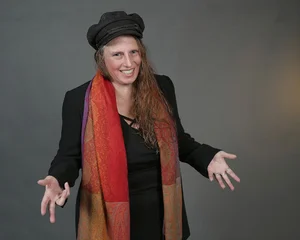
The Unmuted Room with Erin Snow
Aicila:
Welcome to Business as Unusual. My guest today spent 16 years as a legal advocate for survivors of domestic violence, sexual assault, and stalking. And what she kept seeing over and over was how much a person could shift simply by being truly heard. That observation became a practice. And that practice became the un-muted room.
Erin Snow is the founder of a space designed specifically for women to speak freely, find clarity, and reconnect with their own voice. Welcome, Erin.
Erin Snow: Hi, how are you? I'm so happy to be here. Thank you.
Aicila: I am so excited, but we've been waiting for a while for this, so I'll just dive right in. I mean, today's show's gonna be a little bit about listening and why that matters. And one of the things that the challenges that Erin talked about is, or one of the challenges that you see is that we've been trained to feel the right things and say the right things in quotes for people that [00:01:00] are listening that people don't even recognize when they're doing that.
Uh, can you talk a little more about that?
Erin Snow: Yeah, I see it in my work. Um, I just see it when I'm talking to friends is that we tend to censor ourselves. We wanna package things in a particular way. So it's palatable, so that it's pretty, it looks good. It sounds good. It feels good because I think we're just nervous about I in a safe space where if I say the wrong thing, if I say it incorrectly. You know, you're, you're human and we're so careful, and if we do that incorrectly, what's the reception going to be? What's the judgment gonna be? What are people going to think? So I think we've like held ourselves back from saying the things that we wanna say. And I did that. I, I've personally done that.
I, like I said, I've seen clients do that. I've, I've seen that in my legal work and in the work that I do now. Um, yeah, we just censor ourselves.
Aicila: Yeah. [00:02:00] But I also think that on another layer that we're dealing with is the, the line between the public and the personal has been really blurred. I, I was thinking about this recently where. In the past, if you had an outrageous thought, you might share it with a couple of your friends. And they would laugh, and then they would say, yeah, but. And now if somebody shares an outrageous thought on, say Twitter. It goes, it gets amplified and suddenly these very outrageous things have become quite normalized.
Erin Snow: Mm-hmm.
Aicila: And so I feel like that that's one layer that I see. But then another layer is that because the public and the personal has been a bit blurred in this other way. You feel like every personal thought is sort of public. And you need some spaces where you can be, I would say almost like community regulated. Where you have a thought and you say it and then somebody is like, oh, that's really insightful, or eh. And then you get some time to kind of adjust your perspective [00:03:00] because a lot of us have instincts that are not our, like not, not our desire, right?
Like we've got all this training. That my, my son likes to say, you know, your first reaction is your training and your second reaction is your choice. And so you need a little space for that because we don't know what, what we don't know until we realize that, oh wow, this created an impact I don't wanna be part of.
So I feel like there's that layer too. And, and to have a place where you know, you can say something and that it is genuinely private.
Erin Snow: Mm-hmm. Yeah,
Aicila: Um, yeah, I feel like that that could be very helpful. It's sort of like working some of those things out.
Erin Snow: Mm-hmm. Yeah. Being able to process something, say something, process it without having, like I said, package it in a particular way. It can just be like a verbal dump and then saying, Hey, how? It's almost like a practice. It can be, if your goal is to maybe articulate. A thought or a feeling to somebody else. This space is good because you can [00:04:00] practice it and say, Ooh, that didn't come across the way that I wanted it to. Or, Hey, I didn't realize that I've heard myself. Now say it out loud. Here's a new thought I have around this. And it is, it's a good practice so that when you want to. Make sure you're getting your point across and maybe you feel like you have one shot at doing that, that you wanna get it right.
And so, hey, let's it all the rough edges come out and work it out and, and then take that and be able to apply it in the conversation, like the space where you wanna have that conversation, if that makes sense.
Aicila: Make that. I feel like that's really helpful, honestly. That having that we all, many of us have friends for that, but sometimes our friends are kind of close. And we, we wanna have a, a, a truly free space to, to not feel any ripples in our life. Um, you know, whatever that looks like. Or even there's, there's a whole articles they've done on the value of privacy.
Folks talk about, [00:05:00] oh, if you, you know, why do you need privacy don't have anything to hide? But there's, there's something about how we as humans are socially oriented. That means that when we feel observed, it is difficult for us to truly listen to our inner self in a certain way. And privacy allows us to risk and grow and experiment without a fear of like social embarrassment or rejection, while we're testing something out and feeling kind of uncertain.
So I could see how this would be a similar thing where maybe you can talk this way to your friend, but it loses a certain privacy that you could get, um, with a, with someone who does professional listening,
Erin Snow: Mm-hmm. Right, exactly. And I think for me, just on a personal level, I struggle with, you know, I'm all about advocating for using your voice, whether it is in private or it's out there in the world. Um, and I feel like sometimes the lines for me, often blur between how much is too much [00:06:00] to share. I'm all about saying. It's never too much to share. This is your space to do that, and it is in private. But for me, who's saying, Hey, I'm creating this space where you get to have this opportunity to say all the things that you're afraid to say anywhere else. And then at the same time, I'm like, okay, I am. is what I'm promoting.
This is my business. This is truly what I have, I'm passionate about, but at the same time, I also have a private life. And how much of that do I put out there while also maintaining this, be an advocate for your voice and what's happening, and don't be afraid to speak about all the things. So it is, it is kind of a balancing act for me too on a personal and professional level.
Aicila: Yeah, I mean, that makes sense 'cause, and I do think there's a difference between like authenticity and sharing and you know, emotionally dumping, if you will. Like just being like, here's everything. And I, I think of it a [00:07:00] little bit like clothes. Like I myself, when I'm taking a shower, not wearing anything, and when I'm out dressed up I'm still me. But it's really not quite appropriate for me to wear the same thing outside as I wear to the shower.
And I feel like that's just a layer of my own, you know personal boundaries, if you will. And so it doesn't, but it doesn't mean that I'm not, you know, expressing myself. I am just also being respectful of the, the different social engagements and, and other people's rights, if you will, to how they wanna do life.
And also, if it's freezing cold in Colorado, you have to wear like 37 layers. So
Erin Snow: I'm probably not gonna do that.
Aicila: I'm probably not.
Erin Snow: Yeah. I love that, that, that makes a lot of sense. Um, I would just say is that for, it's really two things like the business that I've created, the space that I've created is the space where you get to. You know, metaphorically speaking, be like [00:08:00] you are in the shower. know, like completely naked, like vulnerable, naked. You're out there,
Aicila: Yeah.
Erin Snow: you're absolutely right. We're not gonna go do that in public. You'd be arrested. That would be awful.
Aicila: Right.
Erin Snow: But here you get to emotionally be that open and that exposed if you want to be.
Aicila: Mm-hmm.
Erin Snow: And, and that's what I think is great because to your earlier point, we don't have a lot of spaces like that. Um, do need to, we show up in, think about all the places that you show up to in your daily life. Like we go to the doctors and we present a certain way. If you're in therapy, you go and you present a certain way. If you go and have. meeting with your kid's teacher, you're gonna present a certain way like there, because that's what we're taught, and that's that those are, there's some societal norms built into all of that. But here it's like, all right, I can really, in this space, let all of that down, let all of all of that go and just be at [00:09:00] base level. What I want to be in this moment and express myself that way. And it is very freeing. It's very freeing. It's, it can be scary, I'm sure, for somebody coming in for the first time and just letting it all out, but think it's important to have places to do that and people to do that with.
Aicila: I, I did a personal development program like more than a decade ago, probably more than that. And there was an exercise they had in it that I've kept for years. Uh, in, in the, the, what you do, you can do it with a partner or a friend, but you each sit down and you write, you can write on a topic or you can write on something.
Just randomly. And then this is the really interesting part, especially in a partnership. And then you read what you wrote to the other person. They don't get to respond in any way. You sit for a minute in silence. They read what they wrote to you. You sit in silence. And they know you're not allowed to talk about any of those topics for at least 24 hours.[00:10:00]
Usually you'll never talk about them again. And it changes how people listen in relationship and how they uh, respond because they don't get to just verbally say, you know- they have to actually just totally listen and they're also freed from the burden of responding, if you will, and they don't have to do any active listening.
They just have to hear it.
Erin Snow: I love that exercise. That it, and that is an example of what. We don't an opportunity to do in a lot of our conversations, most of our conversations, we're trying to, I mean, 'cause everything's about efficiency right now. How do we get to the answer as quickly as possible, right? Because people don't have a lot of time and there's short attention spans, and we've gotta get to the next thing.
So, all right, you're talking to me, you're presenting a problem. I've gotta fix the problem. We're listening to respond. That is how we're engineered now. We're listening to respond when, one, we don't know if that's what the person wants. We don't know if they want [00:11:00] us to respond. Two, we don't know. We're assuming that they want it to be fixed.
Aicila: Yeah.
Erin Snow: takes all of that out of the equation. Like there's not interruption, there's not. A fix. If somebody wants advice or is looking for a solution, great. Ask me for that. But that's not the goal. That's not what you're walking into is, Hey, I'm here because I'm gonna solve your problem.
Aicila: Right, exactly. And it and it free. This creates a different container for the conversation.
Erin Snow: Mm-hmm.
Aicila: the lack, if you will. I would say actually there's still a conversation if you're not responding, but that's a probably we not, I don't wanna side rail us. I think we could talk about a lot of things in depth.
It'd be really fun. Which I already feel like you have to come back. So hopefully you will do that. So I, so you, um, can you give like a, a, a story, like a, a short one that kind of shows a couple of key experiences that kind of made this aha moment for you? Um, and if, if you don't have one, don't, I have lots of questions for you, but.[00:12:00]
Erin Snow: In my life or
Aicila: Either in your, like if you had an experience where you saw someone's, the way things shifted for someone. I know you said that you saw it when you were doing your other work.
Erin Snow: Mm-hmm.
Aicila: Um, but I mean, that, that could be kind of heavy, so I don't know if there's one.
Erin Snow: I can talk about, um, a, a session that I had with a client in my, in my listening
Aicila: Yeah, that'd be great.
Erin Snow: So, because a lot, this is a new concept, professional listening, what the heck is that? Right? What do you do? What, what does it mean? Um, so I had somebody who was interested and they tried it out, and I love that they were so directive initially because I always ask, how do you want me to listen to you today? Um, do you want a conversation? Do you want to just go? Um, and they said, I want. You to listen to me for 15 minutes. I don't want you to talk. I don't want you to say anything. I'm gonna go for 15 minutes. And they went for 15 minutes. I [00:13:00] timed it. They wanted me to, I timed it and before the 15 minutes was up, they said like literally if there was a light bulb, I would've seen it.
Like what those like click, like they said, oh my gosh. I. Had no, I didn't understand this,
Aicila: Mm-hmm.
Erin Snow: I totally get this. Like I heard one, I had the space. Two, I heard myself. I could hear myself, think, I could hear the words coming outta my mouth because I wasn't worried about judgment. I wasn't worried about someone interrupting me. I heard all of these things. And I get it, like not only just got why this matters and why listening is important, but also got what they were trying to process and figure out because
Aicila: Nice.
Erin Snow: given themselves the space or the time really to do that. then because they had done that, then they were able to say, okay. [00:14:00] I have some clarity around this now let's talk about it, because I understand where I was coming from. I have an idea that I didn't have before and now I do. So now I have space freed up in my brain to be like, okay, let me kind of figure out what I wanna do for next steps. And that was their choice.
That's not everyone's choice about do I wanna talk next steps? But that's what they wanted to do. And it was just, so, I've had a couple of moments like that where these like you can just actually. See the aha moments with the clients where they're like, my gosh, like I, I'm figuring this stuff out. Like, wow, I've been working on this for years and had never figured out like, why am I doing it this way? But they gave themselves the time in the space with a neutral person who didn't judge or interrupt them. And they're figuring it out, and it is so empowering. It's amazing to see. It's like you can physically see it. It is the coolest thing. [00:15:00] I
Aicila: Mm-hmm. That is awesome. That is really awesome. So what business wisdom makes you roll your eyes every time you hear it,
Erin Snow: Oh, business wisdom. Now I don't come from a business background at all. Um, business wisdom that makes me roll my eyes.
Aicila: or your least favorite piece of business advice?
Erin Snow: Um. I dunno. I, I guess I would probably say that the hustle, I, I guess this, this, uh, advice or like, just keep hustling. Just keep hustling. Okay, well, what does that mean really? What,
Aicila: Mm-hmm.
Erin Snow: to hustle? And do you have to break yourself
Aicila: Yeah.
Erin Snow: to make it like this? Pressure, an idea of if you hustle, you'll get X.
If you
Aicila: Hmm.
Erin Snow: [00:16:00] you'll get Y. But what is the hustle? And really is that what we should be telling people to do, is to completely just, throwing yourself into something and being passionate is great, but like to do it at such an extent where, one, you think that there's gonna be a particular outcome if you do that.
And two, that's not healthy. It's not, there's no.
Aicila: Yeah.
Erin Snow: there. So this expectation that if you do the hustle, whatever the hustle is, you are gonna make it big. It's,
Aicila: Yep.
Erin Snow: what that is. I don't know what that hustle is. I think it's feeling showing up in ways and in places that make you feel good, where you wanna grow your business and with people that you wanna grow your business with.
Aicila: The company makes everything better. I'm a firm believer in that.
Erin Snow: Mm-hmm.
Aicila: What advice would you give your 18-year-old self?
Erin Snow: Oh, my 18-year-old [00:17:00] self. Um, trust your gut and use your voice. Um, ask for what you need. I. Throw politeness out the window sometimes. I think especially as girls, we are raised to be polite and you know, it's the same thing. You go to somebody's house, I, I feel like I've even said this to my kids. Look, if you go to somebody's house and they offer you a meal, eat the meal.
Even if you don't like it, eat the meal. Because that's the polite thing to do. And to some extent, yes, as a mom, I'm like, that makes sense. Um, we don't wanna be rude, but I think it's gone like a step too far where people. Feel uncomfortable in certain situations, and doesn't, it's not a good fit for them, but they're like, no, I've gotta keep going.
I've gotta be polite. I've gotta stay in this situation. And, and they stay, you know, for that reason and feeling like they're stuck and that they [00:18:00] need to stay there because. Leaving or not staying would be rude, and it can have this effect on you and how are people gonna think about you?
Aicila: That's good advice. I take it.
Erin Snow: Yeah.
Aicila: Do you have, so you, you just rebranded to get to the, um, unmuted room.
Erin Snow: Yes.
Aicila: to the unmuted room. And what, do you have any like cohorts or sample things that people can check out or ways they can sign up to to be heard? I love that sign up to be heard.
Erin Snow: We heard. I love that. Yeah. Okay, so the best thing is to go to my website, which is the unmuted room.com, and anyone listening to this or goes to my website and is like, Hey, this seems interesting. I'm intrigued. This is different. Might this work for me? I do 10 minute free minute con, 10 minute free consults, um, which you can also book through my website.
And that's just a really good introduction to what [00:19:00] this is and what it isn't. And see if you're a fit and if I'm a fit and this is something that would be really helpful for you. I always encourage people to do that.
Aicila: Sounds great. Well, thank you so much for joining me today to chat about what you're up to and to let people know.
Erin Snow: Yeah. Thanks so much for having me. This was fun.
Speaker: Thank you for tuning into business as unusual, remember, in this ever evolving world of modern business, it's not about fitting in.
It's about standing out. See you next time. Stay curious, stay innovative, and always keep it unusual.