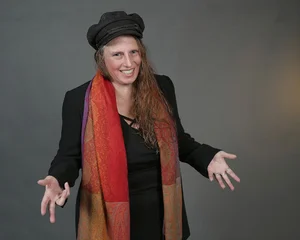
The 21-Year Shortcut with JB Glossinger
Aicila: [00:00:00] joining me today is JB Glosser, the founder of Morning Coach, a life operating system designed specifically for founders, entrepreneurs, and high performing professionals. What stood out to me about j B's journey is his grasp on sustainable momentum. Over the past 21 years, he has published nearly 6,000 daily coaching episodes, a steady rhythm and system that he's distilled into his new book. JB brings an unusual and fascinating lens to his work blending practical business strategy with deep personal alignment backed both by an MBA and a PhD in metaphysics. Splitting his time between the US and Columbia, he is a living example of designing a business ecosystem that actually supports the life you wanna live rather than the other way around.
Jb I'm really excited to have you here, learn more about consistency and everything you're up to. Welcome to the show.
JB Glossinger: I love. Have to bring you everywhere. Gosh, just introduce me everywhere. That's Fanta. I wanna meet that person. Right. No, that's awesome. Thank you for that intro. That was really good.
Aicila: It's just based on everything that I read about you. [00:01:00] So, uh, you, you brought it, I just summarized it.
JB Glossinger: You did great. No, it's awesome. Been added a long time, 21 years, but before that was an aerospace. So just putting energy out there and showing up when, uh, you know, where I need to show up. So excited to be.
Aicila: One of the challenges that you mentioned seeing is, and even discussed it slightly before we started, is that people are overwhelmed with the number of tools, apps, content, things they're supposed to do, have to do, should do, we're gonna do, um, but they don't really have an operating system or a framework that helps 'em to tie it together.
So then they will confuse consuming information with making progress. So you can help with that daily structure and priorities that can really help those high performers who can also get distracted by this. Even though they're doing a lot, they're not doing the things that help them move.
JB Glossinger: Yeah, we, I mean, we all go through that. You know, I think what, what really worked for me is, and my new book talks about this, and this is a bad word, but I use it because that's what I was called, was in third [00:02:00] grade I was called a retard, right? So. Third grade, I got held back and um, my grades were never fantastic.
In fact, I got a report card here, which was F's and D's and you can kinda see, oh, I see that there. Um, so it wasn't great. I actually found that, which is cool. So I'm actually gonna put this
Aicila: Yeah.
JB Glossinger: But the reason I bring that up, not being a straight A student, even though I did my MBA did better in graduate school and my PhD, it was really hard on me.
You know, in third grade they put me in a split. Class and I was bullied and they called me a retard, literally. And they said I had special needs, so I had to leave. And back in the seventies they would come get you. They'd say, James to special needs. And all the, you know, the kids would be, look, you idiot.
And you know, it was, it
Aicila: Yeah.
JB Glossinger: it was. I think the thing that has been the blessing of all that is I've had to figure out life. I didn't have the straight A's. I didn't know, I didn't have the engineering background. I didn't know how to put all this together. And so the past, now it's, you know, geez, I'm 56 now, I'm gonna be 57,
it's been a long time. Uh, you know, I've really built a system and helped thousands of people around the world [00:03:00] because I've had to live it. It hasn't been something that's just been easy. So you're right, so many people have so many tools and overwhelm, but at the end of the day, you gotta figure out how to figure it, you know, work it into your life.
And we're all unique and all different, and that's what's really critical about this. So what qualifies me, I think, um, you know, being that person that had to work through all this, you know, it just wasn't a God-given gift. I, I had to work to figure out a way to, uh, actually succeed in this weird world we live in.
Aicila: Yeah. Well one of the things that I think is really interesting is often the thing that we are. Not naturally good at is often the thing we are best at teaching other people, because we had to learn it step by step, whereas, and
JB Glossinger: know, yeah. A lot of times they say we write the books for ourselves. You
Aicila: mm-hmm.
JB Glossinger: fifth book and every book I've written for myself, you know, my morning coach, I do. I did it for myself. Everything I've done, because I've needed it.
Aicila: But then you ex. But that's the thing, is you're able to then [00:04:00] take that thing and share it so other people don't have to figure it out themselves. It's like the things that we're naturally good at that are intuitive, are hard to explain because they're just the way it is. But the things that we had to learn, we really had to break it down and then we can share that information with other people.
So in some ways, having that kind of challenge. This is a total side note, I'll get back to the regular thing, but yeah, I find that it's a very interesting, um. So I love one of the things that you talk about is that personal development isn't a weekend seminar. It's a daily practice, and the people that succeed over the long term are not necessarily the ones with the best goals.
They're the ones with the best systems. And that consistency beats inten intensity, which I've seen in my own life. I can do both, but, uh, I, I would love you to talk a little bit more about that.
JB Glossinger: Yeah, it's, it's really critical. I think it's Zig Ziglar, who was one of my mentors, said, you know, personal development, it's like bathing. You know, you want to do it just one weekend, you need to do it every day. And, uh, it's really interesting because. You know, I, I'm a marathoner and I wasn't a couple [00:05:00] years ago my vision, I'll talk about mission, vision, values, that's our cascade process.
But I decided to become a runner and I qualified for the Boston Marathon. Now what was cool about doing that at 56 as a non runner and becoming an elite athlete, which is very few people qualify for Boston, um, was I learned about zone two. And zone two is really interesting. It's the area of fitness that the Kenyans and all the great runners run in, but it's actually really easy.
It's really boring, and 80 to 90% of your training needs to be zoned two. And you think
Aicila: I.
JB Glossinger: you've gotta be running at these high levels and super high intensity with with running to train. But it's actually the opposite that will hurt you. I do 40 miles a week of zone two running, which is just basically, I look really slow, but then I'll go out and run a seven 30. Marathon 26 miles and and kill it. And so life and business is very similar. Most people are living in crisis mode constantly. But the truth is they need to slow it down and be consistent and steady. And that's gonna be my next book next fall. I'm actually living this because I want [00:06:00] to wanna put that book out, but it's really about slowing life down.
Because that's where you get clear. You have less cognitive load, you have less decision fatigue, you're very clear, you're very structured and you can make things happen. But the problem is most people live in crisis. Whether they're in the news, they're watching the news, or you know, involved with social media, and they're just in crisis constantly.
And that's just not a good place for success.
Aicila: I am guessing this ties in, but I'm gonna ask anyway. One of the things you talk about is that most productivity advice fails busy founders. Could you talk a little bit about why that is?
JB Glossinger: Yeah, I mean, because we're saying yes to too many things, like, so our systems are really designed to help you say no. it's, it's really getting the focus of what is important in your life and figuring it out. And what really insane is like I work with a lot of people, whether it's basketball teams, professional golfers, to stay-at-home moms.
I mean, we have a whole gamut of people. What you'll find is that people that are really struggling are saying yes to a million things. [00:07:00] And what people that are really doing well are saying no. But here's what's crazy. The more success you get, the more opportunities, the more things that happen. So you really, really gotta have some type of operating system.
If not, you're just gonna be scattered and scattered, really creates. Think about a river. river is free and awesome and can do so many things, but without the banks, it's a flood. And that's where most people are living. They're the flood, they're not the river. And so I'm all about freedom. I wanna be the big Lebowski.
I wanna sit on the beach. I got a place in Columbia on the ocean. We're building now. I, I wanna be free. I don't want all this discipline, I don't want these systems. It's the opposite of anything I've ever wanted, but that's a dichotomy. In order to have that freedom, I have to have the discipline in the system.
So it's really interesting. But yeah, most people are struggling because they're in crisis mode and they're doing way too many things and they don't know what to do next.
Aicila: Yeah, I think that's really true. Second that from my own observations of the people that I worked with and the places that I've been myself. Um, so [00:08:00] what do you think is unusual about what you're up to? There's lots of folks out there trying to help people be more successful, more productive.
JB Glossinger: Yeah, I think, um, 21 years, 6,000 episodes is unusual.
Aicila: Yeah, it's true.
JB Glossinger: years ago is a long time, and I think the most. I would say the most unusual thing is the people that we've attracted. I have the
Aicila: Hmm.
JB Glossinger: people in the morning coach community, and you know, I've actually had my assistant said, where do you find these awesome people?
And I'm like, I have no idea, because it's not me. And I always say I'm the messenger anyway is not the message, right? So this is not about me. I have a pretty deep faith and I'm not gonna take credit for this. I've been doing this a long time and there's absolutely no way I could do it as a human being.
Like, we've got amazing people. Uh, it just, it's awesome, you know, and I'm having so much fun. of the reasons I wanna do shows like yours, which are awesome, is just to get out there more and do more interviews because I've built a lot of stuff on my own without doing this, and now it's, I'm just getting out a little bit more, which is a lot of fun.
Aicila: I love it. I, [00:09:00] that's why I do the show, is I want people to know there are other options. And that they don't have to be in that place of grind and misery. There are ways to create something that can build a life that they want while also having work, either that they believe in, or at least that they enjoy.
JB Glossinger: Yes, it's critical. I mean, I believe true success is peace. I mean, I have billionaires that have come to me that are unhappy and unsuccessful. So it's not just finances. I mean, I think that's the big thing in the United States specifically. Luckily I have a big international community. Uh, we have a lot of Europeans, a lot of Australians. And it's just a different vibe, like we're multicultural in the United States specifically, there's just a lot of people that are grinding. And one of the joys I have is to go to Palomino Columbia, my wife's Colombian, and we go, uh, in the Palomino. We also have a place in Imba, but Palominos on the ocean.
There's real indigenous Indians there. And there are people that live in homes with dirt floors, there's hardly any TVs. Everybody's outside and they're some of the happiest people in the world. [00:10:00] And to get away from the noise is awesome. Sometimes I'm not saying, you know, put a oo on and and go to an ashra, but I am saying perspective is such an important part of this.
And when you start to be happy with what you have, things start to settle down. And we can slow down psychological time and instead of time compressing, which is happening for so many of us, especially in the United. States, we can slow time down and we can expand it, which is just a wonderful psychological thing to have happen.
Aicila: Yeah. 100%. I, I feel, I, I don't know how to say this. Like, I, I agree with what you're saying and I don't wanna just be a yes person, but I think people have listened to me. They know, I, I actually genuinely mean that. I see, I see what you're talking about. And when I have those experiences, it's so much more fulfilling.
JB Glossinger: Yeah, it's just having the right perspective, right? I mean,
Aicila: Mm-hmm.
JB Glossinger: I mean, we are so blessed, but yet sometimes it's so painful to live. It's, it's a really weird thing and, and sometimes we just need something drastic or to see something that really opens us up. And I'm hard on social [00:11:00] media. I really am.
I, I think it's a really negative thing, but there's some real positives too, the people that are helping people. And some of the stories you see there is some good there.
Aicila: I don't know. I think that, I think people try to make good wherever they are. I think people are good. I don't know if you've read Humankind by Rutger Bregman, but he talks about the psychology of like humans. And it's really beautiful, very, very hopeful data-based book about, you know, we are a, we we're helpful, we care about each other. And the technology can either foster that or or di deviate.
And I think right now that the incentive, the incentives deviate, and so the more that we take space and have real human connection, the more we can lean into what is our actual nature.
JB Glossinger: Well, and I, I think that's the future of business, right? With AI and everything else. Not to sidebar, but I think it's really important. Human experience is gonna be a commodity and I think, you know. My business specifically, I'm doing more experiences, whether it's going to Columbia or getting people together.
And [00:12:00] also I believe the human connection. One of the big things we did was make a huge investment in community and we built a community platform, which we've never had before, and we're bringing people together and we're doing meetups, and it's just people need that. So I'm with you and I think
Aicila: I do.
JB Glossinger: to business, I think you need to be.
Thinking about that, because that's something AI can never replace. Like there's no way that it can replace experiences. It just can't. I don't care how many 3D head things you put on, or it can't, it can't replace the human connection.
Aicila: Yeah, and you can feel the distinction I there. I'm curious to see where it goes, but I do feel like what I'm seeing is there's a lot more of that like return to trust. I had someone on the show who talked about that, that you, you're gonna really wanna know who you're talking to in a way that was kind of true like 80 years ago, right?
JB Glossinger: Yeah, Spotify, we're seeing it,
Aicila: Mm-hmm.
JB Glossinger: their top lists, people are getting angry, like the YouTubers because there's AI songs and they're [00:13:00] like, we wanna know what is AI and what is a real human being. And it's a weird thing, right? 'cause it sounds so good. It's a great song. But it's not a real person.
And people are, people are revolting against that. They're saying, we need an AI list and we need a real human list. Um, so it is, I think it's already happening. I think that trend is starting to occur.
Aicila: I agree. What business wisdom in quotes, makes you roll your eyes every time you hear it.
JB Glossinger: God, I, I'm a, I'm really against the hustle culture. Like I just can't stand the get rich quick stuff and the internet marketing stuff and you know, I just had somebody come to me that spent $50,000 with a guru that said they were gonna fix everything. A yoga teacher that in COVID had to shut down his gym and was trying to figure out the do.
So we hired somebody for 50 grand. Um, it drives me nuts. Like, you know, business is business. You gotta find a problem and solve it, and then get an exchange for money. And that's what it is. The hype, the next big hack, the next big [00:14:00] thing. It just drives me nuts. I was watching a thing on Jim Carrey last night.
I was just telling my team this, you know, and I, I, I didn't even know Jim Carrey started in his seventies. He was on Johnny Carson in 1983 was his first appearance. He didn't even get to go on the sofa until 1991, and that's really where his career started. So we think Jim Carrey, you think, oh my gosh, this big superstar.
Well, he had 14, 15 years there where he was just grinding through and could have quit at any time. So it's, it's just. You know, you gotta stick with things there, you know, I get it. Some people get lucky, some things happen. I was lucky to put a podcast out in 2005 and become top 25 in the world. I mean, that was luck.
I'll be, I was one of the first podcasters I beat Oprah. Oprah and Ellen. Okay. That was a really early in the game thing and I, I'll admit that was luck of the day. The consistency over time, the zone two is what's gonna get you there. So, I'm sorry to rat ramble here, but I can't stand the hype, get rich quick stuff.
I just can't stand it.
Aicila: No, I, I appreciate it and I, I agree. Like I, I, I tell people I wanna be an overnight success someday[00:15:00]
JB Glossinger: Yeah, I'm a 21-year-old. Overnight success. I mean, that's
Aicila: Right.
JB Glossinger: You know, it's 21 years. It's, it just is what it is. I mean, and again, it's going back to enjoying the process. I think
Aicila: Hmm.
JB Glossinger: many people are trying to make things happen so fast. Appreciate what you have. Wake up with that energy and just work every day.
There's an old, uh, Koan that says, you know, before enlightenment, CHOP would carry water after enlightenment, CHOP would carry water. the truth. I mean, it, that's a business thing too. You just show up and do it. And I think you gotta know why you're doing what you're doing. Because if you don't have a purpose and you don't have a meaning and you're just doing it for the money and -you're, you know, MLMs are really interesting.
I work with a lot of MLMers and. It's really interesting that MLM is a great concept, but the way they sell it is horrible. Right?
Aicila: Yeah.
JB Glossinger: it could actually be a great business. I like it. That gives people business experience. It's cheap, it's inexpensive, but people realize this is a tough business. It's really hard, you know?
And so it's just you. But if you show up and you do it every day, five years from now, you'd probably be a diamond, you know? It's a really [00:16:00] interesting thing with people in time. I, you know, we overestimate what we can do in a short amount of time. We underestimate what we can do in a long amount of time.
Tony Robbins, I think that's his quote. I don't wanna take credit for it.
Aicila: I'll definitely give you credit. No, I'm kidding. Well, and to speak to what you said though, I, I feel like what your yoga person went through, it's one of the things that makes it harder to actually help people is oftentimes what happens, and I, you know, I see this a lot where they're, they, they can tell they're smart, they can see that they need support, and then finding the kind of support that's actually investing in their success as opposed to selling them to their desperation, if you will.
JB Glossinger: yes.
Aicila: we've all been there. I've had those things come across. I'm like, oh, you can make it so easy. And I'm like, no, you can't because all you're selling is to my desperation and, and to my ability to do the work.
And, and I, that's not what I need. I think of it speaking of running as having a trainer. Like if I'm gonna run a, I used to be a long distance runner. [00:17:00] And if I'm gonna go run. I have to be the one that gets up at five and, and works out. And I have to be the one that eats, wait, eats, right.
And I have to be the one that wait, lifts the weights. But if I have a trainer or a buddy, I can shortcut some of the information that I need to be able to be more effective.
It's we, you are doing all the work. You, you get that, but, but I can help or you can help make that work more effective or better for you or help you watch out for things you may not know to watch out for.
JB Glossinger: It's all about the right people, right? And the right mindset.
Aicila: Yeah.
JB Glossinger: I'm a huge, I mean, I believe in everything I do. I have a coach, you
Aicila: Mm-hmm.
JB Glossinger: was screaming at me the first time I failed. I ran two marathons. The first one I didn't qualify. I bonked at mile 18. He's like, you're gonna go out fast.
And guess what I did? And I heard him in my head saying, slow down, slow down, slow down. So, yeah, it's, it's, I, I'm not against that at all. I just think need to be open to like watching your show, you know, getting here. That's where you get information. Then you find people you wanna work with, search people that have authenticity and integrity.
I, I do believe that [00:18:00] people should open up their lives. And that's one of the things I do. Like, I'm very public, but I also mentioned I'm try to be private. But one of the reason I'm very public is I, I want people to see what I do. I want people to see that I actually live my systems. That there is no emperors, you know, wears no clothes. I, I think it's really critical that anybody works with somebody, especially at that level, that you understand what they're really about.
Aicila: No, I agree. I think that's super important. What advice would you give your 18-year-old self?
JB Glossinger: You know, I, I would say just do what you're doing. Like I get that once in a while and, and I'm very happy with every mistake I've made, and I probably made more mistakes than most human beings. I lived in Miami for 30 years and tried to, uh, you know, live the Vita Loca for a while there, and I did, you
Aicila: Okay.
JB Glossinger: Uh, you know, I, I just think, you know, what's great about being young is you do a lot of dumb things, and I think those dumb things make you stronger, better, and, you know, just be safe. That's the big thing. Do dumb things, but be safe.
Aicila: Yeah. Well, sometimes you find your lines by crossing them, and I think that, you know, the way that you [00:19:00] learn is by trying things and then evaluating. That's, that's the, that's the whole thing.
JB Glossinger: darkness, you can't find the light. You know, I think there is this thing where I'm, believe me, I'm a very positive, optimistic person. I'm all about light, light, light, light, light. But there is some truth that there is some darkness out there, and sometimes you need to address your darkness, do some shadow work, understand why you're doing what you're doing and the mistakes you're making.
I'm with you on that.
Aicila: So you said, you know, you, you definitely had this experience in school where you were, um, seen as not capable in this way. I mean, obviously you are, right. Then you have an MBA and that's not unique. Like lots of people have, uh, have their, um, expectations set very low for them. What, what for you created the, the motivation to do this?
JB Glossinger: I, I mean, I'd say, mom. You know, I'm a huge, huge, uh, uh, mama's boy. My mom [00:20:00] raised me until I was 10 as a single mother. My, my father who's passed away, I love him, but I didn't realize the relationship was abusive and was a pro football player. Never paid child support and threw my mom out. And, uh, it was rough on us. I mean, it was really rough. And so she raised me till I was 10. And one of the things that happened, I never seen them married 'cause they got divorced before. You know, I was like a baby. And I, my, my dad passed away. I saw the. The, uh, wedding pictures and they were kids. He's like 18.
She's like 17. I, I, it just blew my mind here. I'm picturing adults and now I, so I've kind of forgive him for, my mom really hasn't, but I've forgi forgave him and my stepdad came into my life and helped a lot. But I, I think the belief of somebody like your mother. Uh, it really helps. You just need that one person,
Aicila: Mm-hmm.
JB Glossinger: that is with you.
And so, yeah, I've had a lot of mentors. Zig Ziglar, when I was 16, Wayne Dyer, we became friends before he passed away. You know, I've had, so I got to share the stage. So many wonderful experiences. But yeah, if I look back, my mom and then being very fortunate that a health. Teacher brought me a book by Zig Ziglar, see You at the top.
And started [00:21:00] reading that and realized that it wasn't so much about the grades, it was about the goals and the structure, and just believe and keep working and eventually you could get there. So, you know, getting that experience of personal development at a young age was great. And then my mom was a factory worker.
She wasn't college educated. She didn't know any of this stuff. She just believed.
Aicila: I love that. Thank you. If somebody, let me think. If some, if someone's listening right now and they're like, okay, this is cool, but what do you mean by consistency? Is there like a, a quick tip or two that you could say, start, start with this thing. That, that, that would give people a chance to kind of test out what you're talking about?
JB Glossinger: I love it. I mean, I, I would tell, so we are big about mission, vision, values, like, so just to define that mission is what you're gonna do over 12 months. This is not some corporate bs. Vision is who you're gonna become, right? And values are what's important. Then we do goals, projects, task. My book that I wrote with Hay House that, well, I got to meet Wayne and started to, you know, get in that world was about the sacred six, which came from this story of Ivy Lee. [00:22:00] Ivy Lee went to Carnegie in the 1910s and said, look, here's the deal. You need to prioritize your days. And Carnegie goes, I don't need any more knowing. I need more doing. He goes, okay, I'm gonna give you a tip. He goes, write down six things you need to do today. Start with number one, don't move to number two and prioritize them right then.
Start on number one. Don't move to number two until number one is done. So literally, Carnegie started using this system, and I heard this from Earl Nightingale on a tape in the eighties. Like this is from Lead the Field, one of the first records, and it was actually on a tape. And, um, so I started applying that.
Well, Carnegie did it. And what happened is he gave it to his management team. He literally, when Ivy League came back, he gave him a check for $25,000, which is like a quarter of a million dollars for that idea back in the 1910s. And this is before email and computers and everything else. So to step back to the, that story, why am I telling you this? Because if people would just do that. Wake up in the morning, prioritize the most important things you need to do today and just start working that list without distraction. If you do that every day consistently, you're gonna be better than 90% of the [00:23:00] people out there are productivity wise. So that's the very tip of our system.
The very basic. But I really, if, if I was meeting with anybody and somebody said, I don't know what to do. Slow down, clean your whiteboard off, and in the morning, just write down the things you need to do. Prioritize 'em and start with one. And don't go to number two and the ones, if there's more than six, which you're gonna have, you're gonna have 30. You're gonna have to start prioritizing.
Aicila: Yeah. Excellent. Um, now, so you have a community. Is that, so you have your book that's come out and picking people can buy that, um.
JB Glossinger: out. That's the new one. This is my first book, and I'll just be full disclosure. It's my fifth. It's the first one I've written, not for money. What do I mean by that? I left my corporate job to become a coach and a consultant. I thought the book would make the difference, so I wrote Get Outta Neutral, and it really was for the money. be honest. I mean, it was like, I need to make money, I need to get out there. And then I've written some books over the years and then I wrote for Hales. Hales gave me a big check, right? So he said, read Tracy, the founder of Hales, said, Hey, you need to write the book. So I wrote the book. My heart was in it, [00:24:00] but it was still, this is the first book that I've written.
I don't care if I make a dime, like it's such a great book. It's so much system based. It's 21 years of experience. And I love it. And I love the fact that I'm not writing it for money. I
Aicila: Yeah, it's different, isn't it? It feels different.
JB Glossinger: No, I'm not trying to make money with this book. Right. So I, I, I'm really focused on putting a system out there that people can really use and I believe in it, and we have people using it every day, and their lives are being changed and it's really awesome.
I, I had this belief years ago that I need a gray hair to be successful. And so it was really a bad belief 'cause all my mentors had gray hair. Now I'm 56 and I have some like, so I feel like I'm finally there, like the wisdom is here and I'm so proud of that.
Aicila: That's awesome. I love that. All right, so we'll put a link to the book in the show notes, and then also, uh, do your community, do people apply for that? How does that work?
JB Glossinger: link. 'cause we make planners really cool for, I don't have one here. Remarkable stuff. I'll give free planner and stuff.
Aicila: Oh, cool.
JB Glossinger: or anything. I'll [00:25:00] just give you a link. I'll send it to you so people can get a link to the book and stuff. Our community and morning coach is very simple business model, so, you know, and this is cool.
So you know, so I, I did a podcast for free. We started for four years and I got to 2009 and we were top on iTunes, top 25. It was awesome. We had so much, I had a lot of fame, like I was on stages at Blog World, Gary Vanerchuk and Tim Ferris. I was keynoting all over the world. I was broke.
Aicila: Yeah.
JB Glossinger: cared in 2009 what a podcast was.
They thought it was cool, but there was no money in it. So I was doing some coaching, but there was no money. So in 2009, I built. I think the first membership site on the web and we created a membership site and 13,000 people came in there. And then I charge, I said, it's 20 bucks a month to hear me, and 1300 people came with me.
1,321 remember the number to this day. And that was like a billion dollars. It changed my
Aicila: Yeah,
JB Glossinger: what was crazy is those 1,321 people, I thought that was horrible. Like I was like only 10% pe The people
Aicila: that's good numbers.
JB Glossinger: And I [00:26:00] was like, that's amazing. Like now I get like a two, one to 2%, even that like a 0.5% conversion.
So interesting business. But now we charge a hundred bucks a month, but we have a complete system. We just integrated a software, which is $97. So our main coaching program's $200 a month and we work with professionals, but we have a software system and a coaching program. But that's how the business has evolved over 21 years.
Aicila: Thank you so much. Uh, for folks that are listening, how do they learn more? Follow you, get in touch.
JB Glossinger: Morning coach.com. It's really simple. And then I'll give you a, you know, like I said, we're not salesy. Like I'll give you a uh, link so people can check it out. And one of the things we're doing is like, we're gonna implement this soon. We're doing a 30, do $30 30 day trial, so that way anybody can quit. I, I never want to be that, know what I mean?
Aicila: I do, I totally know what you mean.
JB Glossinger: People say my hardest thing is marketing. Like I just have a really hard time. Um, I have a really hard time with that.
Aicila: Well, what it sounds to me like is that you have a hard time feeling like you're being [00:27:00] manipulative, which is what we're told marketing is that it's actually getting the word out
JB Glossinger: Yes, exactly. Exactly. Well, that's why I'm here. Right?
Aicila: Yeah,
JB Glossinger: it,
Aicila: you're getting the word out. It's good.
JB Glossinger: but it's hard. I mean, I've had hired marketers, I've had marketing people that copy stuff, and, uh, uh, I just, it is what it is, right? So I'm very positive, very happy. But if people say, what's, what do you struggle with? I, I don't like to talk about myself. Like, I don't like to brag about what we do, but we got a great system of great people. I'm, I'm very excited about what would be done.
Aicila: That's awesome. Oh, thank you so much for coming to talk to me and, uh, my listeners today. I really appreciate what you're up to and, uh, I hope you're having a great time.
JB Glossinger: I love it. Well, I appreciate you having me on and any energy, anything we, you know, we gotta keep putting the word out there.
Aicila: Absolutely. I.
Speaker: Thank you for tuning into business as unusual, remember, in this ever evolving world of modern business, it's not about fitting in.
It's about standing out. See you next time. Stay curious, stay innovative, and always keep it unusual.