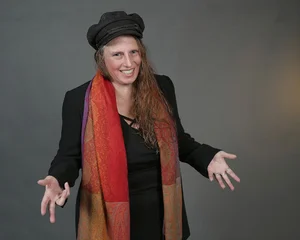
Strategic Sustainability with John Pabon
[00:00:00]
Aicila: Welcome to Business as Unusual. I am very excited to announce a return guest, John Pepone. He recently published a new book, Strategic Sustainability. And, well, I think we should... We'll just start there, but, uh, welcome to the show, John.
John Pabon: Glad to be back
Aicila: So, uh, what do you wanna... Uh, talk, tell people a little about who you are and what you're up to, and then we'll get into your book
John Pabon: Yeah, absolutely. So I am... What am I supposed to say? I am a sustainability author, consultant, and speaker, which doesn't really tell anybody that much. But I spend most of my time helping large businesses, uh, in the private sector figure out how to make sense of sustainability and how to simplify it, and then how to develop really strong strategies that just make business sense.
Because what we're doing, really at the end of the day, I'm not hanging off the side of a whaling ship or, you know, putting myself in harm's way on a pipeline, but I am trying to make the world a little bit of a better [00:01:00] place by working inside the businesses that, let's be honest, should be doing the lion's share of the work to make the world a better place
Aicila: And I, I know that you know, uh, 'cause we've talked about it, I'm a big fan of what you're doing. And I, I
John Pabon: Thank you
Aicila: I w- I feel like I was a teenager, but there was a thing that happened where McDonald's, like, cut the size of their napkins or something, and, like, it reduced the amount of paper that was used in the US by some amount. And they-- There was something else they did in terms of negotiating around, like, livestock and beef, and it, and it changed. So I feel like sometimes we talk about the impact a business can have, we forget that, you know, people are trying to sell to, you know, uh... Like, there's pro- you know, the, the providers of the beef, right? They are influenced by what their customers want. Like, um, like Costco currently in the US is still testing meat. So if they go into a meat facility, and they test it, and it doesn't [00:02:00] pass the FDA regulations, then they won't buy from that facility at all. And they test all the meat, not just the stuff for them, 'cause they wanna make sure the facility is actually up, up to speed, right? But that has an impact, right? That anybody that wants to sell to them has to continue to meet those standards. I
John Pabon: Absolutely
Aicila: people forget that, right? That
John Pabon: These businesses have massive supply chains, uh, and it doesn't even have to be that big of a business to still have a massive impact around the world. So this isn't to say that individuals don't contribute and shouldn't play their part. Absolutely, we all should. But at the end of the day, the way I, I view things, the private sector and lar- especially large businesses, have access to capital and resources and, uh, sort of a, a need to differentiate and to be better just to make their own businesses largely sustainable, not for the planet, but for themselves.
So why wouldn't we want to push them to try to make these incremental changes? Because for them, even an incremental change, like you mentioned with the McDonald's example, that [00:03:00] incremental change is going to have such a massive impact, a lot more than most individuals would ever be able to contribute to making the world a better place.
Aicila: Right? So how do you make the business case for sustainability?
John Pabon: It's really easy, actually. The business case is there. We've had it for a very long time. We know that, and there's plenty of stats around. I, I'm not gonna butcher them by, by pretending I know them by heart. But there are plenty of statistics that show that businesses that are environmentally or more socially sustainable or have better governance models outperform their competition by large amounts.
We know that consumers are demanding this as well, so why wouldn't you be resonant to what your consumers are demanding? That's one of the, the few things that we have with capitalism, is the power of our, of our wallets and how we spend our money. So we know the business case is there. What isn't there, and why we're struggling so much with this and why we're still talking about this, you know, 60 years on from the start of the modern movement, is the willingness.
So the business case is there, but the [00:04:00] willingness from businesses that, for a lot of them, are so entrenched in their ways of operating, they have a very hard time changing. And those that are even willing to change are having a hard time because it's not just flip a switch and it happens. There are lots of things to unpick, lots of processes to switch, and basically turning a battleship around in the water is going to take a little while.
It's not gonna happen overnight. And as we were talking about before we started recording, there, there's people to consider too. We, we tend to forget about the people that are involved in this, especially organizations that have mass supply chains. I think automatically of the fashion industry, that, you know, they have their tentacles in places all over the world, and they impact the lives of so many workers around the world that it's not so easy just to say, "Hey, shut it down," because then what do you do with all the people that are gonna be out of a job?
So it's, it's highly nuanced. And as much as I would love for it to be as easy as flipping a switch, that is not the business we're in.[00:05:00]
Aicila: Yeah, sorry, I, um So there's the nuance, right? And then the challenge of-- Do you feel like the challenge is more sort of structural, like you were saying, or do you feel like there's ideological challenges like, uh, like that... I, and, and I will say also, I'll add in like word challenges, 'cause I feel like sometimes people been trained to react to a word.
Like, if you say sustainability, they shut down. But if you say, uh, effective re-resource management and long-term planning, they're like, "Oh yeah, I'm all for it." Which is the same thing, right? it's like this three-part question, but, you know, ideological and then also structural. Like, where do you feel like you find the most resistance?
John Pabon: Our number one, our, our biggest Achilles heel in the sustainability space has always been around how we communicate it. And that's, you know, been the way since the 1980s when we started communicating this publicly. So from a [00:06:00] public-facing perspective, the, the individual, you know, sitting on their couch watching these advertisements, we've not communicated to them well at all because we've scared the hell out of them, right?
So if you, you're scared, you're not gonna do anything but just sit back and do nothing. So that's from that perspective. And then it goes on into business as well, where we approach them more with-- And I'm painting with very broad strokes. This is not all of my colleagues in this space. But most of us will approach business from a very altruistic perspective.
A business le-- A CFO doesn't care about altruism. They don't care about doing good for the... I mean, maybe they do when they get home, but they certainly don't when they're looking at their, their budget sheet. So you can't approach them with this altruistic perspective and then add on to that just the loaded phrases that we've been using that have just piled on with these misinterpretations.
So when I say sustainability, if I ask five people to define it, I'm gonna get 100 different answers. We don't even have a shared definition of what that means.
Aicila: Mm-hmm.
John Pabon: So how are we to expect a business leader to then resonate with any message we're bringing to them? So it's really important that we are very [00:07:00] careful of the language we're using for business and for individual consumers and, and audiences, and to really help resonate with them in a way that is going to get things across the line.
And for a lot of people in this space, they're gonna think that's pretty unsavory. Why should I have to give up, you know, my wearing my heart on my sleeve just to talk to a business person? But no, you have to be much more pragmatic about it and, and recognize you're not giving up on your altruism by being more pragmatic.
You're actually, if anything else, doing even more to try to get things over the line.
Aicila: Yeah. I, I, I know something I definitely struggle with in my own experience of the... I, I feel like, you know, it's right there in the word. Ideals are ideas in our head, and every idea changes when it meets the real world and has to run into friction. sometimes it changes for the better, right? Like, just because I think this is the best doesn't mean it's gonna have the best long-term out- outcome. And so there's that [00:08:00] one, being too attached to our ideals, and then also sort of feeling that sense of, if we don't get it that way, we failed, instead of recognizing every step forward actually a step forward. Like inc- I understand why people are impatient. I understand why people don't want incremental change. I mean, for sure we all have those moments, and that is the more sustainable. If you look at the history of any revolution, the, the, the more violently extreme the change is, the more either oppressive you have to be to keep it, and the more, you know, strongly the reaction is against it. So the, those slower changes are the ones that are gonna stick, and that's what we want.
We want long-term success, not momentary success. Im- that's what I want. Maybe, maybe I'm
John Pabon: You're-- No, you're, you're--
Aicila: I say
John Pabon: N-not at all. No, you're, you're totally spot on, and, and we're, we're facing a lot of these... There's sort of a perfect storm of issues that we're facing within the space to try to make change. [00:09:00] And, and one is that idea that you talked about that there's the incremental change, which is the reality.
You know, we're doing things, and as long as you're moving the needle in the right direction, that's how it should be. But for some reason, we think that, like I said, it's as easy as flipping a switch, that we're trying to create perfection, that we're all gonna live on some sort of a, a kibbutz and all be farmers or something, and that's not what we're trying to do.
We're just trying to make that incremental change in such a way that, you know, we're-- I know I'm not going to see, most likely, the impacts of the work that I'm doing. This... Or these are things that are happening well beyond my lifetime. But unfortunately, we're, we're so caught up in the here and now, and it has to be immediate, that that just doesn't gel with the work that we're trying to do.
So that's one compounding factor. Other compounding factors are certainly impatience. You know, you get people that are trying to do things immediately, and then they get burnt out because they're not seeing the effects, so then you lose people, and all that institutional knowledge is going by the wayside.
So there, there are plenty of, of things happening within the space that are certainly [00:10:00] working against us. So we do need to take a much more pragmatic approach. Like you said, it's, it's incremental change. It's happening over a long period of time, and we have to be okay with that
Aicila: Is there a surprising fact, like something that, that like when you learned it or you share it, people are like, "What?"
John Pabon: Oh, I got plenty of those um, my, my favorite is not the right word because it's not something I enjoy saying, but it is a fun sustainability fact. So the carbon footprint calculator, the thing that we all base our impact on and, and think, "Okay, I have a big carbon footprint.
I'm a terrible person," or vice versa. Did you know that the carbon footprint calculator was created by BP, British Petroleum, in 2004? So they were writing their sustainability report along with, uh, I think it was Edelman or Ogilvy. It was one of the big firms. And they said, "Okay, well, how are we gonna get anybody to read this thing because it's a boring sustainability...
Oh, we know. We're gonna create the carbon footprint [00:11:00] calculator." It was already in existence, but they popularized what it was. They put it in the report and they said, "Hey, you, consumer, take a look at how bad you are for the environment and try to fix yourself. But don't pay attention to what we're doing."
So they never used the carbon footprint calculator on their own emissions and impact on the planet. They pushed it over into consumers, and now everybody, all consumers, all audiences, even people in the sustainability space, use this as a metric of how good or bad we are. But if I look at myself, so again, I'm a consultant, I, I travel quite frequently.
I'm always in an airplane. My carbon footprint is pretty bad. It's not as bad as BP obviously, but it's bad.
Aicila: Yeah.
John Pabon: you know, I don't get a, I don't get any credit for the impact of the work that I'm doing and why I have a, a high carbon footprint. It's just John bad, everybody bad. So that, that is just one of those greenwashing tactics that has become so embedded in everything and the, the way we think that when I tell people that, their minds are just blown.
But we're sort of so far gone that what are we supposed to do? Just not use a carbon footprint calculator anymore? [00:12:00] So that's my not so fun, fun fact.
Aicila: Love that. Well, and I, one of the ones that, I don't know if many people might be familiar with it, but like the, um, the crying Indian advertisements here in the US put on by the oil companies,
John Pabon: Mm-hmm.
Aicila: they were... And the, the actor was actually Italian, which is
John Pabon: Yeah.
Aicila: wild. And, but, but just the, the ways in which w- we have been encouraged to personally feel responsible the, the ch- the th- and, and I agree, like, yes, each of us can and should do what we can.
And reality is, if I'm perfect zero-waste person in my life, the amount of change that's gonna have, and that's gonna be my whole life, and I'm certainly not gonna be talking to you on a podcast,
John Pabon: Yeah.
Aicila: uh, the, uh, as opposed to a larger company [00:13:00] making, take- taking responsibility for their waste or, you know, whatever.
And so I feel like that's the, one of the, um, wh- oh, what do you call it? One of those perceptions, one of the public perceptions that we have to kinda work at is helping people to understand that getting mad at your neighbor because they do or don't recycle have a high c- carbon footprint or don't, versus looking at the overall impact, that's a, it's a great distraction, but it doesn't actually help us get to the problems that we can fix or adjust or influence
John Pabon: Which is exactly what this is. A lot of greenwashing is just great distraction. The best greenwashing, if there is such a thing, is just great distraction. Uh, the, the best example, and probably the first example of modern greenwashing is something that we don't even consider greenwashing now, and that's when you go to a hotel and they ask you to hang up your towels.
They don't-- When the hotels started doing this, it wasn't because they were trying to save water to save the planet. They're trying to save water because water's expensive for a hotel, and they use a lot of it. So they've told [00:14:00] us, "Hey, the, you're the problem. If you wanna save the planet, hang up your towel."
Not, "Oh, hey, we're trying to save a bit of money, and we can also save the planet." That would've been a mus- much better message that we could all get behind. But I'm not telling anybody, "Don't hang up your towels." Absolutely do. You don't need to have a different towel each time, uh, you take a shower. But, you know, the distraction is certainly there
Aicila: Right. Will you, for people that don't know what it means, will you explain what greenwashing is?
John Pabon: Absolutely. So greenwashing is when an, uh, usually a large business, but we also see it with the ultra wealthy, with international organizations, with politicians, they'll wrap themselves in the language of sustainability, whether that's doing good for the planet or for society, when the reality probably isn't as altruistic as they let on.
There's different types of greenwashing. Some is purposeful, some is accidental. I'm talking more about the purposeful stuff, like the stuff you tend to see from the fossil fuel industry, where they'll say, "Hey, you know, we're doing good things for..." Oh, God only knows what their message is this week, when we know they're not really [00:15:00] that great for the planet, or defense companies, tobacco companies, these companies that really at the end of the day are built on sort of killing their consumers.
They talk about, "Oh, you know, we put in a children's recycling program." Okay, great. So what? You're still killing people. So it's, it's a way to distract from their negative impact by pretending they have a more positive impact than anything else.
Aicila: Thank you. Uh, appreciate that. So you wrote a book. You've written many books, which I find to be quite impressive.
John Pabon: Thank you
Aicila: and this re- this recent one, Strategic Sustainability, can you talk a little bit about what that is?
John Pabon: Yeah, absolutely. So this is my, my third book. Uh, and it's my first business book. My other two, uh, titles, S- Sustainability for the Rest of Us and The Great Greenwash, I almost forgot their names, are, are more for individuals, uh, you know, just sitting on their couches wanting to read a, a good insightful book about sustainability in a way that can make sense to them and simplifies things.
Now, with Strategic Sustainability, this is written specifically for people in business, and I'm really looking ideally at the [00:16:00] C-suite and trying to show what the state of sustainability is, how we got here, and where we're going. And I started off with the question, because this is sort of the perception right now, is, is sustainability losing steam?
We're seeing a lot of companies take their foot off the gas in a lot of ways. It sort of seems that way. There are political machinations, not just in the US but around the world, impacting the things that we do, and we're just not hearing about it as much anymore. So I wanted to really dig in and, and see, are we losing steam?
Are people in organizations not caring as much as maybe they used to in the past? And, uh, quick spoiler alert, no, that's not the case. We haven't lost steam, but there are factors that have influenced, again, where we've come from and how we've gotten to this point, and certainly what savvy business leaders should be doing if they want to keep a sustainable business going forward into the next decade.
Aicila: Um, do you have, um, a pra- like a couple tips you can give people that, like, just to give them some sense [00:17:00] of what you're talking about? Like a practical suggestion or the kind of thing that you either offer people when you work with them or something we might find in the book so they can kind of see how this might relate to business or what you're talking about
John Pabon: Absolutely. So for any business that I work with, and, and this can be a, a new engagement or one that I've been working with for years, I always ask them to start with what we call a materiality analysis, and that's just a fancy consulting phrase for looking at all of the dozens, if not hundreds of things that as a business you could be doing to save the planet or society or have better governance models, and really distill that down into at most three things that you should be focused on.
Because what tends to happen with business, especially those just starting on their sustainability journey, is they look at all these things they could be doing and they get overwhelmed. And if you try to do everything, you probably end up doing nothing. So you need to focus that down and say, "Okay, I am in the pharmaceutical industry.
I could be doing X, Y, and Z, but I'm just going to do [00:18:00] these two things for, let's say, the next couple of years and really focus and try to make an impact on that. Then I'll reconsider what to do next." That's always and should always be the starting point so that it prevents overwhelm. You can start to figure out how to message this within a business.
So if you have those people that are sitting and trying to be blockages to progress, you can message it to them in a way that makes sense, and it just, again, prevents any of that overwhelm. So that's always point number one. Point number two is to really get the internal stakeholders engaged as much as your external stakeholders.
We tend to forget about the internal folks within a business, and they can be your biggest champions or your biggest blockages to success. So always make sure they're along for the ride. And the third thing I always say, and this is more-- I used to think it was me being way too altruistic, but I think it's more realistic now the more and more I think about it, is I always encourage what I call radical transparency.
So it's no longer good enough just to talk about the good things you're doing as a business. It's no longer enough to not talk about [00:19:00] the bad things you're doing. You, you need to sort of put all your cards on the table because if you don't, no matter what, there's going to be an activist, an internet warrior, somebody is going to come after you, a m-media person trying to look for that gotcha moment.
And that's always, you know, the, the Achilles' heel of any business. So if you put all your cards on the table, the good, the bad, and the ugly, it's really hard to have those gotcha moments. So I always encourage radical transparency. And I can already hear the lawyers listening to this going, "Oh, can't do that."
And, and no, you're not gonna open the doors wide open tomorrow, but you should certainly start considering how you're gonna do that because it's just going to get harder and harder to try to not talk about the things that you're doing within a business.
Aicila: Yeah. Well, and it's, it's kind of like, it's like any levels of disclosure, you know, that you, you don't have to get into every detail to, you know, in terms of whatever the legal concerns would be, to, to still be very clear. Like, we recognize we need to improve in these areas. We, I, we acknowledge [00:20:00] these are areas we have not really committed to ef- effectively or honestly, you know, whatever.
And I don't know. I think that even in life that works better. If you're upfront with people, you know, if you make a mistake and you try to deny it and hide it, people get really frustrated. If you show up and you're like, "I screwed up. I missed that deadline. I am so sorry, and here's how I'm gonna work on fixing it,"
John Pabon: That's all it is
Aicila: that feels like most people in relationship can, can get past anything. that- that's a dangerous word. They can pass a lot, if, if you're able to really show up and, and, and be very clear about you owning it and, and then say, and then acknowledging the steps you're gonna take to show up differently. So it makes sense to me that businesses... I mean, they are in the US people too, so
John Pabon: And, and, you know, I, I tell this to, to people all the time. No, no rational person in your audience, stakeholder, whoever it is, expects your business to be perfect. They just don't want you to lie to them. [00:21:00] Just don't lie. Like, it's as simple as that. You know, just the, the basics. And somehow, even with that low of a bar, businesses still end up not clearing it.
It's wild to me.
Aicila: Yeah. I think people get... Well, that's a different podcast. Uh, what does what does success
John Pabon: With successful business
Aicila: for you?
John Pabon: Personally or with business?
Aicila: Uh, let's go with business
John Pabon: Business. So that makes sense. This is a business podcast. I think for, for me, with any business, particularly those that I work with, getting them to understand some of those points I just mentioned, that they don't have to do everything, they don't have to be perfect, that they can put all those cards on the table and feel comfortable with that, that, that is success to me.
And in a, an absolutely perfect world, and I've not seen this work maybe except in a handful of cases, we need to get businesses marrying these two almost polar opposites that I think are really hamstringing us making progress, and one of those is, as we talked about before, sustainability is a long-term game.
We're thinking in years, decades, and centuries. [00:22:00] Business doesn't operate that way. They operate quarter by quarter, and a lot of boards and C-suite folks are evaluated that way. Their KPIs are quarter by quarter. But the businesses that have truly embraced sustainability, that aren't greenwashing their image, they've found a way to, to put those two things, those polar opposites together, where they can still do the quarter-by-quarter metrics that are kind of a, almost a legal and regulatory requirement now, and they can still have that long-term vision.
And as easy as that sounds on, you know, me saying this right now, it should be fairly straightforward. It, it's not at all. So that's what I really wanna see more businesses doing, is figuring out a way to bring those two polar opposites, maybe not together, but a little bit closer day by day.
Aicila: I, I would say, I don't know, for me, and I know my business is very small, and the businesses that I work with are not large at all, but I actually feel like that they work really well together, right? Because those reports give you a sense of where you might need to [00:23:00] make micro ad- adjustments on the road. I think what I feel ends up happening, especially with these larger businesses, is they see that quarter, uh, as, as a standalone experience.
John Pabon: Mm-hmm.
Aicila: Whether it's positive or negative, that's what gets presented, instead of seeing it in the context of, this is the road we're on, and here's the, you know, here's the c- the whole, the whole context of the road that we're on, and where is that trying to lead us?
But, um, without those reg- I, you know, I do reviews monthly, quarterly to see if I'm on track or if my expectations have, have wavered in some fashion and, and that makes it easier to make those micro adjustments as opposed to you get a year and a half along and suddenly it's a crisis. I hate crises, especially predictable ones.
They're my least
John Pabon: Yes.
Aicila: I, I'm saying that because I feel like there are people that really like them. They thrive in them, and they're
John Pabon: Oh, 100%. And they're the worst ones to work with. Oh.
Aicila: I'm
John Pabon: You know who they are though. You s- you see them [00:24:00] coming a mile away and you go, "Oh, no, you're one of those." But you're, you're spot on, and I think one of the, I mean, amongst all the other complicating factors when it comes to sustainability is the, how matrixed things are.
So for a large business starting out on their journey, their needs are very different to a large business that is entrenched in sustainability. Then you have the smaller businesses that are just starting versus those that are a little bit more experienced. And I, I love to work with the smaller companies much more than the larger ones because you can...
You, you don't need to right the ship, right? You, you build these things in the right way from the beginning. And
Aicila: Yeah
John Pabon: tend to find, again painting with broad strokes, is that for these smaller businesses, they're also thinking far more strategically about what sustainability can do for their business, like you mentioned.
But when it comes to valuation, because for a lot of them they're thinking, "Okay, 10 years I wanna sell this thing to an investor that I know is gonna care about this stuff. How do I embed it?" So it's less of a, an uphill battle to get them to embed these things in their business versus a large company that has to unpick, and you have to deal with personalities and, you know, the fear monger that, [00:25:00] that loves to thrive on drama.
You don't really get that as much in smaller businesses.
Aicila: When I-- And I think it's one of those places where experience can work against you. Like I, I had never worked in a normal company. It's not true. I mean, I worked at Target for like 18 or something. It was, uh... But for the most part, my business expertise was in like grassroots nonprofits and, um, small, like small local scrappy organizations. So things up, and I made them up based on what I thought was effective. I didn't have some idea about how things were supposed to work. It was, you know, we need to do this. a way to do it that's effective? Also, we're a small grassroots nonprofit, so we need to do it as leanly as possible. And I feel like it's that experience of the way you think things are supposed to be get, kinda holds you back.
'Cause to your point, you say like sustainable businesses outperform in indexes. Also, women-run businesses or w- businesses full out of women [00:26:00] leadership outperform, and yet there's still a resistance to both of those things. And I think it's because the people have this experience and these ideas about how things work, and it, and it's, I would say, even sometimes unconscious.
Like if, if, if they ca- if you called it out and you kind of walk them through it, if you have the opportunity, they will realize like, "Oh, actually, I'm being silly." But, but it's just how things are. So that's what you do. It's all, a lot of it's unconscious reaction habit, I guess.
John Pabon: Absolutely. So a lot of our work is about breaking those unconscious habits that people have, and again, doing it in a way that doesn't back them into a corner, 'cause that's the last thing you want. You're just gonna create an enemy. But, you know, you just, you j- you let, you let individuals have their own aha moment.
You don't force it on them
Aicila: Right. No, and I think that's, I really appreciate you saying that. I think that's so powerful because I feel like a lot of times wanna make someone understand. That just does not work.
John Pabon: What's the saying? Lead a horse to water, can't make it drink? Yeah, that's 100%
Aicila: like that.
John Pabon: it
Aicila: So what's [00:27:00] the common s- what's a common business tip you think does more harm than good?
John Pabon: Ooh, that's a good one
It's-- And, and this is certainly speaking as, as somebody who is, is in this space, and I see it happen all the time. It's, it's the ultra-- it's the over altruistic mindset. It's the, the activist going into a business forcing change. That, that is so toxic to the work that we're doing, and I know I'm gonna get people saying, "Oh, what a sellout, John."
But, uh, no. It's-- you, you just look at it strategically, and you look at it on paper. What, what success has that had? Sure, it's had a bit here and there. It might get a good Instagram post, but it's not creating that long-term systemic change that we need. So there's certainly that, and, and if you'll indulge me, I'll give a second one.
So intersectionality, which is a big fancy word for just essentially looking at all pieces of a puzzle and understanding that you don't know everything that's going on, particularly when it comes to individuals' lives and lived experiences. Uh, and I, I think particularly through the [00:28:00] lens of the developed versus the developing world, I've spent the majority of my career in the developing world, so I look at sustainability slightly different than maybe somebody sitting in a high-rise in New York because I've spent more than my fair share of time on a factory floor.
So we approach things very, very differently. So unless you are able to look at all pieces of the puzzle, it's very hard to create strategies that are going to be impactful in a positive way for everybody that you're touching.
Aicila: Thank you. Yeah, I think that's really powerful. Appreciate that. I would say the first one too, the, the, the activist or, you know, the, the bullheaded steamroller, paternalistic and disrespectful. It, it acts like you just know everything, and that...
John Pabon: Mm-hmm.
Aicila: No- nobody likes that. Nobody
John Pabon: And, and with
Aicila: them you, they know better than you
John Pabon: 100% not. And with the, if we look at it through the lens again of, of intersectionality, you, you have these people bulldozing into a business without any understanding of, of, you know, sort of what's going on a- across the... And [00:29:00] for clarity, intersectionality originally was, was looking at things through the lens of race and culture, not sustainability.
But race and culture plays into what we do. If I think about somebody sitting in a high-rise in New York, do they really know who's working on the factory floor in Bangladesh and what their lived experience is? Of course not. So how could you have an activist then come in who's never even left the United States and, and try to dictate what a business will do in a far-off place like Dhaka?
It just doesn't, doesn't make sense. It boggles the mind. Uh, and, and to feel so sure of yourself when, uh... You know, and that's always the thing. If somebody calls themself an expert, run the other way because there's no such thing, right? The more, more people are sure and 100% of, of what they know, and they don't question anything or think they know everything, just push them out the door.
Aicila: Yeah. it's facts. Uh, it's real facts. What advice would you give your 18-year-old self?
John Pabon: I would tell 18-year-old John, uh, probably don't drink so [00:30:00] much in college, but, um, no, that was fun. It was fun. I um, it, it really comes down, for me, it's, it's be prepared to be unprepared. That was poetic. I am a writer. Uh, and just to, to, to not have a destina- have a destination in mind, but not the path, I think is, is probably a better place.
Because that path is going to, you know, weave and change and turn all the time. It's ... You, you know where you're trying to go, but certainly don't be, don't be rigid in terms of how you're gonna get there
Aicila: Uh, those, those are some gems. Thank you. I,
John Pabon: That goes in the promo.
Aicila: I think so. And then so people who want to... Kit, so is your book available in the US
John Pabon: It is. It's available globally. Strategic Sustainability: A Pragmatic Blueprint for Responsible Business is available everywhere. Uh, most bookstores should have it as well. Just search online, even on Amazon, but it's fine. Ends to a mean
Aicila: I always put links to [00:31:00] bookshop.org in my, in my show
John Pabon: Perfect. Thank you.
Aicila: I know that not everybody will use them, but that's the link I put in. So I'll do that. And then for folks that are listening, uh, that wanna learn more, follow you, get in touch, what's the best way for them to do that?
John Pabon: Absolutely. So, uh, a few different ways. So you can check out my own website, johnpabon.com. I'm sure it'll be in the show notes. I'm also fairly, uh, this sounds so gross, fairly big on TikTok. I was gonna call myself an influencer and I hate, I hate saying that, but, uh, I, I like using TikTok. I don't do any dancing, but I like it because you can really dive deeper into, into issues that people care about, and it's more of a, a little community, a nice community that we've built there.
So definitely follow me over on TikTok as well.
Aicila: Awesome. Absolutely. Well, thank you so much for sharing what you're up to today. I really appreciate it
John Pabon: No, thanks for having me back on. Really, really good to see you again
Aicila: Thank you for tuning into business as unusual, remember, in this ever evolving world of modern business, it's not about fitting in.
It's [00:32:00] about standing out. See you next time. Stay curious, stay innovative, and always keep it unusual.