Return to Trust
[00:00:00]
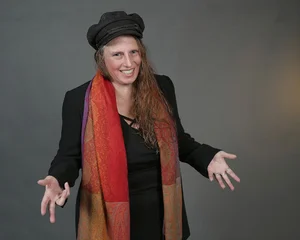
Aicila: Hello, welcome to Business As Unusual. I'm ala,
and today I wanna talk a little bit about AI, technology and the return to trust. Now, I've touched on this a few time with guests and mentioned it here and there in the show, and I just wanna dig in a little bit to what I mean about that.
So, you know, I look around at the world we live in and 12-year-old me would be over the moon with delight. We got self-driving cars, AI agents, writing emails and talk to your phone like Ironman would talk to Jarvis. Uh, this is the future that I dreamed about,
and here it is not exactly as advertised. But it did show up. The promise back then was always the same. Automation means freedom. Technology lifts the burden so humans can do the things only humans can do.
We'd have more time, more equality, more room and space to [00:01:00] actually live, and we got a little more complicated than that. I read a book about a year and a half ago. That I've talked about before, humankind by Rucker Bregman. In it, he systematically dismantles the idea that greed and self-interest are just human nature.
The default to selfishness story, he compellingly argues, is a convenient myth. It gives the people who actually do operate that way an easy escape clause, and it's not actually real. And we keep applying that same logic to technology. Systems that prioritize extraction aren't inevitable. They're designed. Someone made choices, and the choices we've made have sped something up that was already happening.
My colleague, Ethan Decker puts it this way. AI amplifies and magnifies our human frailties. It didn't create them, it does run them faster. And. And we're seeing that, right? And I [00:02:00] think we're still in the, the, the learning phase, so I don't think any of it's settled. However, something really interesting, and that's where I wanna get to the, the topic here is that one of the unexpected byproducts of all of this is acceleration.
AI acceleration is a renewed hunger for something that we kind of took for granted, but it's starting to feel scarce, and that is real human engagement, something that you can't generate. You can fake a report, you can fake a resume. You cannot fake a person, you know, in the real world or what comes from that.
And so in some ways, this AI explosion boom might be an opportunity for us to make an evaluation about, how that's working for us. Individually. So I read something by a gentleman called Will Posco, I'll, I'll link it in the notes. And he wrote similarly that he, he sees a shift coming. That in a world where almost anything can be generated, [00:03:00] what starts to matter again is proof that someone actually showed up, paid attention, and did the work themselves.
I've been sitting with that because I think it has a very specific business implication that can be easy to miss if you stay at the level of cultural observation. And what I'm talking about is connection energy. In the energy equation. It's one of the three types of energy that I talk about alongside momentum and creativity.
And I think it can be really easily misunderstood because it can be assumed that it's about like personality. Extroversion, networking comfort, whether you are a people person or not. And actually what connection energy is, is relational fuel. It's what generates, when you have an exchange that actually means something.
A conversation where someone asks you the question you didn't know you needed, or maybe a collaboration that produces something. Neither of you could have built alone a client relationship where the trust runs deep enough that the work changes or it changes you. [00:04:00] That returns something. It fills a tank that solo effort can't touch and that AI interaction or technology interaction doesn't actually have the same capacity to create.
And one of the sort of.
Um, I dunno how to say this exactly. The, one of the things about automating your way through your relationships, even with good intentions, even with tools that are effective and that work, you can quietly stop generating that connection energy without even noticing. And it's not really because you're doing less, it's more because the quality of the exchange has changed a little.
You're present in volume. Not in depth. I wanna be clear. Once again, we don't need AI to make this happen or any kind of technology. I mean, think about if you've ever been to an in-person networking event, right? Some people have their little system and they walk around and they give everyone their business card and you, [00:05:00] you don't really feel like they are actually there to engage with you. They're ga, they're, they're there to engage in their task of networking. And so you don't really feel any sense of movement or connection. So what does this actually look like as a business decision? Not just like a philosophy. And I would say start with a, a question, uh, an evaluative question that I found to be useful, which is where in your business are you still irreplaceable? And
it's something that I also ask the people that I work with. And I try to observe it for them. This isn't an ego move. It's not even really a resource question. It's, there are places in your business where your presence or your specific way of thinking, your relationships, your particular way of reading a room generates something and, and brings you into connection with your own inspiration.
Ideas, trust, momentum. And that's [00:06:00] where your connection energy is producing a return and a value add for the people that you work with, you wanna protect that. And then there are also some places where you've maybe handed your presence to a system. And what you're getting back is more reach than any kind of resonance.
And that's also worth looking at, not to eliminate your systems. Uh, don't just throw, let the baby with the bath water. But really get a sense of where the trade trade off is working. And. And recognizing the automation question is never a yes or no pro or anti. The, the question you wanna be asking is, what is this serving?
Is this tool protecting your capacity so you have more of yourself to give to the places that need you, or has it become the default, path of least resistance thing that fills a space where your presence used to be. And that produces very different outcomes. Right? And the difference isn't necessarily visible in your metrics.
It might show up in how it feels to do the work and whether or not the relationships feel [00:07:00] fulfilling or hold or you know, things kinda start to feel off, right? So just remember, trust is slow to build and fast to lose. And one of the places that I think we've been spending it by default in this AI technology boom without necessarily tracking it as a cost is in the gap between what our automated systems promise and what they actually deliver.
The slop is getting sloppier, as Ethan would say. The automated outreach that sounds almost personal, the generated content that has all the right words in the wrong order, people feel it even when they can't name it. I know I do. I can read LinkedIn posts and really have a sense of whether or not they were written by AI without being able specifically to tell you how I know. Um, and as people feel that they will, you know, maybe not read your stuff, they don't necessarily wanna be talked to by a computer. And look for something that actually has that feeling of real to it. This isn't really a trend to chase.
It's an or it's a reorientation worth [00:08:00] considering. Where is your technology currently dictating your rhythm instead of protecting your capacity? That's the question the from the post that started this episode, and I think it's really worth sitting with. If you wanna get a clearer picture of where your three energy types are right now, which tank is running low, which is doing more work than you realized.
The Energy Equation snapshot is free and takes a couple of minutes. It's at bicurean.com/energysnapshot.
Thank you for tuning into business as unusual, remember, in this ever evolving world of modern business, it's not about fitting in.
It's about standing out. See you next time. Stay curious, stay innovative, and always keep it unusual.