The Mid-Year Look
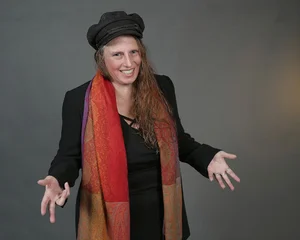
Aicila: [00:00:00] Hi there. Welcome to Business as Unusual, and today I'm gonna talk about a midyear look. So you started everything, most of us do our planning in December or November, sometimes January, right? Uh, but you did that. You wrote something out in January, you made some goals for yourself, maybe some goals for your business, um, maybe both. And there's a, there's a split now, right? Between what you wrote and where you're at. And that can land in some ways. Sometimes we'll, uh, uh, really get down on ourselves because we're not where we thought we should be or where we think we should be.
Or we'll sort of ignore that we had an intention. We'll let that fade away, pretend that we never really had that intention, or that we never made those plans. And both of those things will treat the gap between what you intended in [00:01:00] January and where you're at in June as a verdict on you. And I'm gonna say, why not consider it as a record of where your e- energy actually went?
So from the energy equation lens, let's look at the goals that stalled, and instead of turning it into a reflection or an indictment on you, you don't have enough willpower, you're not a good planner. Really look at what was the energy needed, and did you have that energy in these six months, and were you able to put it towards what you thought you would be able to put it towards Sometimes we make a plan that's aspirational, and sometimes we make a plan that's really solid and reality strikes.
There's a saying I love, and I repeat it to myself any time that I start to feel that sense of what on earth is happening, which is life is what happens when you're making other [00:02:00] plans.
Depending, uh, depending on your perspective, that can be an unfortunate reality or a gift to understand and ex- and embrace the rollercoaster that is reality.
Like sometimes it's even success that, that creates a new opportunity for you. Sometimes a new opportunity takes you in a new direction. So with that, so instead of saying, "Oh, I'm not where I thought I'd be," or, "This project didn't work the way I thought it would," instead notice what did work. So I'll give a personal example.
I, I have been a little down on myself because I feel like some of the things that I wanna work on haven't moved along the way that I would've expected them to or had intended them to. And I kinda did a little assessment a few weeks ago, and so I was like, "All right, well, what is it?"
And I said, "Well, actually, some of my habit goals that I had intended," like I really wanted to work on writing more regularly. That felt like a really important shift in how I approach my work and what I'm doing [00:03:00] and, and I wanted to create more of that habit. Well, I've done that. That has occurred, but I kind of dismissed it 'cause once I achieved it, I thought, "Okay, that's good."
But it does take, uh, it does take me applying myself really differently to my work weeks to make... I have to make space for my writing in a different way. And I have to consider that in a priority. And one of the reasons I often deprioritize it is because I love it so much. And I, I have a, a work-first attitude that means I will often take the thing that I really love and replace it and, and say, "Oh, that thing doesn't count, doesn't count as work or doesn't count as success to have added that in."
And so that's an attitude that I have to work on. But it, it was helpful for me to look at that and say, "Okay, I, I did really achieve the habit goals that I found to be very important," and I've, I've been layering those in. I had some other project [00:04:00] goals that I wanted to achieve, and I didn't because there was some client work that really had to take priority. And that was a conscious choice.
And, and it... I, and I stand behind it was the right choice. And what I didn't do was also say, "Okay, if I'm doing that, how am I going to understand and interpret the rest of the stuff that I wanna do in a more realistic sense? Even if I have time to do it, do I have the mental capacity to generate what I need to generate for these things?" And so that's kind of where I wanted to talk about that today is just saying, you know, it's good to do these check-ins, but I would say instead of going, "Am I on track?" Really looking at was that the right track for who I've been the last six months? Am I noticing everything that I've brought in or am I only focusing on the places where I feel some, some sense of [00:05:00] deficiency?
Or and, and/or am I accounting for the energy balance that I need right now? Uh, I don't know about you, but I know for me it just changed. That I have different kinds of energy at different times of year. I tend to be a little seasonal, so I hibernate a little in the winter, and in the summer I'm much more interested in going out and interacting.
And so trying also to account for did I, did I try to create a situation where I was gonna really have to force myself to be out in the world a lot when it was cold? It's not a great idea. And, and thinking about that, noticing those things too. If this is the first time that you've really consciously thought about how you manage your energy in your business, because I'm really clear that everybody is doing it in some way. I'm just giving you a different way to think about it and, and an invitation to do it a little more consciously. This is a great opportunity to notice things.
I feel like noticing is huge. And so really paying [00:06:00] attention to what did you intend that went really well? What showed up that you didn't expect? What went so smoothly you didn't even realize you accomplished it? Like for me, I really did achieve my goal of writing so much more easily than I expected to, became a habit much more quickly.
I thought it would take a lot more effort for me to pull that in. And to really notice those things, celebrate them, and think about how that occurred. Notice the things that didn't, and start to get a feel for your ebb and flow so that as you're making your new intentions, you can bring that, uh, into consideration as well.
So for the next six months, uh, try taking, you know, do that little refresh for yourself and think about, like, what would you do? What would you plan differently, or what would you shift in terms of your goals for the next six months if you stop [00:07:00] assuming that June or July you and January, February you are the same person?
So I'm gonna leave you with that question. This is a quick one. I hope that you're having a great summer, and I will see you next week.
Thank you for tuning into business as unusual, remember, in this ever evolving world of modern business, it's not about fitting in.
It's about standing out. See you next time. Stay curious, stay innovative, and always keep it unusual.