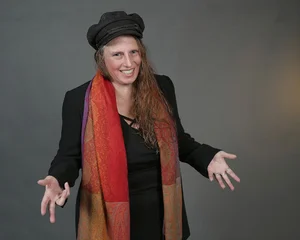
Frugal Thinking
[00:00:00] I grew up in New England to a single mother, and, frugality got wired into me early. I used to say I was cheap, but my friend said, "No, no, you gotta, you gotta say you're frugal." And I used to joke that I spent every dollar twice. today I wanna talk a little bit about, um, that principle under frugality. Sometimes you need to throw money at a problem, and I wanna acknowledge that took me a long time to understand too. So it's not always great to be cheap or frugal. However, assessing what you have and what you need and how to put your resources best towards it, especially as a solopreneur, is really important, uh, because we often discount our time.
"Oh, I'll just do that. That's free." But it's not, right? Like it's a, it's a... At the very m-minimum, it's your time, which is the only non-renewable resource that you have. But it's also, potentially lost opportunity, lost focus on other things. So that said, let's talk about, frugality. And one of the principles that I think could be really [00:01:00] helpful is before you go to try something new, some new tool or gadget, and I love those things, remember to look at what you have.
And I don't mean just about just money, but, you know, time, attention, and energy, all of it. The question to start with is instead of starting with the question, what do I need to bring in? Is the question to get to start with, am I actually using what I already have? So, uh, you know, evaluating your systems and how you're doing things.
So if you notice that you're really frustrated that something you're doing isn't working, um, you know, it's really easy to be like, "Oh, I'm gonna go buy the solution." And, and the, the marketers, the practitioners of the dark arts, they know that. They know our desperation. They know the problems we have, so they're like, "This tool is gonna fix everything."
You're like, "Ooh, rainbows and unicorns." Except it doesn't because actually you didn't need something new to learn, to buy and to implement. You needed to use what you had better or to change some of the things you were doing. So it's [00:02:00] the, the place to start. And that version is a thing that happens in a crisis, right?
A lot of times we're reactive instead of being intentional. So you, uh, like you look at your credit card statement and you're like, "Oh, crap, I'm spending too much on things," and you just start deleting things.
What I'm talking about is the slow, intentional version where you look at something and you ask yourself, "What serves me well now?" Not when I got it. Not what I thought it would be or what I thought it would become. Not what I've been meaning to figure out.
Potential's a big one for me, so I'll highlight that. What's actually working in the ways I need it to work right now? And a lot of times we don't do that intentional version because it does take energy. And it feels less costly to avoid it because it, it's, you know, if you're not doing it, then it's, you're saving that time or that mental effort.
And adding it in, adding the [00:03:00] evaluation in feels like you're adding work, but it's the kind of work that pays itself back. Evaluating things also can sometimes feel like you're admitting something doesn't work.
And the thing is, if you're in an organic living system, which a business is, things will shift and change. - Not everything's gonna work forever the way that you want it to. And if you, if you put a lot of time and energy into it, you fought to set it up, you
Paid a lot of money for it, told other people about it. That can feel like, admitting something, right? Like, that can feel like, oops. And it's gonna happen. It's okay. Admit it. And, and face that because it, when you avoid it, those, those small tweaks that you could make become larger and larger reactions that you'll end up having to do somewhere.
Think about it like maintenance on your car. Like, you don't have to get your oil changed. [00:04:00] You could avoid doing it. It is money and time. But eventually you're gonna throw a rod and your engine won't work. And that's gonna be a much bigger financial and time suck. So the same thing. It's like little baby oil changes.
This is even less than that. It's less than changing the oil. It's checking the oil when you fill your gas tank. Just little tiny bits. And that will... that'll let you know way before something's a big deal. Most of the time.
A lot of times we'll hold on to things because of what they cost us to get them, the time, the money, the effort. It's a real pull. And because we don't wanna change things, that, that one I think deserves a different kind of, uh, evaluation because, changing things in your business...
Like, I love... I try new tools all the time, but I've stopped changing my tools because as much as I love it. I do realize that it does cause a little bit of disruption. And I don't need to add that. So I have to have a [00:05:00] bigger reason to change it than just this is cool. However, if your reason for keeping it is more based on the cost to acquire it than what it's doing for you, flip the question and ask yourself, "What's the cost to keep it?" And this applies to tools, programs, offers, commitments, relationships with clients, vendors, ways of working, schedules, all of it.
Just do a quick, "What does it cost me to keep this?" And see, see what comes up. And think about this this week. What are you holding onto because it costs you something rather than because it's still returning something? Just take a minute. Notice what happens. The point isn't to strip everything down.
It's to make sure you're carrying... It's to make sure that what you're carrying is worth carrying. To me, that's frugality, and it turns out it's also just really good business. Thanks for listening. See you soon. See you again soon.
Thank you for tuning into business as unusual, remember, in this ever evolving world of [00:06:00] modern business, it's not about fitting in.
It's about standing out. See you next time. Stay curious, stay innovative, and always keep it unusual.